Showing posts with label personal interest. Show all posts

Thursday, 31 December 2009

My 2009 in Important Reading for Human Beings

The end of the year is a time for looking back over the previous one, looking forward to the next one and other such clichéd nonsense. I am, however, increasingly interested in the future: what’s going to happen in the next 1-10 years? How is it going to go down, and what will be the consequences of that 'getting down'? I believe the outline of the answers to these and many other fascinating and unrelated questions can be glimpsed by casting our eyes back over the year of 2009 while keeping in mind the one to come. So I present to you, this list of My 2009 in Important Reading for Humans Beings.

A word on my methodology: These were all posted to my Facebook account at one stage or another, a good indicator of my own estimation of their value and importance. That's about the extent of the methodology.

This is the first of a planned three parts, the first being constrained to pieces written or published this year that I found to be important reading; the second will be pieces that are perhaps less ‘important’ but no less interesting or potentially informative as to the shape of things to come; and the final third piece will be are pieces I discovered this year, written in previous years and decades that, I found particularly prescient or relevant.

This list begins in March.

March 19, 2009 – ‘The Big Takeover’ by Matt Taibbi

The first piece on my important reading list in 2009 is Matt Taibbi’s Rolling Stone expose on the 2008 GFC bailout and what it means for the future of our society. It’s big, it’s long, and it’s assertive in its assessment of the future impact of the ‘necessary evil’ that was the $700 billion dollar bailout. If Taibbi is suggesting we may be living in the tail end of the era of the American Empire – with his opening allusion to insurance giant AIG as “a dissolute nobleman gambling away the family estate in the waning days of the British Empire” – then it is an assertion rapidly gaining currency, as we shall see at least once more further down the list.

April 15, 2009 – ‘Inside the Precision Hack’ by Paul Lamere

The next piece of important writing comes from an unlikely source – the ‘Music Machinery’ blog pulls the thread behind a Time.com online poll and uncovers the machinations of the group of anonymous users from 4chan who came together to rig the poll by stuffing ballots. There are a couple of ways to read this piece; as either a rather typical cautionary tale about the underlying potential for abuse in online media, or as testament to the growing power and political influence of anonymous. This was no Fox News ballot stuffing – it was Time and they let it stand. The fact that the people in charge decided to leave the results as is perhaps says more than any simple poll result.

May 21, 2009 – ‘A Day At Sydney’s Pinball Expo’ by Ben Abraham

Because this is an indulgently personal list, I’m going to say that the next important piece was something I wrote for Kotaku Australia about visiting Australia’s first annual Pinball Expo. It’s important, I feel, less for the points that it makes about the differences between Pinball and Videogames (which are kind of interesting) but because it represents a mainstream videogame media willing to publish writing about games from an untried author, writing that’s a bit different, a bit off the beaten track and that’s a bit more experimental. Of maybe it’s nothing of the sort – it’s still on my list.

May 28th, 2009 – ‘Shhhh. Newspaper Publishers Are Quietly Holding a Very, Very Important Conclave Today. Will You Soon Be Paying for Online Content?’ by James Warren

In a short piece (for this list of generally extra long pieces) at The Atlantic, James Warren mentions that a News Industry group were meeting that week to discuss monetizing online news content. It’s an important piece because, firstly, in the time since the piece was posted in May some news organisations have actually begun to charge for their content online. The future for online news is still uncertain, but I hazard a guess that, as hinted at by the earlier piece on Anonymous, it’s future is going to be influenced more and more by people like 4chan’s anonymous and less and less by the Packers and Murdoch’s of this world.

June 6th, 2009 – ‘The Learjet Repo Man’ by Marc Weingarten

In this piece for the website Salon, Marc Weingarten chronicles the upswing in business for one high flying reposesor of luxury items like private jets and expensive yachts that accompanied the 08/09 financial crisis. If Taibbi’s ‘The Big Takeover’ was about the political implications of the bailout, then ‘Learjet Repo Man’ is about a small, vertical (ha!) slice of the practical impact on post GFC life.

June 14th, 2009 – ‘TehranElection on Twitter’ by Abdul-Azim Mohammed

Instrumental in spreading the first Iran Election twitter info, the 31 tweets all from the day and night of June 14th spoke of injustices at the ballot boxes and restricted internet and phone access as the government spread its own election winning propaganda. His last tweet is only “I have to shut down for a bit, the police are looking for satellites” but the word was out, and plenty of other Iranian twitter accounts sprung up to similar effect. As far as I know, his ensuing fate is unknown and my cursory googling turned up no relevant contemporaneous hits.

June 13th, 2009 – ‘The Obama Haters’ Silent Enablers’ by Frank Rich

In a piece for the New York Times Frank Rich writes about the increasing politicisation of republican media outlets like Fox News and their inflammatory influence on the extreme political right of America. Rich asserts that these “silent enablers” in the media could very well be trying to incite indirect violence against the President. It’s a sobering thought, and alongside another piece later in the year, can be looked upon confidently as indicators of a polarisation in politics in 2009, as the gaps between the left and the right were wedged right open.

June 30th, 2009 – ‘The Not-So-Hidden Politics of Class Online’ by Danah Boyd

Boyd presented her research findings at the ‘Personal Democracy Forum’ in New York and it’s important reading because it challenges the rhetoric employed in tech circles that often has the tendency to ascribe utopian properties to technology. The crux of her argument is that, “For decades, we've assumed that inequality in relation to technology has everything to do with "access" and that if we fix the access problem, all will be fine. This is the grand narrative of concepts like the "digital divide." Yet, increasingly, we're seeing people with similar levels of access engage in fundamentally different ways. And we're seeing a social media landscape where participation "choice" leads to a digital reproduction of social divisions.” Important stuff and again it’s a theme that will come back later in this year’s list.

July 5th 2009 – ‘I’m a proud braniac’ by Roger Ebert

Another trend perhaps always present in every year but particularly easily identifiable in 2009 was an up-swell of defensive reactions to critical thinking and reasoned, thoughtful critique. Roger Ebert wrote in defence of reading ‘too much’ into films instead of passively and unquestionably consuming in a piece titled “I’m a proud braniac”. More recently this year we even got ‘Moffs Law’ summing up why the case for ‘not thinking as much’ is not really a valid discursive argument.

July 6th, 2009 – ‘Babes of the BNP’ by Gavin Haynes

This year saw an interesting phenomenon in the UK in the form of unprecedented voter support for the British National Party, a far right extremist political party that would like nothing better than to reverse immigration and send everyone non-white out of Britain. It’s seems to me it’s only further evidence of the widening between the left and the right across the globe, and it’s important to understand why these people think the way that they do. So, to find out we have this cheeky series of interviews with the ‘Babes of the BNP’. Easy targets perhaps, but it’s quite amazing to see just how misinformed some of them are.

July 6th, 2009 – ‘Huh?! 4 Cases Of How Tearing Down A Highway Can Relieve Traffic Jams (And Save Your City)’ by Yonah Freemark and Jebediah Reed

In a case (or four) of the accepted wisdom being turned on its head for the betterment of everyone, Freemark and Reed write about how removing freeways in four cities around the world has actually improved traffic flow, as well as being beneficial to the city. This is a personally important piece of reading because it reflects a gradual eclecticising of my interests. I’ve somehow gained the belief this year that the low-level curiosity instilled in me by diversifying my reading habits will pay dividends in the long run. There really is no telling which fascinating new tangent will inform some other area of interest or lead to some interesting new idea.

July 15th, 2009 – ‘Confessions of a Radical Prof’ by Julie Matthaei

As if proof of the previous point, I bought a book earlier this year about print design for magazines and online, which led to finding the website that ran this fascinating and important piece. Matthaei is an economics professor here explaining the failings of economics teaching in providing an education to its students. For example, “I always took care to explore the fact that equilibrium – where the supply and demand curves cross, and quantity supplied equals quantity demanded – does not mean that everyone is happy, or that basic needs are met. Many people could, in fact, be starving because they are too poor to be able to “demand” what they need. Even when no lines or shortages exist, people can still be dying from starvation. Despite my lessons, many of my students were unable to point out the falseness of the statement “everybody is happy in equilibrium” on their tests.” As the earlier pieces on the GFC have made patently clear, we need more professors like Matthaei to teach these kinds of things to the next generation of economists.

July 15th, 2009 – ‘Losing my religion for equality’ by Jimmy Carter

In a year marked strongly by the aforementioned growing divide between the political left and right (which I can’t seem to stop mentioning – probably because it was a big deal, right?) it’s notable when someone argues for a more moderate stance on religion and equality, doubly so when it’s a former US President and now-former southern Baptist. Here he is arguing for equality before dogma, and a new equality for women in the Christian faith.

July 21st, 2009 - ‘An Easy Way to Increase Creativity’ by Oren Shapira and Nira Liberman

Another piece I found personally important, if not, perhaps, on the same scale of world-wide socio-political import as others on this list, was an article in Scientific American that detailed research that found gaining distance from a problem, even purely imagined mental distance, increases ones creativity and ability to solve problems. Absolutely fascinating, and something I’ve found applicable a number of occasions this year.

July 29th, 2009 – ‘New Game Column at Edge’ by Chris Dahlen

Another important moment for games writing this year was the green-lighting of Chris Dahlen’s (now not so new now) weekly Edge column. It’s an important piece because, again, it represents the triumph of more of what I want to see from games writing. Offbeat, occasionally humorous, just as often insightful, and always grounded in something like personal experience, Dahlen’s column (and there are too many good ones to mention them all) was an important part of my 2009.

August 5th, 2009 – Symbol of Unhealed Congo: Male Rape Victims by Jeffrey Gettleman

For all the patting on the back we (and I include myself) may do here in the west, there are still so many places of the world that are just not okay. Rape is always a tragedy, but something in the stories of the male rape victims of the Congo seemed to capture something of the absolute desolation of the place, as Jeffrey Gettleman writes some of their stories for the New York Times.

August 4th, 2009 - ‘When Did Americans Turn into a Bunch of Raving Lunatics?’ and August 11th, 2009 - ‘What Really Happens When You Demand the President Produce His Birth Certificate?’ by John H. Richardson

Something of a reasonably late development in the year was the almost-legitimisation in the conservative American media of the ‘Birthers’ and their absolute conviction that President Obama was not a real American. Esquire’s John H, Richardson goes on the road throughout the Bible belt to find out first hand why these people are such sore losers. Then again, I bet they said the same thing in the aftermath of the 2004 election controversy.

August 11th 2009 – ‘TIE Fighter: A Post 9/11 Parable’ by LB Jeffries

LB Jeffries piece on the old LucasArts TIE Fighter game talks about its renewed relevance in a post 9/11 world. It was another important moment because it was another case where games writing took itself seriously and went, I’m okay with this. It employed a kind of poststructuralist approach by viewing the game with modern eyes, and in our context, rather than its original one, which is kind of what the rest of the art world has been used to doing for forty-odd years.

August 15th, 2009 – ‘What’s Good For IBM...is as good as it gets for America’ by Zachary Karabell

A piece in Newsweek about IBM and the shift in it’s global workforce out of America and into other emerging markets brought everyone that read it up to speed on that post-American-Empire thing once again. The important point from the story is that “This is the new world of global business, one in which the U.S. becomes simply a market among markets, and not even the most interesting one.” And that’s both pretty important and a pretty interesting change. I’ll bet my bottom dollar that’ll be a factor in 2010.

August 5th, 2009 – ‘Garbage In’ by Diana Holden

This year saw the “pacific garbage patch” explode into the public’s consciousness (or mine at least) with a number of high profile pieces (including one on the ABC programme catalyst back home in Australia) about the large area of the pacific ocean that attracts rubbish and that is now filled with floating debris. Looking at the scale of some of the world’s biggest garbage dumps (including the pacific garbage patch) is an important thing to do, and the accompanying pictures with the story are quite impacting. Waste, managing increasingly scarce resources and the attendant economic effects were (and are going to be) big and important issues in the coming year and decade.

September 13th, 2009 – ‘We still have the same disease’ by Margaret Wente

But I’m not making a list of the issues, but a list of the most important pieces of writing about the issues. Here’s economist Nassim Taleb writing on the one year anniversary of the Lehman Bros collapse about the economy, and saying rather unfortunately that ‘We still have the same disease'

September 14th, 2009 – Redactor Agonistes by Daniel Menaker

A fascinating essay on the book publishing business, with some estimations about reader numbers and explanation of why books that get published get published. The money quote: ‘Genuine literary discernment is often a liability in editors. And it should be -- at least when it is unaccompanied by a broader, more popular sensibility it should be.’ I wouldn’t mind turning some writing into a book one day, so this was eye opener for me. It also echoed sentiments more commonly seen in the newspaper industry (such as the piece linked earlier) with the feeling that, if not dying away, then certainly the nature of the industry is undergoing some fundamental changes.

7th September, 2009 – ‘Douglas Coupland: the writer who sees into the future’ by Decca Aitkenhead

This interview with author Douglas Coupland, who I have never read anything of before this interview, is important because while it’s ostensibly about promoting his novel ‘Generation-A’ Coupland is more interested in talking about pig picture ideas, the future, and a whole bunch of interesting peccadillo’s of his personality. It’s also important for me because Coupland sounds like the kind of non-traditional thinker I aspire to – for example, Coupland says he can never throw away his art objects “because an object is interesting because it's the crystallisation of a good idea. And I like being surrounded by good ideas.”

24th September 2009 – ‘Diary’ by Roy Mayall

If I recall correctly, the person who originally posted the link to this expose of the UK’s Royal Mail compared it to a real life version of The Wire. It’s another striking example of corporations valuing profit over people, and it’s another important piece of writing from 2009.

24th September, 2009 – ‘Lost Vegas’ by Pete Samson

In a combination of news and personal interest story, UK’s The Sun does a story on the people living in the sewers under Las Vegas. This is exactly who and what our society is producing; these are the kinds of people The West creates, even if it isn’t immediately visible.

September 24th, 2009 – ‘Mobile money in the poor world’

A story in The Economist (which has now been gated behind a subscription) was about the importance of mobile phones in developing countries and some of the possible technologies, including micro transactions of money via SMS, which the mobile phone is enabling in third world countries. One of the things that 2009 saw time and again (as in the earlier Myspace/Facebook piece) was proof that technology is neither neutral, nor was being on the very cutting edge necessary for development.

September 25th, 2009 – ‘One more go: Why Halo makes me want to lay down and die’ by Margaret Robertson

The end of the short lived tenure of Offworld as its own separate blog from the main Boing Boing posts was marked by Margaret Robertson’s important piece, a discussion of the eternal quality of the original Halo. It was also important as a demarcation of the Offworld that so many had such high hopes for.

September 2nd, 2009 – ‘A Virtual Life. An Actual Death’ by Mark Steven Meadows and Peter Ludlow

This piece looked back over the real-world and second life death of one rather prescient internet user and commenter who you’ve almost definitely never heard of before. The focus of the story, a woman known as Carmen Hermosillo who, before her death in 2008, was intimately acquainted with many of the peaks and pitfalls of virtual life is looked, examining her life both real and virtual, as a progenitor for many of the issues facing an increasing number of people coming to terms with virtual existence online. It sounds dramatic, and it is, but the authors note that, “The thing that killed Carmen was the thing she spent her entire online life warning us about.”

October 2009 – ‘The Story Behind the Story’ by Mark Bowden

In ‘The Story Behind the Story’, Bowden takes an in depth look at how news gathering in the US has become increasingly politicised, as the work traditionally done by proper journalists gets outsourced to amateur and professional political groups. It’s viewed through the lens of the media’s obsession with a pair of clips of then-supreme court -justice-to-be Sonya Sotamayer. The decline – and let’s be honest, it’s been nothing but a decline – in print journalism revenues and staff means that the quality of reporting and, perhaps more importantly, fact checking and context gets lost in the race to the juiciest ‘sound bites’. An important dissection of another overarching trend of 2009.

October 2009 – ‘They Shoot Porn Stars, Don't They?’ by Susannah Breslin

In an inspired move, ‘They Shoot Porn Starts Don’t They?’ made a website that looks and reads like a magazine article, but remains its own thing entirely. Breslin spent some time in California’s San Fernando Valley looking at the effects of the US economic downturn on the porn industry and the result is as touchingly personal as it is insightful and revelatory. Avoiding clichéd depictions of the actresses and actors themselves, it shows the good and the bad in this most definitely not recession proof industry.

June 9th, 2009 to October 11th, 2009 – ‘Alice and Kev’ by Robin Burkinshaw

One of the most important things in games writing that happened this year was the beginning – or perhaps the more important part was actually the ending – of the blog/story/comic/tale of Alice and Kev. Its incredible popularity demonstrates that not only are people willing to read non-traditional essay writing and stories about games, but that they are actually hungry for them.

October 12th, 2009 – ‘Why Snark Works’

In this short review/summary of David Denby’s book ‘Snark’ the unknown author of the ‘A Grammar’ tumblr blog makes some observations about ‘Why Snark Works’ and what it does to online communities – essentially, it works more effectively and efficiently to weed out those that are not ‘in’ on the jokes, explicating the culture of a website better than any list of beliefs or aspirations could ever do. Important reading because of the prevalence of snark in almost every online context.

October 14th, 2009 – ‘Off White’ by Tony Martin

Martin’s website ‘The Scriveners Fancy’ is ostensibly a comedy website, but as with just about everything he does, it more-often-than-not comes with an edge of intelligent commentary, and his witty and biting reaction to the Hey, Hey, It’s Saturday ‘Blackface Skit’ is an important read for Australia.

October 20th 2009 – ‘Nearly universal literacy is a defining characteristic of today’s modern civilization; nearly universal authorship will shape tomorrow's’ by Denis G. Pelli & Charles Bigelow

This short piece at Seed magazine discusses how, if current trends in Twitter take-up and usage continue universal authorship could soon become as ubiquitous as universal literacy…

November 5th, 2009 – ‘Neutral on Neutrality’ by Scott McClellan

…and then, soon after the aforementioned piece, I read this one examining Marshall McLuhan’s ideas and their applicability to Christians interested in using media in evangelism. Echoing the sentiments of Danah Boyd’s piece on technological utopianism and Facebook/Myspace class issues, McClellan notes that technology is not a wholly neutral thing which, in light of the above Seed magazine piece, leads me to wonder about the effects these Twitter/Facebook/Myspace universal authorship technologies will have on society in the future. What (if any) effect will the technology of Twitter have on our ability and interest in communicating with each other? These are the important questions.

November 11th, 2009 – ‘SPIEGEL Interview with Umberto Eco

'We Like Lists Because We Don't Want to Die' by By Susanne Beyer and Lothar Gorris

Umberto Eco is another of those thinkers often appreciated for his diversity and eclecticism – in this interview with the German magazine Spiegel Online they even go so far as to reference him as a ‘polymath’. Eco talks about all sorts of things in this interview, with the stand out being the assertion that “We like lists because we don’t want to die” which is an interesting way of looking at things.

November 18th, 2009 – ‘pueraria lobata’ by Rob Holmes

More questioning of conventional wisdom here in an interesting breakdown of the idea of ‘introduced species’ of plants. Holmes argues that by declaring any species of plant ‘introduced’ is a social construct that draws an artificial line in time as though nature were a static thing to be preserved. Which is rather artificial when you think about it, and the piece references a Slate article that details “scientific push-back against the making of binary distinctions between ‘native’ and ‘invasive’ plants”. After all, as human beings we are part of nature ourselves.

November 27th, 2009 - ‘Here’s Kamahl!’ by Andy Quan

Peril Magazine is an Australian arts and culture journal that aims to provide insight and commentary on Asian-Australian arts and culture. Here they interviewed the preeminent Australian performer Kamahl about how Australia is (or isn’t) dealing well with issues of racism. It’s important in the wake of the Hey, Hey, It’s Saturday ‘Blackface Skit’ controversy and the event is discussed.

April 7th, 2009 – ‘The Dark Side of Dubai’ by Johann Hari

I read this piece right at the very end of the year – in November no less – and it seemed to make perfect sense to read it at that time, so I’m placing it here, our of order. In November/December the world was worrying about Dubai defaulting on as much as $50 billion dollars worth of debt, and this piece seemed to fit right in with the general mood about the place and its possible future – according to Hari’s time there and interviews with members of it’s migrant labour force, Dubai is a town build on cheap, almost slave labour and rife with class divisions.

December 1st, 2009 – ‘Somali sea gangs lure investors at pirate lair’ by Mohamed Ahmed

Reuters ran an investigative piece on the sea gangs of Somalia and their cooperative investments scheme. The rise and rise of Somali pirates was another important thing that worried the western world in 2009 and accompanying it was the concept of the ‘failed state’.

December 14th, 2009 – ‘The future of the Australian Liberal Party’ by Peter Hartcher

Australia has not been unaffected by the oft identified widening Left/Right divisions in politics, and here Sydney Morning Herald political editor Peter Hartcher discusses what the recent elevation of Tony Abbott to the Liberal leadership means for the future of the party, and by inference, the Australian political landscape.

December 20th, 2009 – ‘Crash State’ by Geoff Manaugh

BLDGBLG runs the terrifically important think-piece about the future of the state of California and, more generally a post-bankruptcy metropolis looks like. Manaugh presents two alternative futures for a bankrupt major city, each just as likely as the other, and wonders what we can do to influence the future towards the more palatable one.

December 19th, 2009 – ‘David Simon’ interviewed by Jesse Pearson

Vice Magazine interviews David Simon, creator of HBO’s critically acclaimed TV series The Wire, widely acknowledged as being the most interesting/important television series of the past year, even the past decade. In the long and informal interview, Simon talks about his creative process and the beliefs and ideologies that inform his work.

December 22nd, 2009 – ‘How do I know China wrecked the Copenhagen deal? I was in the room’ by Mark Lynas

Lynas was there, attached to a political delegation at the Copenhagen Climate Change Summit and he tells frankly of a China that decided to flex its political muscle. He dissects why it derailed what many had hoped would be a cut-and-dry worldwide agreement on the need for change.

And that was the year in important writing as I saw it, linked it and recommended it to friends and colleagues. I should thank everyone who linked me to these important artifacts from 2009 - there are probably too many to name, but a large portion of the credit can be given ascribed to Christopher J. Hyde and his fantastically eclectic blog '25 Times a Second'.

Friday, 30 January 2009

Jan 09 Round Table: The New Testament for Windows, Mac OS and Linux


Jan 09 Round Table - Putting the Game Before the Book: What would your favorite piece of literature look like if it had been created as a game first? …rather than challenge you to imagine the conversion of your favorite literature into games, I challenge you to supersede the source literature and imagine a game that might have tried to communicate the same themes, the same message, to its audience.


Now I know the New Testament of the Bible is not strictly speaking one book, it’s made up of a bunch of them and they’re written by a number of different authors, however many Christians like to think of the Bible as expressing a single idea – or rather more specifically, the single voice of God. There are, as you may or may not know, many different views, perspectives and beliefs on how to read the Bible – all too many to count and list here in fact. So I will instead explain how and why I read the Bible in my own fallibility and imperfection and then get onto the interesting business of imagining how “The New Testament: The Videogame” (for Windows, Mac & Linux) would play and what it would be like if it were originally authored as a videogame.


I read the Bible because I do believe that it really is some kind of ‘designer’s handbook’ for life and living. And I believe in the central figure of the story – you know, that Jesus guy. Yeah he’s alright with me. However, I’m not altogether convinced at the moment that the Bible is as infallible as the institution often portrays and I similarly struggle to believe that it’s entirely reflective of exactly and specifically the intent of the author (talking about God as the author in this case not the human writers) but there are still plenty of people that do. And there are also plenty of people that think Braid is exactly authored the way Jonathan Blow wanted it to be. (Admittedly, that is rather a reduction of their arguments and points about the games, but an overarching theme of much of the discussion has been ‘what Blow was doing’ with the game and it’s hardly been studied in from the modernistic perspective as an independent work, studied in a vacuum if you will, with one notable exception.)


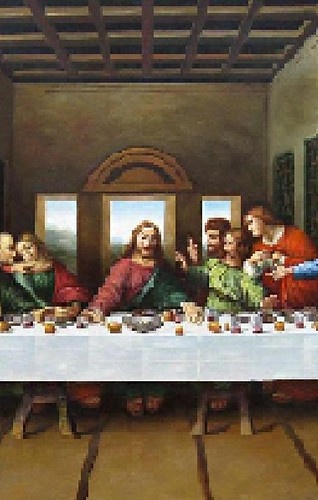
So let’s pretend that God sent his son Jesus to earth not in the first century but in the twenty-first instead. Two points make The New Testament for Windows, Mac OS and Linux a convincing possibility. Firstly, knowing that Jesus was a pretty contemporary dude for his time, it makes sense that he’d encourage his followers to be down with the ways and the means of the time. The 12 apostles would probably have held wicked awesome Halo LAN parties and frag each other late into the night, trash talking about who was greatest in the kingdom of Halo and all that. It would probably get a bit out of hand when Judas started TK-ing and the other disciples left Jesus to fight by himself, but somehow the peace would always be kept and a good time would be had by all. Jesus being the prince of peace and all that.


Also, as someone who was dedicated to speaking to people in a way that they could understand, using parables and stories to communicate his message, it seems rather credible that his followers would be just as dedicated, and want to tell people about him via the medium that they are both well versed in and which is rapidly emerging as the newest medium for human expression.


Obviously throughout the short history of games there have been a bunch of limp wristed, patently pathetic Bible based videogames and I’ve only (thankfully) been witness to a few of them. The most high profile of recent bible games would have to be the Left Behind game, based on the popular ‘Left Behind’ series and which plays as a spiritual focused RTS. No game, as far as I know has tried to be the Bible, even if many have tried to re-tell the Bible. So how would the Bible authors make The New Testament: The Game?


While the gospels in the New Testament are about telling the story of Jesus, the point of the gospels is not found within in the narrative, that is, by reading, studying and learning the order of events. Instead it’s about character and characters, people that are both saintly and flawed. The important things to take away from the Bible are not names and places and dates, but implications and ideas. Let’s take a small look at one idea that this Jesus fellow wanted to get across – this short passage is from The Message version of the Bible, which has deliberately been paraphrased from the original Greek so as to (hopefully) speak in a contemporary vernacular much as it would have for readers in the first century.


(This is Jesus speaking)

“Be wary of false preachers who smile a lot, dripping with practiced sincerity. Chances are they are out to rip you off in some way or other. Don’t be impressed with charisma; look for character. Who preachers are is the main thing, not what they say. A genuine leader will never exploit your emotions or your pocketbook. These diseased trees and their bad apples are going to be chopped down and burned.”

The passage is from Matthew, Chapter 7, verses 15-20 (for those so inclined to go look it up) and the point Jesus is making could be told in any number of ways through a videogame.


Maybe the videogame of The Gospel of Matthew is a tile based top down RPG, where you play as a follower of Jesus or even play through a series of Galileans, Judeans, Pharisees and Sadducees in a kind of fractured narrative style game a bit like the Call of Duty games and their three-way US/British/Russian story splits. The ‘game’ could even be a series of fully fledged proto-games, like a harvest moon clone where, in one of a number of vignettes, you’re a poor fisherman performing your daily chores only to hear of a visitor in town promising to make your sick daughter well. However the trade off is that if you don’t catch enough fish then you’ll go hungry tonight and your daughter will only get worse. Do you investigate or ignore this stranger? Maybe he hangs around for a few days, with each day your daughter getting progressively sicker until she either dies or you decide you’re getting desperate and what could it hurt to just go and see? Simulating the conditions for a random encounter with Jesus could be a method of showing something about Jesus’ life to people – he was around for only so long before he had to be elsewhere and if he’s truly as important as we say he is then you’d better go see!


After a bit of play testing however, maybe Matthew decides that, as the currently game works it’s making people think that the message of the game is “Go see Jesus or your daughter will die” which is pretty extreme and not exactly what Matthew wants. So he goes back to the drawing board and for a second version creates an interesting dynamic story where your daughter’s chance of survival is a mix of random chance and how well you care for her, with story options for what Jesus would do when he heard she died, if she recovered on her own, etc, etc… Like the real world, in The New Testament: The Videogame sad and terrible things happen and they’re often out of our own control.


But just because Matthew is an indie dev of shmups and RPG’s in this scenario doesn’t mean that the disciple Luke will be – maybe he’s much more into the FPS. In his gospel, the focus is less on the experience of meeting Jesus and more about remediating the ideas that he espoused and personally represented. So to express something like the passage above – that charisma is less important than character – perhaps Luke designs a mod for an existing game, like Half-Life 2.


In The Gospel of Luke, a mod for Half-Life 2, he codes and makes changes to the levels, giving you the player the ability to divine the real nature of a character, and see past the facade. It’s probably a bit more of a ‘proof of concept’ demo than full mod because it only works on that first level after you get off the train and until you reach the building where you get chased by the combine. But in the first area of the game, it works by letting you touch a human or combine NPC to see a short flashback from an earlier moment in that person’s life – with each example being something the person has done that has contributed to making them the person that they really are. Maybe one of the flashbacks shows a person surrendering to the combine and turning collaborator, naming their friends as members of the resistance. A flashback for a particular Metrocop could show quick, rapidly cut scenes of the combine transformation process – how they were afraid before it happened, and how that fear turned to terror as their personality was destroyed and replaced with machine.


Why do you have this mechanic? There’s no in-story reason for it, but it’s a nice experiment as part of The New Testament for Windows, Mac OS and Linux. The point of the mod is to show that appearances can be deceiving and while there’s no ‘practical application’ involved with seeing these flashbacks it would probably change the way we perceive the particular NPC’s. Imagine if you could do the same thing in the real world – think of all the things you would rather keep hidden from random strangers, all the things you’ve ever done you’re not proud of.


So I’ll leave the rest of the imagining up to you – these are just a few ideas I half-baked in my noggin, I’m sure the real version would be way better and have much higher production values anyway. I mean, have you seen how much money is in Christian lifestyle books these days? Then again, maybe the early Christian’s would have been edgy and cool and gone pure indie – 8bit all the way. Yeah, I think that’s it. Solid.


Sunday, 18 January 2009

Suddenly: GONZO


This post was entirely written on a mobile phone in the early hours of this morning then meticulously copied over to PC by hand.


§1

There are few places colder and sadder than Strathfield station at 12:30 in the morning. I’m listening to electronic music and plotting ways of killing a friend, out of some deep irrational, simmering hatred that finds its was to the surface after a vodka and red bull.


* a paragraph is missing here. It was accidentally deleted. I said something about being the whitest dude on the station, and explained that I was working on this post, writing on my Nokia phone to take my mind off my predicament. *


§2

Because I’m typing this on my phone, I just lost the last two paragraphs, but that’s ok. I’ll pretend they’re still in here and you can guess what was in there.


…So can a 3D space in a videogame ever be proper Gonzo?


§3

I’m tempted to think not, but only because I can’t see how a method of storytelling that relies so much on the reader trying to imagine the outlandish and the plainly ridiculous… (I failed to finish this sentence, the slow type speed broke my train of thought)


Could a narrative be told then in a game that is Gonzo in style? The best games clearly ‘show not tell’ their stories which would render the florid descriptions of scenes crafted to highlight the insane, pointless. Could we visually highlight the crazy, or must we rely imperfectly on a narrator?


§4

Oh man, Metronomy just came on my iPod and it stirs up a feeling of regret; i missed their concert just the other day because i didn’t have anyone to go with. (note: Spencer Greenwood was considering it) That’s partly why I’m pissed at my mate (note: not Spencer), because he wasn’t there to go with me to see them. But also it’s because of a girl (Shhh! Don’t tell!).


What makes a situation Gonzo worthy? L.B. Jeffries pointed out that it’s not the drugs that makes Gonzo, that was just what HST just used to get in the groove or the flow or something. The drug culture (freaks) however, and identifying with its ethos, was however and the clash of cultures was often the source of most of his anecdotes. Having the head political wizard of the McGovern campaign (note: Frank Mankiewicz) waiting for Thompson in the bushes outside his hotel to club him over the head in retribution for something Hunter had done was very much an invasionary possession of the poor fellow by some demon of drug-taking.


§5

Editing on a nokia phone isn’t easy so getting it right the first time is important. Thankfully it’s impossible to write faster than a few words per minute, so the pace of writing is in my favour at least. The train is also so empty by this time, being ten minutes good of 1am. That’s also ok, it’s just me and a sleeping old guy who has shifted in his sleep once the whole trip. I accidentally the whole trip. And the whole ticket collector, who checked my ticket in a lovely way, wishing me a lovely trip. There’s an ad campaign running at the moment “a lot goes into a forgettable trip”, and the slogan could be applied to game design. The unforgettable games are often the worst ones, or the worst experiences.


When I was a fair bit yo9unger I hired Playstation games based on what was supposed to be good. Resident Evil and Metal Gear Solid, both, were atrocious for someone of my age, experience and skill. It didn’t make sense to me to run from zombies and hide from the guards at the bottom of the elevator. Games are bout killing and doing stuff, not running away and hiding, surely! A slight variation on the basic idea and we get ‘hiding’ as the main game verb, and just so with Gonzo – an injection of personality into reportage.


And in that same way, we get blogging on a phone – a slight variation on the theme and a product of a very particular situation. Short and sweet, take it or leave it. FIN.


Thursday, 8 January 2009

Gaming Soundtracks (and not the kind you’re thinking!)


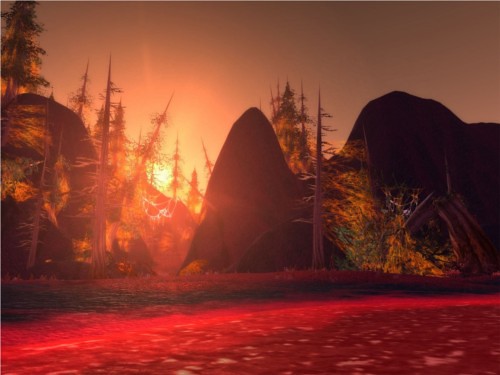
The first album from the Emo rock band ‘Panic! At the Disco’ has been stamped into my brain to such a degree that, if I can’t quite remember all the words, I can certainly always sing the melody. Also, whenever it’s played, a strange phenomenon occurs in my brain as it stirs up memories of a place far, far away from anywhere I have actually ever been. For me the album ‘A Fever You Can’t Sweat Out’ will always remind me of the crimson shores of Bloodmyst Isle, and a young Warrior in his low teens named Davetwo.


Back in the day I was a pretty serious WoW player, spending as much as 10-12 hours a day playing if given the chance and while I was levelling up my third character towards the goal of level 70 I also fell head over heels for Panic! At The Disco. The album was on massive high repeat, not entirely unlike the act of ‘grinding’ for XP. As an indication of just how much I listened to that album at the time, for a period of about a month I would often lie in bed awake at night listening to the album just because it was so infectious. I am frequently go on what Dan Bruno has called ‘bingeing’ on media (he originally applied it to games, but I think it’s an idea that has wider applicability also).


So when I put it on again just the other day it felt like being back there grinding on Blood Elves for XP. The sensation of being in that place was just below the surface, like having a word on the tip of your tongue but for a feeling of place. My response was almost one of synaesthesia in that the music becomes the sensation of ‘being there’ again. Of course, this album is by no means the only example, there was another in particular that also reminded me of Un’Goro Crater (another World of Warcraft zone) which I can’t recall right now but will probably recognise instantly the next time I hear it. And if this sort of thing is purely the result of the confluence of music and game levels then Metronomy’s ‘Nights Out’ album will remind me of my GoW2 marathon of the other night…


But I suspect Metronomy will be saved from that rather unfortunate fate for the time being. For starters, GoW2 wasn’t memorable enough (more on that a bit later), and there probably wasn’t enough repetition to ingrain the ‘location’ with the music into my brain. And in that sense, WoW is perhaps a stellar candidate for this kind of musical/locational imprinting because a player often spends long periods of time in one particular location doing highly repetitive tasks.


Another album that reminds me of a game level is ‘Lost in the sound of separation’ by Underoath (possibly the best album to Audiosurf to ever). There is a particular part in the 4th track of the album, where the cacophony cuts back to primarily the sound of the hi-hat beating out a straight rhythm. After having been barrelling along at 100mph the track comes to a period of relative calm (a flat area in the track) and it undulates up and down beneath you in time to the hi-hat. It’s quite memorable to the point that now whenever I hear that part of the song I see the track hopping up and down madly in time to the hi-hat in my mind, even if I’m not playing Audiosurf. However, Audiosurf is probably unique in that it renders levels unique for each song in a way that is generally representative of the song itself. Whether this improves the chances of imprinting the level/music combo, I have no idea, but the game also encourages replaying songs over with its scoring system.


I’m sure if I took the time I could think of a bunch more examples of non-game music reminding me of a place in a game, but the important fact is that the phenomenon happens at all. Videogame ‘levels’ are as real to my brain as ‘physical’ places.


Care to share a similar occurrence of game bingeing mixed with music bingeing? I’d love to hear about your own extra-game musical experiences if you have any. Let’s see if we can’t find some patterns about when and how they occur and whether it really is just as simple as plenty of repetition.


Wednesday, 7 January 2009

Marty O'Donnell in Interview - Part 4


In this, probably the longest single post of the series, Marty explains the relationship between music and location as well as how much of the music he composes in response to the level. Then, in perhaps my favourite part of the interview, Marty answers my question about why he didn’t (and still doesn’t) allow players to change the volume of the music and sound in the Halo games, resulting in a passionate response about the issue of player control vs. designer control.


Ben: So, the way Halo has used music… it seems like music is triggered based on location or events. So you crest the top of a hill and that particular string piece plays or something like that. I’m interested to know, how much of the level did you know was going to be there when you started writing and when you started recording?


Marty: I’m not sure if I could say what the percentage is… but the majority of the music is written because of what’s happening in the levels. Sometimes I’ve already made what we call music tags, tags that work a certain way or have certain variations within them or certain intensities, I know I can go from here to here. I have these music pieces that are built that will respond in certain ways and I’m building them while I’m watching what the level designers are doing.

But then before I actually implement the music or finish even recording the music, the levels are pretty much done and scripted. So we have what we call trigger volumes. Events will be triggered based on what the player’s doing, or the location of the player, or how much time the players spent. You can pick a trigger and we can trigger something off of it. Pick some event that can happen in real time and we can anticipate it and put in a condition that will be aware of that thing.

So any of those triggers I can decide, this would be a perfect point to start a piece of music, stop a piece of music, change a piece of music, overlay some other piece of music, you name it.

And because I’m sitting and working with the designers all the time, basically, I sit with them and say ‘what are you intending to do in this level, what is the emotional journey you want the payer to have from here to her to here, [etc]’ and then we just keep working that out and that’s when the music is finalized, sometimes it’s composed from scratch from those discussions, sometimes it’s music that I’ve already sort of already anticipated would be useful and I try using it in certain situations. It’s probably half & half in terms of how much music is composed prior to the level being completed and how much is composed after the level is completed and designed.


B: I also read in an interview with you, that you deliberately decided not to let the player fiddle with the volume of the music and the mix. I thought that was a really interesting choice.


M: That goes all the way back to Halo 1, you’re right.


B: And I didn’t even know as well, I’d never gone to look for it until I had started my analysis for it, and tried to turn it up so I could hear it over the noise of a tank. Is that choice related to you want to have that composer control?


M: *laughs* Probably, I think my genetic makeup is ‘I’m a composer’ but I like technology, I love games and I play games and I help design games, but… yeah, my DNA is as a composer and composers are primarily control guys. Even more than that is that I want people to have a really great experience. It’s as though I was a chef and, look, I’m making a really great meal and if the first thing somebody does when I serve them is they pour ketchup all over it or salt all over it, I’m like ‘wait a minute! You’re not tasting what I prepared. Now, if someone tastes it and goes ‘wow this tastes like crap, I need ketchup’ then fine. What I didn’t like was people, especially game players, have gotten into a habit that they should have control over all these things and basically I’m saying, you know what, no – you shouldn’t. What you should do is, play my game and if you hate it you should return it. *laughs* You should stop playing it. But I don’t want you to return it because you poured ketchup on it right away.

“If the very first thing people do, and which I’ve seen people do, is they change the mix before they even play through the game… my suggestion was, hey I have no problem giving people control over the entire mix of the game, that’s fine, I want to give you control of the entire mix of the game, however I’d like you to earn that right *laughs* and I would like the technology to be… play the game my way once, and then you unlock the mixing console and now you can go back and play the game again… but at least I know at least one time you heard it and experienced it the way I like it… I’m not even saying it’s the right way, I’m just saying this is what my vision was. So, what I don’t want-- people go ‘hey you know I had a really crappy audio experience’ and then I say ‘really?’ And they go ‘Yeah, well of course I turned the sound effects all the way up and I couldn’t hear the music’. It’s sorta like, well that’s not the experience I gave you so… On none of the games I’ve been able to convince the technologists at Bungie that we have to have a mixing console for the fans that is only implemented after they have completed the game. I would love to have that, in all honesty I think that would be ideal because then at least I know they would be experiencing the game the way I like it, and I hope they like it, and then they can play around with it to their hearts content.

But it’s sorta like going to a movie theatre and saying “I always like dialogue louder, so even before I watch this movie I want the projectionist to turn the dialogue up”, and that’s just not the way we see movies. And here’s the problem, as a passive audience member in a movie you’re just are expecting that you’re going to hear the mix that people wanted you to hear, and most of the time you say, wow either I loved that movie and I love the mix or I didn’t, but you don’t have this expectation that you’re gonna be able to control that. I don’t think it’s necessarily think it’s a good thing for game-players to think that they should have control over every parameter of a game.

You might as well say ‘hey, if you want to, change everything that’s red to green – because you prefer green. …And no one says the artists are control freaks, even though, trust me, artists are way more control freaks than composers, but that’s just my opinion. *laughs* But no ones expecting that you should be able to choose your own colour palette, unless you’re doing something like Little Big Planet which is a game which is all about the sand box, which is all about you creating your own characters and lighting and fog and textures and you name it. But basically you’re still giving players a controlled palette that designers have already decided… here’s the sandbox, and here’s the parameters we believe are fun to play in, go play.

Anyway, that’s a long answer to your question but that’s why I did that thing about the mix. Very, very few people have complained to me about not being able to mix Halo games their way. I have had some people complain and I apologise I say well that just wasn’t my intent and if you didn’t enjoy it then you didn’t enjoy my mix, and I understand that but…


B: Wow, that’s hard to believe that anyone would complain.


M: Well no I’ve had it don’t worry. *laughs* And I apologised, but at least I know they are complaining about… they don’t like my vision of the audio. They’re not just having a bad experience because they happened to set a fader badly. To most players they don’t know the difference between ‘I intended them to have this experience’ or ‘they inadvertently caused the experience to the bad’ all they remember is the bad experience.


B: Yeah that’s interesting. I had a funny experience with Bioshock at the end of last year, I put it in and I started playing and I went “The music is too loud!” because I couldn’t hear anything else, so I was really glad I could turn it down. So I guess that’s the trade-off, you’ve got to be confidents that you’ve set it all right.


M: Yeah… I mean it’s like… I make the trailers and so forth too for Halo games and no one thinks twice about… we work forever on a the final mix, right. If you’re seeing a linear trailer you’re seeing the mix… no one has the expectation that you’re going to watch a trailer and turn the music up or the dialogue down or turn the effects up or whatever and change the mix… I don’t think it’s necessarily the right expectation to have in a game. Certainly if they have that expectation it’s because they’ve been forced to use it too many times which means that’s a failure of the audio designers because they haven’t done good mixes.

Now, the caveat to that is, I believe the tradition started especially on the PC because, back in the day when you played games on PC’s everybody had different sound cards, and the audio designers could not know what the persons final experience would be, they had no clue. So they had to give all those faders and switches and sliders to people because they knew everybody’s experience was going to automatically be different. So, for me, I understand why it started, I think it’s just a bad habit. And to some extent I think it’s gotten game designers and audio designer people for games a little sloppy because they just feel like, ‘we can just throw a pile of music in there and not have to think about mixing it in, and they can throw a bunch of sound effects in and have all the sound effects normalized and unnaturally loud because they figure ‘well, people will just turn it up and down according to their preference.’ And I think that’s just not how you mix anything.

I would rather actually spend the time trying to do as good a mix as I possibly can, and then having the fans say ‘I love the game, I loved the audio’ or ‘I loved the game but the music was too soft, or the music was too loud.’ And I learn from that, most people didn’t like the mix or whatever. So far I’ve been OK.

But you see what I’m saying? What happens with gamers is they tend to think, well this is an interactive medium and that means that as the player I should have control over everything… and to me I’m thinking, you know what, no, not really… the game designer is making a game and trying to make a cool experience for you and there are going to be a lot of interactive parts to the game but it’s still… I don’t know if you’re religious at all… but it’s like Calvinism, the idea that there is a sovereign God, or there’s man’s free will, right. Well, in the game universe, the game designer is basically like God, but we want the player to believe they have free will, believe they are truly making choices but really we’re sort of God in the background saying ‘yeah you’re gonna have this illusion of free will but we know where you are, we know what you’re doing and you’re never going to get through that door no matter what you do *laughs* but here’s 5 other doors that you can choose any order you want to.”


B: Yeah, I guess the skill is in… well its sorta negative connotations to it, but manipulating the player.


M: No, no, we manipulate, no doubt about it. And frankly think about it, well you can think about it however you want, let me put it this way. You have a tribe of people. No technology at all. And everyone sits around the campfire and everyone can tell a story. Well, after a couple weeks, that tribe of people is gonna say, hey lets have Fred tell the story tonight because he always tells good stories. Just because we all have the ability or we all have the right to tell our own story… some of us are just not that good at telling stories. So certain people in the tribe become the storytellers and become the shamans, and that’s just the way people are.

Just because we say ‘hey, here’s a game and you can tell your own story’, well guess what – people don’t really want that because… probably most people tell kinda boring stories… they still want to be entertained, and to be entertained you have to have someone who’s entertaining behind it.”

Yeah that’s my philosophy, trust me I’m not necessarily right, it’s just what I think. *laughs*


In the next part, I ask Marty about musical scoring in multiplayer and why he doesn’t think it’s currently necessary, and what it would take to convince him otherwise.

Sunday, 28 December 2008

Gonzo Pt 2 - Return of the Shark


I’ve torn up two other introductions to this piece already, so this is as good a start as any. I’m mildly drunk as I’m writing this (gonzo) and feeling rather quite ill – but I think it’s more to do with my intolerance to lactose than to any real level of alcohol poisoning. Then again, what do I know, I’m feeling very stupid and ignorant right now which is probably less of a delusion than the regular brand of self satisfaction. I could probably power a small car off that thing – like that episode in the Simpsons with the inventor who is so proud of his Green Cred that he invented a car to run of his own satisfaction. Yeah, I could be that guy, but not right now because my stomach is reminding me that I’m mortal and my throat has a minty taste in it that is making me feel like retching.


And I’ve blown my lead on 2:44 am post-drinking un-wellness. Thompson would be proud. And honest to goodness, after finishing that sentence I just rushed off to the bathroom in a fit of nausea.


So – videogames. Sexy, Sexy Leigh Alexander mentioned over twitter just the other day how tired she was of talking about, writing about, thinking about, even playing videogames. And I must confess to a brief spell of the same – except that I’m not over writing about them, which has become more and more fun as I’ve gone along, while still somewhat being less excited about playing them (or some of them at least). Probably a fair bit to do with how much fun it is to write in the Gonzo style, and while done poorly it is massively self-indulgent, when good it’s great. In this follow up to my first (moderately well received) Gonzo piece I had thought to go deep gonzo in some serious game from the recent past. L.B. Jeffries (Hey L.B., we need to drink together some time!) of the Banana Pepper Martini’s blog and the moving pixels blog, gently directed me in the direction of Braid which I would be more than happy to do except I don’t want to spend the money (This is not a hint for someone to buy the game and gift it to me – that has already happened far too often in times past and I really don’t think that sort of thing should be encouraged. Or at least I should not be encouraged in that manner – it’ll just delay the onset of the ruthless urgency to find gainful employment that I know has to come soon).


My next thought was Fallout 3. But that’s almost too easy a target for batshit insanity, so I thought I’d pass. Also I don’t really like Fallout 3, so any excuse will do. I also briefly considered Bioshock, because it’s a pretty decent game (I also owe Michael Abbott a game review for it – but that’s neither here nor there) and seemed to possess enough of the requisite chin-strokey seriousness that a gonzo style dive piece would benefit from in its subject. It’s certainly long enough to generate some hilarious anecdotes that I’m sure could benefit enormously from a bit of hyper-inflation and dramatic retelling from the first person. However, like Fallout 3, I didn’t really enjoy Bioshock all that much – certainly not to the same extent as many, many fellow game bloggers. Actually, on second thoughts, maybe that’s a decent enough reason in itself – perhaps it’s a way for me to get into the game from a different perspective, or to vilify it and explain why as I seem to recall it didn’t manage to live up to the hype for me. How much was hype affecting me the first time I played it? I’d hazard a guess quite a fair lot actually. Hype, as a target in itself, is probably more than well overdue of a seriously trippin’ expose piece.


But maybe not right now. The third game I thought of and which I’m probably most inclined to actually pursue is Prince of Persia: the Sands of Time. Yes, the classic game which just received a rather iffy reboot/sequel recently, because it seems to me that game has been praised quite a bit and often without much of a clear articulation of what’s so great about it… but then, that’s not even really the point of a gonzo piece is it? It’s not supposed to praise a game, nor to analyse (unless you had a marvelous experience with it and there’s a great story to tell). It’s more about mulling over and relating to a reader as intimate a sense of the experience as can possibly be rendered unto text. It’s a skill I feel I’m getting a little better at and even if I’m not noticeably improving, like I said, it’s still hella fun. There’s a reason Thompson stuck to it like some suitably sticky metaphor.


So my last idea was to do something on Spore, that procedural wunderkind that sprung from the mental loins of Will Wright. Spore is crazy. Sharkbite & Powershot crazy. The amount of soft-core Sporn creatures out there is truly staggering, but unless I want to feel the wrath of the EA Banhammer I think I’ll stay away from them. But I do think that making a landshark and walking around eating other procedural monstrosities could be fun, if only for a while. And the procedural music in Spore is pretty awesome too – there’s a post in me about that, somewhere. Actually, if it had come out early enough, and if I’d played it, it could seriously have gone into my thesis for an extra 1,000 words over my limit, just because it’s so close to this imaginary ‘ideal’ that I had for videogame music. The fact that the music in particular didn’t exactly make massive waves in the industry is not a very encouraging sign. Still, if a company wants to hire’s me (even freelance/contractor style) I’d be happy to write you a paper on why the music was so good. Hell I’ll probably end up doing that for free before long, David Carlton just finished Spore and was looking for more posts on the game. And I’m a sucker for any guaranteed readers something’ll get me.


Which is all a long winded way of saying that I don’t really know what game exactly I’ll be putting on my wizard hat and cloak for, this coming week. Be sure that when this author does, however, it’ll probably be somewhat slapdash, substandard and of questionable literary merit.


Yeap, I’m pretty sure it was the milk that did it earlier because that lacteeze tablet I took has worked like a charm. Now I think I can go to bed and sleep until I wake up. Bloody hell it feels good not to have chills from suppressing the urge to retch.