Showing posts with label Friends of SLRC. Show all posts

Wednesday, 17 February 2010

SLRC is dead! Long live SLRC!

At 2:39am on January 26th, SLRC died. (tl;rd - New blog/website here.)

SLRC knew it had died because a number of things tipped it off. Primarily, the reasons for its existence at the time of its inception were no longer applicable. The spirit of the thing had departed it. For the benefit of any readers who joined since, say, the start of 2009, SLRC started life as a place to write about music and sound and videogames. And also as a place to write specifically about the videogames I personally was interested in; games like System Shock 2, which at the time of writing in November 07, I felt had not received its share of critical attention in the critical-games blogosphere.

A lot of that naturally had much more to do with my lack of breadth in reading and awareness of the field than it did any failing on the part of the community. To get an idea of how much has been written about even SS2, before and since SLRC started, check out the results for a quick search on Simon Ferrari’s Game Blog search engine, or on Michel McBride’s own variation on the same (they’re both great resources, by the way, and deserve more attention and use than they seem to have attracted so far). SLRC seems to have both naturally and productively drifted away from these early aims and morphed into something completely different.

And that was the first tip-off that it was perhaps time to retire the old blog, coming as it did late last year. The second came just as subtly but much more recently as a growing malaise and uncertainty about videogames blogging qua blogging. I’ve been reading Geert Lovink’s ‘Zero Comments: Blogging and Critical Internet Culture’ these past few weeks and in his opening chapter he positions blogging as a ‘creative nihilism’. I’m finding that thought increasingly attractive and pertinent the more time I spend with it.

As bloggers and technology-using types, we like to imagine that technology is meaning agnostic, that it’s whatever we make of it that counts, or more importantly that we are in charge of what we make of it. But the truth is less certain. It is becoming increasingly obvious that technology imposes its own logic, its own way of doing things, and that can both resist as well as reinforce hegemony. As Lovink says,

“Blogs fix the social in a specific manner. These techno-fixes are not neutral; they reflect the broader cultural atmosphere of our time.” (p.2)

On a similar note, Danah Boyd has spent a number of years researching the different ways that online social technology interacts with real-world societies. In her case it was American teens and how MySpace/Facebook, etc divided along class lines.

So blogging is not a medium devoid of cultural and social baggage. Things that a given site allows for, like reader comments, ‘fix the social in a specific manner’ as it were. We tend to say that blogging is a ‘democratising’ force and celebrate the way it empowers people who have something to say, but we pay less attention to the attendant downside which is, as Lovink points out, that;

“as much as democratization means engaged citizens, it also implies normalization (as in the setting of norms) and banalization. We can’t separate these elements and only enjoy the interesting bits.” (p.4)

So whether we like it or not, and whether it is intentional or not, blogging changes things. Michael Walbridge wrote recently about his own first hand experience with the world of games journalism post-these changes – i.e. “making it” as a videogame journalist is not only increasingly hard, but it’s also looking more and more like a mugs game. There’s just no money in it, and the fact of the matter is that when people as brilliant and talented as Michael Abbott, or David Carlton, or LB Jeffries, or Wes Erdelak are all willing to give away their stuff online for free why would anyone pay for it? Heck, if Tom Bissell can’t make a buck at games journalism now that Crispy Gamer has folded what hope is there for the rest of us? As numerous influential people have piped up to say in the comments to Michael Walbridge’s piece, the field is getting overcrowded. In the final tally, blogging and, by inference, us lot are complicit in bringing about the demise of print journalism and old media structures (hooray!) with a million bleeding cuts in the form of our brilliant blog posts.

But this is by no means the only (or even the major) reason that I’m not going to ‘blog’ anymore in the way I have been doing at SLRC for the past two years and five months. The practical differences in what I’m changing may be relatively minor, but I feel like they are a gesture that should be made nontheless. They are encompassed tidily by this speculation by Lovink, who suggests that when blogs have reached their peak and subsided,

“most likely the social aspect of blogs will be phased out and developed elsewhere into other products, leaving blogs to perform the introspective duty of the online diary.” (p.29)

Hello Facebook!, Hello Twitter!, my new friends. We are enjoying our new time together, and I’d invite you to join us – friend me on Facebook and gain regular access to all the strange and wonderful links I pull from all across the internet with my network tendrils. Or catch up on them via RSS if that’s still your thing (it’s becoming less and less mine – there’s just too much stuff). Unless you’re one of the few established videogame blogs (Hi Michael Abbott! Hi Mitch Krpata! Hi Corvus Elrod! You guys are seriously wonderful) trying to build a big and thoughtful community on a new site it feels like a folly similar to the abovementioned breaking into games journalism. And why would I even need to bother trying when I've got Facebook and twitter right here already? What’s to stop you from using Facebook as a blog? I seriously considered it but decided that I'd have to compromise a bit too much of my personal information (pictures, statuses, etc) to make it worthwhile, but everyday it seems there are new and excitingly customisable privacy settings.

I also find a lot of value and not an insignificant amount of personal satisfaction in posting links on Facebook, not least of all because I’ve gained something of a reputation amongst friends as always posting quality links, but because very nearly everyone I know and whose opinion I care about is on Facebook already. It's also very convenient and works just like a blog with an archive for links and the aforementioned RSS feed and everything.

So my blogging is becoming more like diary keeping, and Facebook/Twitter are taking over the social aspect of the equation. Obviously, as a writer I am compelled to keep writing things, but SLRC is no longer the place for them.

The important question now becomes what, or more importantly where, is this new blog I’ve been keeping for stuff that doesn't go to Twitter/Facebook? Right now it’s located at http://iam.benabraham.net and I’ve been writing there for much of February 2010 already. Unlike SLRC it’s not restricted to publishing important essays or creative stories, etc, etc and is more ordinary, like an diary, and more flexible in subject matter – I also plan on using it to store up and write-out ideas for my PhD research (which I’m already super excited about doing by the way).

In the past, I’ve always gotten a lot of the mileage out of being able to write out related tangents and seeing where they lead, but SLRC was never the place for that. Exploring tangents and experimental connections are, for me at least, a useful strategy for getting at The New. One of the very first things impressed upon our cohort at the start of honours research in 2008 was that you simply cannot predict where The New is or where you’ll find it in your research. Which may sound trite and obvious to some, but could also be completely backwards and counterintuitive to others. I think that it’s almost certainly not such an obvious fact given that so much of our society and our collective time is spent rehashing, renewing, refocussing and refining pre-existing ideas. I guess that’s a reasonably successful strategy, but it seems to only get us so far. After all, if we knew where to find The New or if it were completely mapped out, it wouldn’t really be New anymore would it?

All that aside, in keeping with the phasing out of social aspects as mentioned by Lovink, ben abraham dot net doesn’t allow comments. As allude to above, I’m not out to build a community, but just to keep a diary. Doing away with the now ubiquitous “add a comment” feature is just another way to “fix the social in a specific manner”, and in this case do something to push-back against the author-reader-commenter relationships established by blogs as the De Facto operating mode for the internet. If you’re after the social, join Facebook, join twitter and you’ll find me easy enough. If you want to read the online diary, go have a look and maybe get the RSS or catch up infrequently whenever you remember to load up the site. Since it’s becoming my go-to place for my writing, I'll probably write my GDC trip in March there. The new format should be conducive to some good stuff.

I will leave SLRC with a last line from Byron that I read in a great book recently. See you around.

-- Ben Abraham, 17th February, 2009.

Fare thee well! and if for ever,
Still for ever, fare thee well.

Thursday, 26 February 2009

Guest Rant: Turning The Other Cheek


The following piece was written by a friend of mine and I offered to post it on my blog if he could get the thing down in print. Follows is Tim's rant about realism, immersion and convincing game AI.


I am a fan of Control Alt Delete comics. I am also a fan of Call of Duty 4. Recently Tim Buckley, author & artist of CAD, made a comic joking about Killzone 2. To anyone who has read this comic my rant will make sense...or at least more sense than otherwise. (So go read it – Ed.) Regardless it did bring up the question, to my mind, of why game AI designed to respond tactically to a player’s skill or playing style, which is attempting to mimic the real world, would in the comics situation just send more troops in to die. Now true enough; if one man with a gun runs into a military facility then sending in a squad of heavily armed troops may be entirely appropriate as a response, but seriously, how many men can be sacrificed before someone says, "OK...lets just lock him in and flood the building with poisonous gas”.


Sure that may be overkill, but considering how many people (virtual people) die every time I play Far Cry 2, its curious that one man can make it the distance in a computer game without being nuked, without being murdered by the very factions I’m betraying. The commanders of these armies must be lunatics to think that a guy who has already killed many, many of their soldiers or security guards is going to have trouble if you just send in another 10.


It's then somewhat surprising these games can create and hold any sense of immersion. Sure we'd all love to see ourselves in a fantasy, an unstoppable force of good or evil or ponies...whatever you stand for – that doesn’t change the fact that no single person could possibly do the sorts of things we achieve in the virtual world. This is not to say games should make all characters week and venerable cowards who run in fear at the first site of an enemy...thought that did work for Mirrors Edge. But it is to say, why are game developer’s still obsessed with creating a sense of realism when the point of these games is often to escape the real world.


And this brings me to why I love Call of Duty 4. Any game that Nukes the player character halfway through the story is good in my books. Still, wouldn't it be nice to return to the good old days of Sonic the Hedgehog where you could die horribly by drowning but before that happened, you got bright colours and a gameshow countdown timer to bring it about, rather than horrifying orchestral music and 8 shades of gray?

- Tim.


Thursday, 5 February 2009

In reply to Clint Hocking and Michael Abbott


An issue that’s been floating around the videogame blogs recently is that of spoiling a game’s story for other players, whether or not that’s important, and similarly whether or not it’s possible to spoil a games actual mechanics for another player.


The issue was first raised by Michael Abbott in his post, ‘The spoiler ball and chain’ in which was pointed out that if you’re going to talk seriously about a game and what it means, what it says, how it says it, then you’re probably going to have to assume a certain level of knowledge on the part of your reader.


And then in the comments thread CLINT HOCKING showed up to spoil the party. (I kid! Clint is a consummate professional) The point he was making was that ‘story’ or anything the player doesn’t actually have control over isn’t really part of the ‘game’. Here’s the important part of what he said, in full:

Here's a more pertinent question though - why are we even really concerned with giving away details of the PLOT in a video game. Elika doesn't die in PoP. There is no Elika, there is no Death of Elika, because there is no choice, there is no GAME there. The villain in CoD4 doesn't get his arm sniped off by a BAD SHOT, he gets his arm sniped off by an imposed narrative. The weakness of Passage is that the death of the wife is purely narrative, and the moving elements of the experience of Passage are the narrative ones. Telling the player these 'plot secrets' does nothing at all to impact the experience of the GAME in my opinion (you may still find these things moving, but they are not games, they are stories).


What I really like about this idea is that it is reflective of the school of thought that says games are interactive and everything else is secondary to the ‘game’. Which is a perspective I can see has a lot of validity – however on the other hand, you have Michael Abbott who steadfastly refuses to believe that story has necessarily be ‘tacked on’ to a game as some kind of garnish, which also seems like quite a sensible idea.


My initial sense is that it comes from conceptions of ‘game’ somewhat running at cross purposes. Specifically, differing conceptions of what is and is not extraneous to the actual ‘game’, which is an issue that Jesper Juul discusses in depth in his book Half-Real. In it, Juul offers a view of games as pared back as they come – essentially describing them as rule systems. However, he also acknowledges that equally important is the aesthetics or ‘fiction’ placed on top of those rules, which often have as much an impact on the actual end-user experience as what the X button on the controller does.


An example: If I were to rip out the music portion of Far Cry 2 and replace it with nothing or something completely irrelevant and jarring, is that not going to change the experience of the game? Of course it is! But has the underlying mechanics of Far Cry 2 actually been changed in any way? Not really, and yet the experience will fundamentally not be the same.


What Hocking says next, after this his initial comment, is quite challenging. He says,

I propose that we put this 'spoiler challenge' to the test - I'd like to see someone write a spoiler that was about a MECHANIC or a DYNAMIC of a game - something that is part of PLAY not part of the STORY, that *actually spoils the game* for me.


Go ahead, try it. Find a game, explain the ways in which the mechanics and dynamics moved you, and write it up so that it ruins my own subjective experience of the game.


I think on this point he’s actually bang on the money – I have never, and don’t ever expect to in the future, have a mechanic spoiled for me by a write up. Why? Because mechanics are truly best experienced, and there is no replacement for first hand experience. Gonzalo Frasca wrote about this issue in his paper Simulation vs. Narrative back in 2003, and he concisely outlined the difference between a simulation and a narrative thusly,

To an external observer, the sequence of signs produced by both the film and the simulation could look exactly the same…but simulation cannot be understood just through its output.


In other words, mechanics (here fungible with simulation) can really only be experienced and any attempts to describe them will be, at best, second hand descriptions without being truly evocative and therefore leaving our imagination with the task of ‘filling in the blanks’ with respect to the actual experience.


As a side note, I think my belief in this idea partly explains why I love New Games Journalism and the whole movement around subjective games writing so much, since I feel it sidesteps the clunky ‘descriptions’ of mechanics and, via the vehicle of creative writing and anecdote, actually gets closer to the mark than even the best of dry mechanical breakdowns. So I believe that Hocking is right in that you probably can’t spoil a mechanic any more than you can replace the experience of white water rafting with a story about it. Even if that story is a cracking good yarn, it’s never going to be able to get you wet.


The ironic part in all this is that while Hocking seems to really get the ‘experiencing mechanics’ issue, he seems to have (with this comment at least) ignored the fact that no matter how trivial the ‘fiction’ (as Juul would put it) or ‘content’ (as game developers would put it) of a game may seem in comparison to the mechanics it still remains important. Exactly how important, I have a hunch, is probably different from person to person as evidenced by the strong reaction provoked in Michael Abbott at the announcement of the somewhat “tacked on” nature of the narrative component of the latest downloadable content for the new Prince of Persia title. And that’s actually a feeling I can somewhat empathise with – the few extra missions released to add more story to my favorite game Far Cry 2 were more than welcome additions, and I wouldn’t want to see the story ruined or altered seriously like Michael seems to is the case. But since it’s also probably a bit less important for me, I’m not sure I’d see it as the ‘betrayal’ he feels it is.


So that’s what I think – Hocking’s right in that mechanics can’t be ruined because, like they say, there’s no substitute for the real thing. But on the other hand, story isn’t irrelevant to videogames either – it’s obviously not the core of them and there’s certainly plenty of future potential for growth in the area of making interactive stories, but I wouldn’t want to cut the idea off entirely. Then again, is it really a story if it’s interactive? Actually, I’ll leave that kind of discussion to the Corvus’ of the 'sphere, I think.


Wednesday, 31 December 2008

From Go to Woe - Only The Best of SLRC in '08


Two Thousand and Eight in the year of our Lord was the year SLRC really entered its stride. While the URL of ‘drgamelove.blogspot.com’ was officially claimed in October of Oh-Seven, the first real piece of writing on the blog that says anything worth reading was the April ‘08 Round Table entry ‘Starcraft and the power of 3’s’. Off to a slightly shaky start, the piece was roughly shoe-horned into the round table topic of the month but was ostensibly targeting the potential within asynchronous gameplay.


Actually, there was a small piece buried in the earlier fluff that pointed towards the future direction of the blog – a post about how System Shock 2 is a bit skewed towards the hacker/navy career path. I think that I was actually wrong in saying that though (even if I didn’t exactly test the alternatives in practice), but I’d be interested in hearing other tales from SS2 players, if only because it’s such a classic (and dare I say canonical?) game. Its influence on the hallowed Bioshock is deeply profound and obvious to any veteran of the earlier ‘Shock game.


In May, while researching my thesis I attended the “first ever academic conference held in World of Warcraft” and then promptly cancelled my subscription. I never did go back for Wrath. Also in May, I presented to my honours class, a seminar on immersion in videogames and took an Xbox with me to show them all Call of Duty 4. Immersion is an interesting topic, and the class members were most familiar with literary comparisons – an interesting counterpoint to my own reliance on CLINT HOCKING and Chris Crawford for theories of videogame immersion.


In June I created the ‘Things-to-do-while-you-should be working on your thesis’ tag, which was first applied to one of my most enduringly popular posts ‘10 Free Indie Games to play while not working on your thesis’, although… it seems I never applied that tag to that actual post. Nevertheless, it fits, and it has been consistently a popular search result on Google for ‘Free Indie Games’. Also in June, I blogged what is possibly my longest post ever, ‘A post for Xenia: Simulation and an apologetic explanation of Super Columbine Massacre RPG’. Which was probably the first post of mine to gain some real traction in the blog-o-sphere, going purely on comments. L.B. Jeffries managed to succinctly sum up my argument saying,

If I'm reading you right...the basic idea is that instead of making a bunch of events to experience the creator should instead be creating a bunch of reactions to the player.


Which would have only been so much easier if I had just said that, but then it might not have been as persuasive? Who’s to know. It was also an important landmark for SLRC because it really hints at the focus of most of my analysis and player/experience centric-criticism for the rest of the year. These are the things that ‘I’m Quite Interested In’.


July was almost a non-starter, busy as I was with thesis coursework, but I managed to squeeze out a post asking the question ‘Should we aim for some sort of rating system for indie games?’ after I introduced DEATH WORM to a bunch of 6-10 year olds to general hilarity.


In August, I wrote up what eventually became the motivating question for my thesis – why do game developers think a linear medium like music can just be shoved into a nonlinear videogame? – in the post ‘Videogames and Digital Musicians’.


September opened with the cracking ‘What speaks to me the most’, a post all about my inclination towards the ‘tourist’ player type in Mitch Krpata’s New Taxonomy of Gamers, the spiritual successor to Richard Bartle’s earlier ‘taxonomy of MUD players’. Expanding on that idea and partially in response to a post by Corvus Elrod adressing player preference for first person or third person camera, I wrote ‘The peaks and perils of first person camera’. An interesting foreshadowing of things to come – in it I mentioned a Game Set Watch column which pointed out how ‘innovative’ the latest Alone in the Dark game’s mechanic of forcing you to check your body for injuries was. Almost in answer to my criticism of AitD (Why would you need to know where to heal yourself if you are actually in this body?), Far Cry 2 would later in the year present a similar focus on embodiment minus the need to ‘discover’ where you were injured. In the rest of the month of September, I wrote about ‘The Affect Discussion’ which still hasn’t really been addressed adequately by videogame critics or proponents, and did a back-and-forth retrospective with an old friend of mine in a retrospective on the classic computergame-making-game ZZT.


If April was SLRC’s beginning, October was the month in which we could finally say ‘SLRC has arrived’. The big announcement in it was the completion of my thesis, but it was quickly overshadowed by, first, my second ever contribution to the Blogs of the Round Table ‘Playing Halo with my Mother’ and later by my initial burst of enthusiasm for Far Cry 2. The initial pre-game discussion in ‘Why I’m so Fracking excited about Far Cry 2’ was quickly followed by ‘Far Cry 2: Wrongs and Rights’ in which I had my first encounter with a game designer In The Wild when CLINT HOCKING stopped by the blog to thank me for the attention paid to his game. I then tried to pry myself away from Far Cry 2 to play Fable 2 with a rather scathing result, and at around which point SLRC celebrated its technical First Birthday. October rocketed home with ‘War Stories from Mosate Soleo’ leading the charge, followed up close behind by a quick photo-journey through Far Cry 2 (which has sadly since been broken by my flickr reorganisation). Finally October culminated in the Magnum Opus ‘Hocking’s Masterpiece’ which has been rather widely linked to as an excellent example of SMART fanboyishness.


Ah, November, what a month. If I had to pinpoint the onset of The Madness it would be somewhere in November. Two Posts about Valve’s Left 4 Dead added a distinctly metallic taste to the month and with the additional arrival of Fallout 3 it became a bit of a clusterfrak. Far Cry 2 had well and truly ruined me for any and all future games with Fallout 3 not surviving the comparison with honour intact. However, with the posting of this rather vitriolic diatribe against its rather flaccid ending (which was supposed to be more entertainingly ironic than I think the post it ended up) I think I needed to straighten-up and fly right by criticizing a rather less easy target. And perhaps a little more coherently. Which I did when I got annoyed by the vapid portrayal of ‘the moustache twirling evil doer’ character, Mister Burke and pointed out how he should have been more Heath Ledger and less Jack Nicholson. And there’s was a photo of a scorpion stuck on a fence! Giggle!


Which leads into December, wherein The Madness reaches a head – starting with ‘Frank Bilders is Dead’, a first person perspective piece. Look ma’, I’m in a vidjagame! Erm… I also posted a review for a game that came out two months prior, and with which I was right pleased (the review, not the game: that as pretty dumb) – here’s to more videogame review gigs! Then I wrote what I felt was perhaps a slightly overlooked piece on Far Cry 2I have two hands and with them I touch the world’, which (I thought at least) was Pretty Smashing Actually and all about the difference having hands as the central embodiment of the avatar made over traditional FPS gun-centrism. Around that time the whole ‘Games Journalism Journalism’ trend fired up again (lead by Mister Snappy Gamer and his Angry Internet Man impersonations) and I had to have a go myself – writing to criticize the trend of talking about games and mechanics as though it was more maths than art. Yes that touched a bit of a nerve, but the cool was kept. I’m just much more into the experience and the subjective (done well) – and this could not be made plainer than by my ‘Going Gonzo’ piece. In December I also finally got my thesis marks (86 – High Distinction, just) and posted the full text for all and sundry. With that, I started posting the (exceptionally long, but terribly worthwhile) transcript of my interview with Marty O’Donnell – composer and Audio Director of the Halo series. It’s going to run to about 7 or 8 parts, but I promise, it’s totally worth a read. Shortly thereafter (and just to fill in a posting gap, I might add) I re-posted a lightly edited excerpt from my honours thesis, ‘Audiosurf – Breakfast of Champions’ which swiftly got picked up by Kieron Gillen of Rock Paper Shotgun in linked to in The Sunday Papers. The result was no less than 700 pageloads in the space of a few days. Just going off my own habits, I click through maybe one or two items in RPS’ Sunday Papers weekly, so if I’m at all indicative, their readership is probably quite easily in the 5,000-10,000 reader’s mark. And that’s just their more intellectual and less busy weekend post! Phwoar!


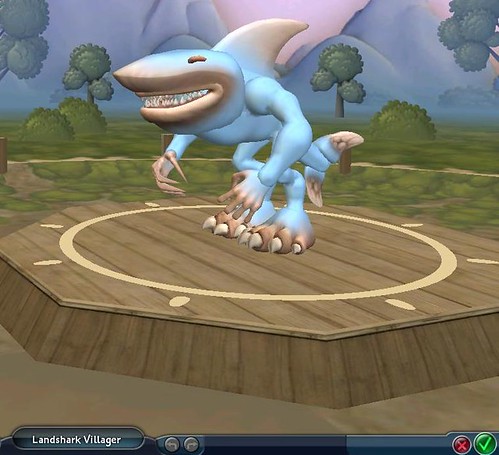
A number that big requires a brand new paragraph to get over, so lets finish the last part of December by mentioning that I was (to my own child like delight) included in Michael Abbott’s wonderful end of year gamers confab epic podcast of legendary proportions. That was an absolute blast to be on and a huge honour to be considered alongside some truly respectable bloggers. Not content to finish the year on such a self-congratulatory note, I then went and followed up with a second Gonzo journalism piece “Gonzo Pt 2 – Return of the Shark”, which was either brilliant or a spectacular failure. And, that’s the only way I’d want it. Look for more of same in early Oh-Nine. Toot-Toot! Last but not least and barely sneaking into 08, I finally got around to playing some more Spore and discussing (if ever so disdainfully) the procedural music in the game, with "Spore 'n' Eno".


Thanks for reading (or even glancing over), all you readers out there. You know who you are and I don’t (but apparently Feed Burner say’s there’s now 60+ of you! Where’d you all come from?!) so you’ll just have to give yourselves a pat on the back for discovering SLRC ‘before it jumped the Shark’. Onwards!, to Twenty-Oh-Nine with nary a backward glance and a slight ringing in the ears. Enjoy the New Year and please drink responsibly.


Monday, 22 December 2008

Featured on The Brainy Gamer Podcast


As a special part of the end-of-year discussion, Michael Abbott of The Brainy Gamer has assembled the whole crew of The Gamers Confab to do a huge round-up of their favorite games of '08. I'm in the second half of the 1st podcast (being 3 in all - there sure are a lot of us bloggers!) and you'll get to hear me rave about the game that I love from this year (the biggest non-secret around I believe) saying such silly things as "In the game the environment almost becomes a character itself...etc". Phew!

Also, a big thank you to Kieron Gillen over at Rock, Paper, Shotgun for linking to my post on Audiosurf yesterday/ earlier today in The Suday Papers. It's very nice to know someone like him is reading (even occasionally) the things I write, and it's a great privelege to be linked to by the boys.

Tuesday, 9 December 2008

Things I don't want to do

N'Gai Croal can have my man-babies. Hi N'Gai!


This post could also be called “Things I’m not particularly good at, and hence largely shy away from”, but that was a bit long I thought. It might also help to keep that in mind while reading.


As a member of the burgeoning blogeratti, us pretentious, occasionally intelligent videogame writers (admittedly a somewhat unknown in comparison to the likes of Michael Abbott, Iroquois Pliskin, Leigh Alexander, N’Gai Croal, etc.) there’s a particular thing that I see others doing and that I struggle to be interested in.


Reading around, I get the sense that there’s a lot of thought being put into things like defining the proper terminology for talking about games; whether that terminology should be specialist or general enough to be inclusive; and what kinds of things need brand new words or explanations. And I really struggle to want be a part of it. And when I stopped to think about it, I wondered if maybe I was onto something.


This is going to run the risk of seeming like I’m calling him out, but Corvus Elrod (whom I greatly respect) has devoted a generous amount of words and blog posts to things like his definition of ‘play’ or the definition of ‘mechanics’. I think the first time I saw it happening I actually did a double take. Does an established word like ‘play’ really need redefinition just solely for the context of videogames? Isn’t just the context of a videogame blog enough for people to generally understand what you mean? If you do think there is a case for it, wouldn’t it perhaps be better to come up with some new and descriptive word rather than repurpose an existing one? Can’t we also by this point assume that many (most?) people who are reading our blogs pretty much know most of the terms and understand what we mean when we say things about a game? Surely they don’t really need us to explain that “videogames involve a player’s input, whereas a movie doesn’t”. If a particular reader doesn’t know that sort of thing already, what are they doing on my blog?! Go out and play some games first! Seriously, shoo! Go play Halo or The Sims – you’ll pick up on that whole player input aspect pretty darn quick, let me tell you. And if my mum can do it, so can you.


James Paul Gee wrote in What videogames have to teach us about learning and literacy that the best videogames, the ones that are successful, actually teach the player about how games work. So why do we in the blogosphere seem to think we have to explain the wheel to our readers? They’ve all played Call of Duty, they’ve know all the tricks. And if they don’t, can we even expect them to understand this interactive medium without experiencing it? Gonzalo Frasca, the granddaddy of academic videogame theory, says that in media that is simulational (videogames), unlike traditional narrative’s with which most people have already had significant exposure to in the form of film, books, etc, you can’t actually come to grips with it from the outside or without experiencing it for yourself.


In another example of the terminology discussion, Iroquois Pliskin (who, again, I greatly admire for his near-overnight rise to prominence and contribution to discussion) in a recent post criticized Clint Hocking’s bastard phrase, ‘ludonarrative dissonance’. He described it as,

“needlessly florid, and…the sort of thing that gives aid and comfort to the people who think that games writin' has gotten too fancy.”


I commented on the post, but I’ll reiterate here – I think ludonarrative dissonance is a fantastic term, and honestly it’s not just because I’m enamoured with the work of Clint Hocking himself (heh). It’s because it’s a term that describes quite exactly a specific occurrence in videogames – one that only occurs in videogames. But hey, just a second ago, wasn’t I advocating against discussing terminology and such? True, but in this instance ludonarrative dissonance is actually a term specific to videogames – unless it involves rules or mechanics that “say” one thing, and a story that says another you can’t get ludonarrative dissonance. There is no potential for ludonarrative dissonance in media like film, so I think it’s quite a valuable term for describing something rather unique to videogames and as such hasn’t really had a name before. And it avoids repurposing old words which, frankly I think is actually doing more to create a specialist vocabulary about games than phrases like the above. In what other context does ‘play’ mean “the self-guided exploration of possibility within a bounded space.”1


Okay, so the counter argument to that all this is, well, look in the dictionary – there’s already a bunch of given meanings for ‘play’ that are all different, some subtly, others wildly. But I don’t think I’m alone in feeling like this is an issue. The recent hoopla over the snappy gamer’s article, which tried to call out fantastic games writers as being “overly intellectual” and ruining it for everyone else, so pooh pooh, made Leigh Alexander comment that, while the author was being a dick, he did kind of have a point.


All of which makes me think that, shock horror, Kieron Gillen and New Games Journalism maybe actually had the right idea. You really, truly can’t dissect a game without reducing it to less than its whole. I just don’t think it works as it fails to capture the essence of what’s really great about games and why we play them. What I believe Gillen was onto with NGJ was identifying and writing about ourselves. Ultimately, people and their reactions, their feelings, their thoughts their stories (which I am also a big fan of, gaming anecdotes [RPS’ Planetside, the 1% and the ‘I was there, man’ syndrome is an amazing example]) are always going to be more interesting to read than a technical breakdown of game mechanics and why the pistol in Halo 1 was overpowered.


So, let’s bring this train wreck to a conclusion – what am I trying to say? Is it misguided to attempt to nail down some important and novel terms and ways of thinking about games? Well, no not really, there’ll always be a place for that. But, if writing about games is going to really truly transcend accusations of ‘over thinking it all’ then I believe the blogosphere has got to stop trying to clinically explain ‘how it is’. Let it go a little more often - go a bit wild. I think the really successful writers are already doing it, and I tip my hat in the direction of Duncan Fyfe and his writing at Hit Self Destruct. Also, Rock, Paper, Shotgun are often exceptionally good at this too.


Lastly, to both the guys who I criticized earlier, please don’t take it personally. Feel free to disagree with me, take my argument apart and show me the gaping flaws in my logic – please tell me if you think I’m aiming way off base. I am eternally thankful that, largely, we’re all an incredibly mature, friendly and thoughtful bunch and that that in itself goes miles towards overcoming any disagreements.

Monday, 29 September 2008

A retrospective of 'ZZT', part Deux

In this post I am having a long-form discussing about a particular videogame with a childhood friend of mine and fellow blogger, Bibliosimius. In this 2 parter we discuss our mutual affection for the game ZZT and it's profound impact on our underdeveloped teenage minds. Part Un, in which we discuss the influence of the aesthetic of ZZT and more, can be found here.


B'simius adds his $.o2:

That's given me another thought. We learn visual art, creative writing, mathematics, "citizenship", all compulsorily in school. What about programming? One could argue that it'd make a good addition to the basic curriculum to give kids a general introduction to the very basic basics of how it all works. Using computer programs is increasingly becoming a part of schooling these days, but what about understanding how they're made? Not so much.


Ben:

Wow, that's such a brilliant idea! I think that kids would also really be into it - I know I would have been. But then again, I was a massive nerd, so... I'm sure there'd need to be classes tailored to skill levels much like the maths and sciences.

You're right that knowing how to use them is about 100 times more important than knowing stuff like how a Hard Disk Drive works (hey, I was under the mistaken impression that there was no magnetism involved until just recently, and I'm OK), so maybe school computer classes should be teaching fundamentals of programming. It also makes sense, because students are currently being taught stuff like how to use specific software packages like Microsoft office and Photoshop, etc, which all go out of date within a year or so. The ideas behind being able to understand programming are so much longer lasting though.


B'Simius:

Absolutely. It comes down to whether we want kids to grow up as good little mechanoids in the social machine or to be informed individuals who actually know how stuff works, and not just how to work it. We want new generations to avoid hardware problems which could be resolved with the dual typicals "Have you tried turning it off and on again?" and "Are you sure it's plugged in?" Understanding basic programming principles could alleviate similarly ridiculous problems with software.

I haven't thought about it from this perspective before, but understanding the basic ZZT-OOP programming paramaters and commands has probably helped me understand a fairly diverse range of electronic applications. I'd be interested in any kind of study into whether understanding the basics makes the complexities more intuitive. I'd more than tentatively guess that it does.


Ben:

Mmm, good points. I don't think it's just an age thing either. My nana in her 80's got her first ever mobile phone recently, although I guess that is more an extension of an existing older technology, but my other grandmother is getting a laptop too, so she can get on the internet.

So, to segue into a neat conclusion - what's the single best thing about ZZT? The Aesthetic? Teaching Programming? Creative Potential? Or even the community of programmers and storytellers that grew up around it?

B'simius:

I'd say that the single best thing about ZZT is all the good times it gave us - it was fun; fun to learn how to use it, fun to collaborate, fun to work individually, fun to share... but that's a matter of opinion. There's a lot in ZZT for a lot of different types.

Single best feature in your opinion?


Ben:

For me probably the creative outlet aspect. I really need to have something like that and ZZT was the first ever thing where I could just be creative without being constrained by lack of skill or talent or equipment or something =P

It's not like there weren't constraints on ZZT (in fact there were lots) but it was the first real "medium" or toolset I ever managed to come to grips with enough to get to the stage of being able to make something that was meaningful to me.

And on that note, thanks for taking a stroll down memory lane with me, B'simius! Feel free to blog about the experience and how librarians can use Facebook threaded conversations, etc on your own blog. And dear readers, may I also encourage you to check out Bibliosimus sometime in the future too.

-------------

That's all for my two part discussion with B'simius, however if people find this format at all interesting (and I quite like it myself) then look out for more posts in a similar vein. If you're looking for Part Un, in which we discuss the influence of the aesthetic of ZZT and more, it can be found here.


Random ZZT Linkdump:

ZZT @ YTMND.com
ZZT In retrovision article at Gay Gamer
Official Wikipedia article on ZZT

Thursday, 25 September 2008

A retrospective of 'ZZT', part Un


In this post I am having a long-form discussing about a particular videogame with a childhood friend of mine and fellow blogger, Bibliosimius. In this 2 parter we discuss our mutual affection for the game ZZT and it's profound impact on our underdeveloped teenage minds.


Ben fires his opening volley:

So in this blog post I'm discussing with my long time friend B'simius a game that is part of both of our shared gaming heritage, and has probably had the single biggest impact on my tastes when it comes to games. I am of course talking about the 1991 classic videogame ZZT!

ZZT was a game by Tim Sweeny, later founder of Epic games, who went on to make both the Gears of War and Unreal Tournament series. What is probably most notable about the game is that it's not quite your ordinary PC game - in large part ZZT was just a level editor for making your own games. B'simius, would you also agree that a large part of the attraction to ZZT was the fact that it was really just a cleverly disguised game creation tool?


B'Simius replies:

As far as I'm concerned, the editor was ZZT's primary point of appeal. I probably spent more time programming Objects and drawing giant sandwiches using nothing but ASCII than I did playing the games, even though some of them were pretty amazing feats, especially given the limitations inherent to the program.

In retrospect my many attempts at crafting masterpieces of ZZT-OOP were generally fairly shoddy, but I couldn't get enough of trying, and trying, and trying again because of that ever-present sense that I made this, this is mine; a sense that's generally out of reach to the common gamer. A bit of a melodramatic assessment, I must admit, but there is truly a warm, snuggly spot in my heart reserved for this game.


Ben:

You're totally right about the feeling you get of owning your creations. I remember I once spent a good six hours scripting an EPICintro cut scene to a game that I never made more than a single screen for. It was fantastic!

Do you get the same sensation of ownership from Spore? I know you have been playing that game like a bit of an addict, does it reflect a similar attraction? I've been formulating this weird theory recently that ZZT (and the semi-sequel Megazeux) have been more of an influence on my gaming tastes than anything since.

I mean, how else do I explain why my favourite game ever is the batshit insane Randy Balma: Municipal Abortionist? I can only guess that the surreal games of ZZT (I'm looking at you Bernard the Bard & That Game With B-Fly Ptarmigan in it. For readers unfamiliar with this particular ZZT game, B-Fly was a Ptarmigan God who spewed up the universe).


B'simius:

Spore has a similar feel, although it pales in comparison to the scope and scale of ZZT. You can only go so far with creating Spores; eventually you have to set them loose in the universe, which is where the majority of the game really takes place. In ZZT, though, it's not just the majority but the entirety of the game that's forged in the editor's fires.

A thought's occurred to me. ZZT may have influenced your taste in games as far as the surreal and loopy content goes, but do you think your early exposure to ZZT has influenced the way you think about games as games - that is, the structure, outlay, design, etc. of games?


Ben:

ha ha! I was actually hoping this topic would come up, because, yes, I think ZZT has totally influenced the way I think about and appreciate games. And not just games too - I think the 'ZZTOOPS' system of scripting burrowed deep into my impressionable mind as a child and is influencing the way I make music.

When we started working with a music program called Max/MSP in Digital Musics back in 2nd year Uni, I was one of those insane few people who actually got it. Although I wasn't super great at making cool stuff with it, I understood the underlying principle of the visual patcher environment as a programming language and that gave me a huge advantage over just about everyone else in the class.

When it comes to games, I think I also have that same rule based approach, hence my attraction towards the work of Ian Bogost & Gonzalo Frasca who both talk about games qua simulations or computations. It's all rules and instructions baby!

And thus concludes part I of our ZZT retrospective.