Showing posts with label broken promises. Show all posts

Wednesday, 31 December 2008

From Go to Woe - Only The Best of SLRC in '08


Two Thousand and Eight in the year of our Lord was the year SLRC really entered its stride. While the URL of ‘drgamelove.blogspot.com’ was officially claimed in October of Oh-Seven, the first real piece of writing on the blog that says anything worth reading was the April ‘08 Round Table entry ‘Starcraft and the power of 3’s’. Off to a slightly shaky start, the piece was roughly shoe-horned into the round table topic of the month but was ostensibly targeting the potential within asynchronous gameplay.


Actually, there was a small piece buried in the earlier fluff that pointed towards the future direction of the blog – a post about how System Shock 2 is a bit skewed towards the hacker/navy career path. I think that I was actually wrong in saying that though (even if I didn’t exactly test the alternatives in practice), but I’d be interested in hearing other tales from SS2 players, if only because it’s such a classic (and dare I say canonical?) game. Its influence on the hallowed Bioshock is deeply profound and obvious to any veteran of the earlier ‘Shock game.


In May, while researching my thesis I attended the “first ever academic conference held in World of Warcraft” and then promptly cancelled my subscription. I never did go back for Wrath. Also in May, I presented to my honours class, a seminar on immersion in videogames and took an Xbox with me to show them all Call of Duty 4. Immersion is an interesting topic, and the class members were most familiar with literary comparisons – an interesting counterpoint to my own reliance on CLINT HOCKING and Chris Crawford for theories of videogame immersion.


In June I created the ‘Things-to-do-while-you-should be working on your thesis’ tag, which was first applied to one of my most enduringly popular posts ‘10 Free Indie Games to play while not working on your thesis’, although… it seems I never applied that tag to that actual post. Nevertheless, it fits, and it has been consistently a popular search result on Google for ‘Free Indie Games’. Also in June, I blogged what is possibly my longest post ever, ‘A post for Xenia: Simulation and an apologetic explanation of Super Columbine Massacre RPG’. Which was probably the first post of mine to gain some real traction in the blog-o-sphere, going purely on comments. L.B. Jeffries managed to succinctly sum up my argument saying,

If I'm reading you right...the basic idea is that instead of making a bunch of events to experience the creator should instead be creating a bunch of reactions to the player.


Which would have only been so much easier if I had just said that, but then it might not have been as persuasive? Who’s to know. It was also an important landmark for SLRC because it really hints at the focus of most of my analysis and player/experience centric-criticism for the rest of the year. These are the things that ‘I’m Quite Interested In’.


July was almost a non-starter, busy as I was with thesis coursework, but I managed to squeeze out a post asking the question ‘Should we aim for some sort of rating system for indie games?’ after I introduced DEATH WORM to a bunch of 6-10 year olds to general hilarity.


In August, I wrote up what eventually became the motivating question for my thesis – why do game developers think a linear medium like music can just be shoved into a nonlinear videogame? – in the post ‘Videogames and Digital Musicians’.


September opened with the cracking ‘What speaks to me the most’, a post all about my inclination towards the ‘tourist’ player type in Mitch Krpata’s New Taxonomy of Gamers, the spiritual successor to Richard Bartle’s earlier ‘taxonomy of MUD players’. Expanding on that idea and partially in response to a post by Corvus Elrod adressing player preference for first person or third person camera, I wrote ‘The peaks and perils of first person camera’. An interesting foreshadowing of things to come – in it I mentioned a Game Set Watch column which pointed out how ‘innovative’ the latest Alone in the Dark game’s mechanic of forcing you to check your body for injuries was. Almost in answer to my criticism of AitD (Why would you need to know where to heal yourself if you are actually in this body?), Far Cry 2 would later in the year present a similar focus on embodiment minus the need to ‘discover’ where you were injured. In the rest of the month of September, I wrote about ‘The Affect Discussion’ which still hasn’t really been addressed adequately by videogame critics or proponents, and did a back-and-forth retrospective with an old friend of mine in a retrospective on the classic computergame-making-game ZZT.


If April was SLRC’s beginning, October was the month in which we could finally say ‘SLRC has arrived’. The big announcement in it was the completion of my thesis, but it was quickly overshadowed by, first, my second ever contribution to the Blogs of the Round Table ‘Playing Halo with my Mother’ and later by my initial burst of enthusiasm for Far Cry 2. The initial pre-game discussion in ‘Why I’m so Fracking excited about Far Cry 2’ was quickly followed by ‘Far Cry 2: Wrongs and Rights’ in which I had my first encounter with a game designer In The Wild when CLINT HOCKING stopped by the blog to thank me for the attention paid to his game. I then tried to pry myself away from Far Cry 2 to play Fable 2 with a rather scathing result, and at around which point SLRC celebrated its technical First Birthday. October rocketed home with ‘War Stories from Mosate Soleo’ leading the charge, followed up close behind by a quick photo-journey through Far Cry 2 (which has sadly since been broken by my flickr reorganisation). Finally October culminated in the Magnum Opus ‘Hocking’s Masterpiece’ which has been rather widely linked to as an excellent example of SMART fanboyishness.


Ah, November, what a month. If I had to pinpoint the onset of The Madness it would be somewhere in November. Two Posts about Valve’s Left 4 Dead added a distinctly metallic taste to the month and with the additional arrival of Fallout 3 it became a bit of a clusterfrak. Far Cry 2 had well and truly ruined me for any and all future games with Fallout 3 not surviving the comparison with honour intact. However, with the posting of this rather vitriolic diatribe against its rather flaccid ending (which was supposed to be more entertainingly ironic than I think the post it ended up) I think I needed to straighten-up and fly right by criticizing a rather less easy target. And perhaps a little more coherently. Which I did when I got annoyed by the vapid portrayal of ‘the moustache twirling evil doer’ character, Mister Burke and pointed out how he should have been more Heath Ledger and less Jack Nicholson. And there’s was a photo of a scorpion stuck on a fence! Giggle!


Which leads into December, wherein The Madness reaches a head – starting with ‘Frank Bilders is Dead’, a first person perspective piece. Look ma’, I’m in a vidjagame! Erm… I also posted a review for a game that came out two months prior, and with which I was right pleased (the review, not the game: that as pretty dumb) – here’s to more videogame review gigs! Then I wrote what I felt was perhaps a slightly overlooked piece on Far Cry 2I have two hands and with them I touch the world’, which (I thought at least) was Pretty Smashing Actually and all about the difference having hands as the central embodiment of the avatar made over traditional FPS gun-centrism. Around that time the whole ‘Games Journalism Journalism’ trend fired up again (lead by Mister Snappy Gamer and his Angry Internet Man impersonations) and I had to have a go myself – writing to criticize the trend of talking about games and mechanics as though it was more maths than art. Yes that touched a bit of a nerve, but the cool was kept. I’m just much more into the experience and the subjective (done well) – and this could not be made plainer than by my ‘Going Gonzo’ piece. In December I also finally got my thesis marks (86 – High Distinction, just) and posted the full text for all and sundry. With that, I started posting the (exceptionally long, but terribly worthwhile) transcript of my interview with Marty O’Donnell – composer and Audio Director of the Halo series. It’s going to run to about 7 or 8 parts, but I promise, it’s totally worth a read. Shortly thereafter (and just to fill in a posting gap, I might add) I re-posted a lightly edited excerpt from my honours thesis, ‘Audiosurf – Breakfast of Champions’ which swiftly got picked up by Kieron Gillen of Rock Paper Shotgun in linked to in The Sunday Papers. The result was no less than 700 pageloads in the space of a few days. Just going off my own habits, I click through maybe one or two items in RPS’ Sunday Papers weekly, so if I’m at all indicative, their readership is probably quite easily in the 5,000-10,000 reader’s mark. And that’s just their more intellectual and less busy weekend post! Phwoar!


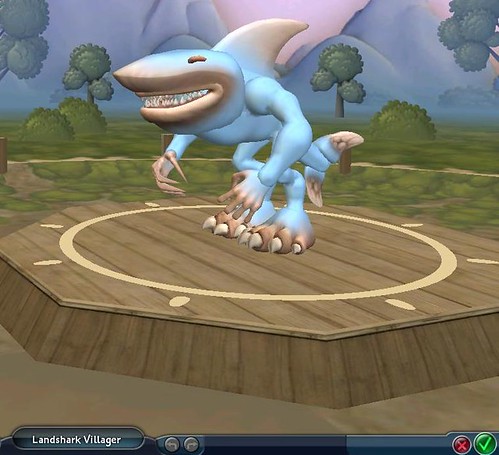
A number that big requires a brand new paragraph to get over, so lets finish the last part of December by mentioning that I was (to my own child like delight) included in Michael Abbott’s wonderful end of year gamers confab epic podcast of legendary proportions. That was an absolute blast to be on and a huge honour to be considered alongside some truly respectable bloggers. Not content to finish the year on such a self-congratulatory note, I then went and followed up with a second Gonzo journalism piece “Gonzo Pt 2 – Return of the Shark”, which was either brilliant or a spectacular failure. And, that’s the only way I’d want it. Look for more of same in early Oh-Nine. Toot-Toot! Last but not least and barely sneaking into 08, I finally got around to playing some more Spore and discussing (if ever so disdainfully) the procedural music in the game, with "Spore 'n' Eno".


Thanks for reading (or even glancing over), all you readers out there. You know who you are and I don’t (but apparently Feed Burner say’s there’s now 60+ of you! Where’d you all come from?!) so you’ll just have to give yourselves a pat on the back for discovering SLRC ‘before it jumped the Shark’. Onwards!, to Twenty-Oh-Nine with nary a backward glance and a slight ringing in the ears. Enjoy the New Year and please drink responsibly.


Monday, 5 May 2008

Another Post, another... BORKED PROMISE...

If you have been a follower of Stereo Left, Right, Centre you'll know that in my last post and subsequent follow-up comments I promised a certain Corvus Elrod a follow up post to answer some of his questions regarding my contribution to the month of April's Blog du Round Tableau (NB: not real french) and that, my readers, is just another one to add to the list of *BROKEN PROMISES*.

This is starting to get predictable. I make a comment about what's coming up on the Blog, and then I never get round to it. How cliche.

Moving right along, I just wanted to mention a little something cool that I discovered recently. If you have your finger ANYWHERE AT ALL near the pulse of the music industry then you'll know that recently a little British band released this album called In Rainbows and, as they say it in the Old Testament, we "saw that it was good". The real kicker though was that it costs whatever you choose to pay for it. I'm down for that!

Well, this is also a little bit of old news (hey, cmon - I post like, once a month, you gotta expect that a bit) but some other guys from a different part of the world have also released an album basically for free.

Trent Reznor and his groupies band have released a really quite excellent instrumental album, or more accurately, four of them, entitled Ghosts I-IV.

Yay free music! Great, but not what I'm most chuffed about (I pirate all my music anyway - sorry) - instead, I'm really pumped that they've included album artwork for every. single. song.

Not impressed? Well, they're wondrous high-res photos that (i assume) are meant to represent something about the song, or it's production. I couldn't find a link-able example but trust me, they're pretty cool.

So, like I said, it's free, go grab the torrent for it from The Pirate Bay or your favorite torrent tracker and listen away. Track numbers 21 and 22 come with my personal recomendation. ;-)

Finally, to end this very ad-hoc post, a link to my Last FM music profile, and a quick plug of the conference I am attending this weekend: The Convergence of the Real and Virtual Conference, the first academic conference being held solely in the virtual World of Warcraft!

Saturday, 15 March 2008

Project Update

HOLY HOLE IN THE GROUND, BATMAN! IT'S A VERBOSE UPDATE OF MY HONOURS PROJECT - POSSIBLY THE MOST IMPORTANT WORK ON VIDEOGAME MUSIC OF OUR TIMES! (Sorry Caps).

Follows:

In my project I propose to examine the role that music plays in the genre of videogames known as First Person Shooters (FPS). Specifically I will examine in detail the score of the Xbox game Halo 2, published by Microsoft Game Studios, and the complex relationships with other elements of the game. The Halo series of games are the Videogame equivalent of the Hollywood Blockbuster – they have some of the highest production values of the current generation of games and spend more time under development than their filmic counterparts.


Videogame analysis and critique, being a burgeoning field, has been developing a vocabulary and methodology with which to approach Videogames and their methods of creating meaning and story. Most analyses and critiques can be placed in one of two camps; those that study a Videogames efforts at inscribing a narrative in a game, identified as ‘Narratology’, often drawing on methods of analysis for other media, such as films, literature and especially hypertext and new media. The alternative, calling their study of games as systems unrelated to story ‘Ludology’, is exactly that, to treat Videogames as systems and representations, examining the rules and laws that govern the simulation.


My analysis of Halo and the music of the series involves a number of key elements. I will apply traditional musical analysis techniques to the music of Halo 2, looking at the function played by musical devices such as ‘Leitmotif’, as well as examining the effect of style and genre connotations. I will also apply a method of analysis that quantifiably examines the music in terms of ‘what plays when’ and try to find some motivation as to ‘why’ it does so. I wish to also apply an examination of the evolution of the music across the series, including key musical motifs and pieces, and view it as not only a development of the composers ‘voice’ but also as a representation of the progression of the themes of the games.


In a non traditional vein, I wish to also attempt to identify important salient features of the relationship between the music and other non-musical aspects of the game. For example, I wish to analyse specific levels of the game by using concepts such as ‘level flow’, ‘progression’ and ‘optimal paths or strategies’, in an attempt to uncover meaningful relationships to the music. One tool I will use to do this is a world famous video recording of a ‘Speed Run’ in which the player, an American film student and Halo player, completes the game on the hardest difficulty setting (called ‘Legendary difficulty’) and never once dies, providing an insight into the importance of elements of the structure and layout of the levels, as well as combat techniques. The most reduced and implicit form of feedback that the player receives from the game is information about the player’s state; either the player is still alive and can continue on ‘progressing’ through the game to its conclusion, or the player is dead and must try again. This information reveals inarticulate or tacit aspects of the game that the designers intentionally and unintentionally included in the game, and which I believe are a vital aspect of the ‘meaning’ created by the game. The crux of the rationale for this approach is a belief that Halo 2 locates much of its created meaning (in a largely non-narrative sense) outside of traditional narrative structures and devices such as dialogue, narration and cinematic direction. In this way, I believe that I will see a parallel to meanings and ideas created by and revealed in the music.


I will also apply semi-filmic analyses, adapting concepts such as Mimesis and Diegesis, along with analyses of such things as the effects of geography, art direction and the Videogame equivalent of camera angles to specific levels and sections of the game. Throughout I will apply Ian Bogost’ theory of ‘unit operations’ as an approach to Videogame criticism, as well as his idea of ‘simulation fever’, especially in regards to the ideas of Mimesis and Diegesis in Videogames – whether videogames ‘tell’ the story to the player (Diegesis) or ‘show’ the story to the player by mimicking actions (Mimesis). To explain the relevance of this distinction, I quote Wikipedia’s entry on Diegesis:

When we come to a modern consideration of the cinema, it may appear that the medium is a straight-forward example of mimetic storytelling--but it is not. In terms of classical poetics, the cinema is an epic form that utilizes dramatic elements; this is determined by the technologies of the camera and editing. Even in a spatially and temporally continuous scene (mimicking the theatrical situation, as it were), the camera chooses where to look for us. In a similar way, editing causes us to jump from one place (and time sometimes) to another, whether it be somewhere else in the room, or across town. This jump is a form of narration; it is as if a narrator whispers to us: "meanwhile, on the other side of the forest".


By this definition it would seem at first glance that First Person Shooter games (and Halo in particular) are generally ‘Diegetic’ with only a short amount of ‘cut scenes’ at the beginning and end of levels determining what the player has to look at. However, if we consider Bogost’s notion of simulation fever, which says that, while we generally view simulations, and Halo could be considered as such, as ‘objective’ representations of what we are simulating, they are in actual fact necessarily ‘subjective’ by virtue of their nature as reductive. Even when a simulation renders every physical aspect of an environment or situation in detail, it still does not include such things as concepts of value, such as the value of human life, which Bogost says by referencing a military simulation of a sarin nerve gas cloud modelling simulation. While it arguable simulates accurately the progression of the gas on a University campus and how to evacuate quickest, it does not represent such things as who to prioritise for evacuation; the Nobel prize winning Professors or the students with years of possible contribution in their lives still left unrealised. In this way, by choosing what Halo includes and excludes in its ‘simulation’, Halo 2 could certainly be considered also Mimetic, and this seemingly contradictory state will be explored.


To sum up my project, I am looking at the music of Halo 2 and placing an emphasis on identifying other aspects of meaning creation in the non-musical elements of the game, applying current theories and concepts of videogame criticism as well as a number of adapted methods from other mediums. I wish to outline the relationships between the music and these other elements and hopefully persuade the reader that a Videogame about a super-human soldier in the future whose task it is to save the world is a work worthy of investigation and which locates its meaning and value in places non typical to media such as films and novels.


*******

Word! Did you read it all? If so, give yourself a pat on the back for getting through over 1,000 of the finest words on Teh Interwebs without exploding. Feel free to comment / flame / ignore this post.


Oh, and the thing about Heiddeger I mentioned last week? That's so last week. It's MIMESIS now.

- Ben.

Sunday, 4 November 2007

Post #4 More posts about MY games, darrnit!

Why hello there, avid readers!

I bet you've been dying to hear from me again. Well, I hate to be brief, but I just don't go in for those boxer things, so briefs it is!

So what have I been playing lately? Have I dutifully gone back and played through SS2 as a Psy Op specialist as I hinted at? Hell no, dear readers, the limited time available to this author means that he has decided to move onto greener pastures, as it were, at least for the time being. I'm now playing the 1998 Blizzard classic, Starcraft(tm)!

So I've been getting around in SCraft for a while, and when i came back to it, It was just like riding a bike. A friend of mine got me back into it, as he wanted to "get into shape" before Starcraft 2 comes out (as if he could! Bar-humbug!). So we've been playing it a fair bit over Hamachi (a VPN program) and I've come to appreciate the dependability of the '98 style AI. My friend, who shall remain nameless, showed me this awesome tactic to apply when the first wave of enemies arrives.... RUN AWAY!

Woah, revolutionary stuff, but it really works! You just grab the guy that the enemies are attacking, find an empty space on the minimap that looks ripe for a bit o' exploring, and off he goes, trailing 12 hungry space marines in his wake... weeee!

Well, enjoy trying out this new (only took 9 years to develop this tactic) awesome Strat, and tell me how it goes. I used to ALWAYS get beaten in the first wave as a young'n... but now, I can pwn the computer with the best of them. It's interesting how age adds a very new perspective to things, no? I guess David Sirlin wasn't right when he wrote the article World of Warcraft teaches the wrong things... time really DOES = Skill.... or... does it just = NOT suck? Either way, Sirlin is a... well... when I approached him on his website to discuss this idea, instead of actually responding to my actual question, he decided to take it as a personal attack and convince me of his arguemnt by saying "No no no, YOU'RE wrong." Seriously. Doesn't he get the idea behind rejecting someone else's premise, and instead proposing a different one? Gosh, what is wrong with people on the internets! It's almost enough to make me cry, except that I'd get cyber bullied, so i'll just go be all emo in my room and turn off all the lights and dress in black. MMmmm sleep is very tempting right about now, and I've written about 3x as much as I initially intended. Oh cruel Blog, why must you always run deviously long or short?

Is this entire post self-indulgently long? Tell me in the comments! I crave the attention!

Peace out!