Thursday, 9 April 2009

Three Month Giant Gonzo S/Mashup


An SLRC Update:

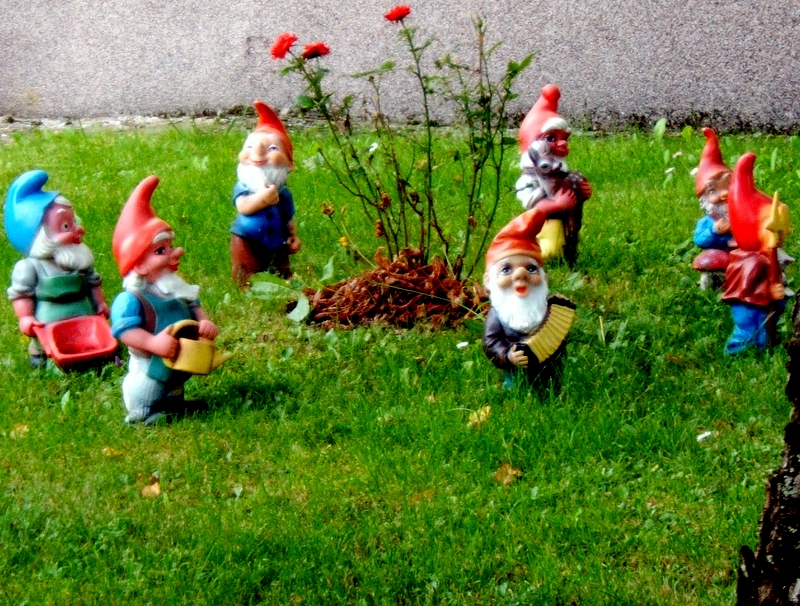
For those actually worried by my April fools post, I haven’t left videogame blogging to pursue a career as a writer for Garden Gnomes – I’ve just been busy with an exciting secret project which, in a few days I’ll hopefully reveal a bit more about. Until then, I decided that in the finest tradition of Gonzo Journalism’s slap-dash and often ‘straight from the tape’ aesthetic I would cannibalize all of my half-finished and pre-maturely aborted gonzo articles into One Giant S/Mashup piece and mix it all together with some other random words and pieces of text I accrued along the way. It is as follows, with minimal edits from the originals. Warning: Your Mileage May Seriously Vary.


----

January 1st:

It’s seems like an extremely Thompson-esque thing to do, starting a blog post after being up for two days. New Years was last night, and more than a few drinks were had by all – our psych-out, early river-side fake-out countdowns are probably famous to anyone out on the water last night for a cruise. So now, I’m going to start my next Gonzo project – I’m going to play some games in a state of high exhaustion and blog about it. But first, I have to make sure my animal charges haven’t died overnight. You just never know with New Year’s.

Note: I think I either played some Far Cry 2 or went to sleep instead.


----

Early-Mid January - ‘Offline Live blogging/Gonzo Playing Gears of War’. Following is a running commentary for approximately the first half of the game and is closely related to my epic tweet-powered GoW2 marathon which seemed to draw quite a crowd at the time:

  • "Tip: to curbstomp an enemy: Press X"
  • Who is this motherly narrator figure and WHAT IS SHE DOING IN MY GoW?!!?!
  • Woah. Wimminz in my Gears of War 2. WHAT IS THIS?! (/irony FYI)
  • Yes, put the story inside the game. Not in custcenes. Thanks @cliffyb
  • Awww, Dom is so upset. I can tell because he is angry. Grrr!
  • Uh oh... Title screen in 2nd act. Damn, it's another Holywood trick in a game. LLLAME
  • Seriously, I'm not even watching these cutscenes they are so crap
  • Oh man, you give me back control for 20 seconds, its all talk, and then hit me with ANOTHER cutscene? What is WITH this game?!
  • Into the second level – A turret mission: being killed was the calmest part of the level. Tank just cruised on over the edge… reminded me of certain scripted things from FC2…
  • Underground level. Guy we rescue (Carmine) I thought was dead, as I was standing over his body. In an attempt to pick him up/interact DID A BARREL ROLL over his body! D= Not what I meant to do and totally broke sentiment of the moment.
  • With no sound on GoW2 becomes an ironic satire of videogames.
  • Examples: “King Raven and Delta Six are KIA” over a scene of burning rubble. My response: “Oh are they? Oh well. LOL”
  • Examples: Coletrain’s American Football move-filled entrance. “Nobody plays this game better than me!” LOOK SEE! It’s aware that it’s a videogame! (Lets just pretend that it’s post-modernistically self-aware)
  • Example: The Locust reaching for a grenade planted on his back takes on Marx brothers visual humour that had me laughing out loud.
  • Example: Fenix “Where’s your squad”. Cole “Here’s my squad LOL” (Dangles some bling – actually COG tags) (Unsaid: Cole is the ONLY squad Cole needs!)
  • My wounded limping towards Dom, without sound, highlighted the weirdness of it. I’m gimping along
  • “I can’t believe they did that to Tai… he… he survives everything doesn’t he?” – (This is GoW teaching us that people really die… *cough*Far Cry 2 did it better, a LOT better*cough*. See Hocking’s Masterpiece)
  • “You hear that? Could that be a heartbeat?” IUNNO LOL, no sound!
  • Wow, a malfunctioning AI. How original… >_>
  • When you die, you don’t get told “You are dead. Game over” it’s “Objective Failed”. Oh, so if I could complete the objective while dead that’s fine? I guess that could be construed as saying something about the disposability of the soldiers in GoW2… but somehow I doubt that it was intentional…
  • I got a 5sec video showing me how I died… being swept away. I swear I thought it was going to be another intentional thing & cutscene.
  • Wow, flamethrower AI can be DUMB. Shoot me from 100m away? Yeah… good luck!
  • “There are no greater warriors anywhere!” – The Queen. “We’ll see about that Bitch.” – Marcus or Dom.

Fuck. This. Shit - Gears of War 2 is not a game for me. I like games that don’t make me feel like I’m losing brain cells as I play. I like games that aspire to some level of moral, ethical or – hell – I’d even take mental engagement with the player over the brain-dead way that GoW2 hits the player over the head with story. Hey dummie! This story is important, so we’re going to make you listen to it, says the game. I like games that say something, and say it well.

I subscribe to the belief that ‘everything about you says something about you’ and that this applies to both people and videogames. So even if a game like Gears2 largely doesn’t set out to make epic, meaningful statements about Life, The Universe and Everything, that does not preclude it from saying something anyway. Every product, every thought, every action by a person (and a game is a result of actions from people) is a result of a combination of different ways of viewing the world, different ideologies and beliefs.

I should add that I’m really only playing it because I have it. I’m playing out of convenience and because I am mind-killingly bored, at home alone and trying to pretend I’m not desperately waiting for someone to talk to me. I’m also trying not to think about what the Sydney Morning Herald described the other day as their prediction of a massive increase in the number of out of work young job seekers. Hint: That’d be me.

Another reason Gears of War 2 isn’t for me is that I’m not the kind of person that likes cussing. It’s not classy and I don’t pull it off very well, so I generally steer clear. I’m not CliffyB’s target audience – I’m not HARDCORE enough… or am I? Michael Abbott described me on the holiday confab podcast as “a bit of a harcore gamer”. Oh really? Well, if I’m so hardcore, then I can beat Gears2 in one evening, right? RIGHT? This is the tale of what happened when I tried and the lessons I learned along the way.

And I’m beating it by accident. A lot of things are inconceivably over-the top or inexplicably contrived. “It’s bulletproof for a reason!” is followed shortly by the window being shot open. The spiritual dimension should not be missed too – “everything happens for a reason” says a COG soldier. Yeah, because some idiot scripted it with the intention of MOAR BANGS = MOAR AWESOME! The game only has one speed – FASTER and if I thought the music of Spore was a bit one note, GoW2’s is even more.


----

Mid-Late January:

The best thing about Gonzo is that it’s unexpected. Like the Spanish inquisition, it thrives on the everyday turning into Monty Python’s Flying Circus or going belly up like a bloated fish floating upside down in a fish tank. Example; my last Gonzo piece – who would have thought that missing a train and spending 54 minutes waiting in the cool midnight air would be so conducive to good gonzo?

After the aforementioned post, which started me in a direction towards one of a few games (Bioshock, Spore, Prince of Persia: Sands of Time, or Fallout 3), it was maybe a little inevitable that I wouldn’t even play any of those games at all in the time between then and now. Which is true with the exception of Spore – I haven’t touched them – but I went so far as to bring them all down to the Xbox in the living room to play in the two weeks I had the house to myself from late December to early Januay.

But it’s hard to get motivated to repeat an experience, even a good one, when it comes to a media experience like a movie or a game. I have a tendency to go rifling through the filing cabinets of my memory mentally searching through the list of previously fun activities I have at hand when stimulated by boredom. I’ll get to the point of mental assent that the thing I’m thinking of doing/watching/playing is good and will be entertaining… but then I balk when I remember the number of times I’ve put something on only to lose interest because it’s something I’ve already experienced.

And I’ve done it again, blown my lead in on something irrelevant to what I want to talk about – Dynasty Warriors 6 (count ‘em!) for Xbox 360. It’s interesting that I keep doing that though because while HST flourished in his obscure tangents, with them being some of the best bits of his books (or the best bits of one of them anyway – “On the Campaign Trail in ‘72”) does tangential writing actively work against the blog format? That would be a bit sad if true.

Er… back to Dynasty Warriors! But before I get there, today I read a really thoughtful post by Kieron Gillen on Rock, Paper, Shotgun which was part eulogy for an ended television program and part manifesto against anger and an overly critical attitude in games writing. And it made me stop and think before I started writing this bit of the post, because originally I was going to criticize Dynasty Warriors 6 (I still can’t get over how many of them there are!) for a whole bunch of things like:

  • Ridiculous voice acting.
  • Ridiculous story-telling, plot and dialogue.
  • Atrociously ‘period inappropriate’ music, and
  • The occasional degenerate strategy or frustratingly unexplained mission objective.

But then I threw my hands up in the air and said “You know what, even though it doesn’t excuse the very real flaws, the bit of the game that matters most is still the original and still the best”. It’s like the idea that is Dynasty Warriors – fighting epic battles involving tens of thousands of soldiers and their commanders – is still just sheer brilliance and awesome. And the game is also a fantastic example of the case for iteration and sequels in videogame design. Just a few weeks before I received DW6 as birthday present (Note: A present from a fellow blogger no less! Thanks Dan!) I played the fifth iteration on Playstation 2 with a friend and while we enjoyed it immensely, I do not think I could go back.

It also tickles the same parts of my brain as WoW, in that a lot of it is an often repetitive but generally pleasurable grind. Unlocking characters has been a part of the game since the beginning and I’ve only completed one character’s story mode campaign.

In DW6 not all characters are created equal – my first character was Sima Yi who was an absolute dandy and a shoe-in for a topic in Denis at Vorpal Bunny Ranch’s Fanny Friday series.


----

January/February: LBJeffries Asked for suggestions for “The Best pieces of New Games Writing from 2008” to which I was only too happy to oblige. I made them all into this list, and then some.

Planetside – The 1%

The Loneliness of the Long Distance Simmer

The Great War

My Name is Nico and I’m a law abider

Paul Ferenc’s Pistol

Frank Bilders is Dead

The Cliffsters Badass plan to fix New Games Journo

3-2-1 Action Half-Life

Alien Swarm The Longest 30 Yards

Fear and Longing in Paris

Replaying SWAT 4

The Joy of Coop

Towards an elitist critic future


----

February:

BG&E Music Analysis:

· Hillyan suite (In Two halves)

o ¾ time sig

o Marimba

o Flute (ethnic flute?)

o African percussion

o Single violin

o String melody

· Second movement of Hyllian suite:

o Piano riff comes in replacing Marimba?

o Whispered words / vocal percussion


----

February 12th:

An Audiosurf quote from ‘2008 and The Indie Renaissance’:

“When Audiosurf-creator Dylan Fitterer climbed up on stage to receive his award, he was already hurtling towards riches. His audio-visualiser game hybrid was to be the top seller on Steam that month, even out-selling Valve's own recently released titles. In the same month Fitterer had been exulted by his gathered peers in San Francisco, and found financial security in a game he'd made with just a bit of help from friends. It was a fine achievement for any programmer: to have made a popular independent game, and have received a money hat too.” – Jim Rossignol


----

February 24thNote: I obviously never bothered to finish the list:

Why does Audiosurf have block collection sound effects?

Aren’t the blocks supposed to represent the music?

  • Ten Best Dance Remixes I know for Audiosurf
    • The 2x FRANKMUSIK remixes


----

Early March:

I’m a fan of violence – when it serves a purpose.

I’m a fan of violence when it’s presented in a way that doesn’t cheapen the act, or glorify it by over stylizing it.

- The watchmen & violence

- Far Cry 2 and violence

- Violence when grounded: when it takes a moment to let you think about what’s just happened, what you’ve just done.


----

March 7th: In a document called 'Taxonomy of Videogame Posts.doc':

Every video game blog post ever written:
  • The Review
  • The Half-Baked theory (probably reading too much into XYZ game or game aspect)
  • Something about storytelling in games – (are they, can they, how, etc)
  • Are games art (LOL!)

----

March 16th: In a word document called ‘Why do we want to say what is and isn’t a game.doc

  • Excluding games (i.e. flower, Spore, the Wii, etc as ‘toys’ rather than games)
    • Meaningless definitions and distinctions?
  • Including all things as games: inclusive is the alternative I guess, but is that useful? Is that going to end up diluting what we call games to the point of being un-usable/un-useful?

----

Mid-Late March:

When going gets tough

Tough Spartans reach for weapon

Covenant defeat


---

V.Late March

It’s probably a bad sign when you finish the first day of a new job and go home feeling depressed. It’s not the pay – although the pay is, to put it mildly, shithouse. It’s not even the fact that, after expenses, I end up with virtually nothing in my pocket to spend. The worst thing is the feeling it gives me, like I’ve given up on a chance at a better job. Like my potential, all my university training and developed skill, is going completely to waste. It’s a kick in the teeth to the dream that I can do what I love, do what I have dreamed of doing since as long as I can remember. It’s really hard to remember it’s temporary.

The other thing about this new job that sucks is that, working only weekends, it means that the only time my friends ever all get together is when I’m working. Okay, so I don’t finish too late to go join them after, but will I want to after a hard evening’s work?

Note: After bashing this out I got the hell over it and the following weekend hung out with my friends after work. Yay for happy endings!


---

So in contrast to L.B. Jeffries output, which is largely consistently and consistently excellent, mine is erratic and strange. Never mind.

I hope this was at least mildly interesting for you - it feels a bit like self-archaeology. I've also got a whole series of posts brewing in the slow-cook pot about songs that really 'make the game', which could be a while off yet, but be sure it's coming. Thanks for sticking with me readers - I've got a job now (not a great one) so at least I have cash and my personal situation is a bit stabilised. The upside of my job being so mediocre is that I have all this free time still! One day I'll trade my hours for dollars as a 9-5 wage slave, but not just yet... Till next time!

Wednesday, 1 April 2009

SLRC Shifts Focus


Dear Readers,

SLRC has been quite a good blast,
But I think that its heyday
Has most truly passed.

Henceforth SLRC shall no longer be known,
As a blog about games,
But a blog about Gnomes.

You and I both realize,
I’m sure it is clear,
That games are exhausting;
Art potential - unclear.

So I grab my pen;
I ignore the fear.
And turn my attention
To a topic most dear.

This most pressing task,
One so serious and dire,
Will not be stopped
By any man’s ire.

SLRC stands vigilant and alone,
But unlike Call of Duty,
We’re upright,
Never prone!

My motivation is simple,
I count it but once,
To silence those,
Who call Gnomes a “dunce”.

Those who say Gnomes,
Are “boring” or “simple”.
This is clearly a lie,
Yet lies they remain - just like pimples.

Thusly I strive to turn a critical eye,
To the practice and discussion
(This being a matter of pride)

Of the literature of Gnomes!
Short, thought they may be,
But not without important history.

What blogs be for Gnomes?!
I now wonder aloud.
At least SLRC,
And in this - I feel proud.

Friday, 27 March 2009

The Audio of Halo Wars – A victim of unambitious design


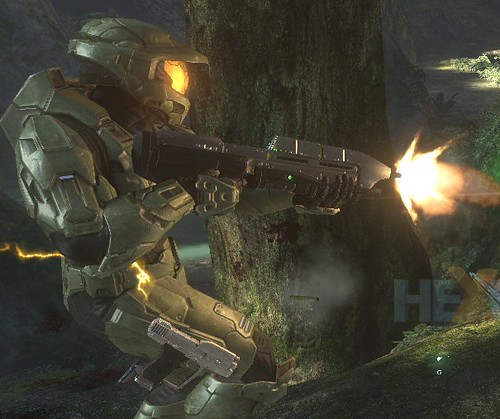
A couple of weeks before it’s official release I got the chance to visit Microsoft HQ in Sydney and play a preview build of the now defunct Ensemble studio’s Xbox RTS Halo Wars. I wrote up a little bit of what I thought for Kotaku Australia as part of the competition I won to go and play it. You can read what I said via the link, but essentially what I most wanted to express was that This is a game that knows what it wants to be, but I’m going to tell you that’s not exactly a good thing.

It’s the Halo Universe, even down to the splash of the plasma weapons. Edge Magazine noted in a review that appeared online briefly that the game is unashamedly a console one, and to paraphrase the reviewer, they said that “Halo Wars stares you down and says ‘This here’s console country, we do things a little differently’.” It’s strange because I get the feeling most games fail because of the opposite problem – often grafting in ancillary ideas from other games and genres in an effort to siphon their success. In development circles it’s known as ‘feature creep’.

So Halo Wars knows what it wants to be and we the audience already know what to expect. Kieron Gillen in his review of the game for Eurogamer said of the game that,

The biggest strength… is the fact that most people understand the Halo universe. It's not just the geek thrill of seeing a Scarab in action - it's that you understand what the Scarab means on the battlefield (trouble). We know which characters are best against tanks, and which are probably best in special vehicles.

Given that foreknowledge, Ensemble is (was?) hardly the studio to farm out a cheap sequel to – so where did they carve out a creative space of their own? Where did they leave their mark on the Halo universe? Unless you count inventing some new units, basically nowhere – and unless there’s another story behind the scenes, they seemed perfectly happy to do that. But, as we saw with the discussion surrounding FEAR 2, is “good enough” really good enough anymore?

Halo Wars is a nostalgia fest, make no mistake, and it would be easy to cynically view it as an attempt by Microsoft’s to cash in on one of their more successful pieces of videogame intellectual property. I’m giving them the benefit of the doubt, however, and I’m going to suggest that it was probably only partly an exercise in ensuring gamers maintain some interest in the Halo franchise. Ensemble’s efforts at channelling the Bungie vibe seem to fall well short of the mark, failing to spin as convincing and exciting a yarn as their predecessors (caveat: I haven’t finished the game yet). Ironically, one of the points Marty O’Donnell made in my interview with him was that some people are just better story tellers than others and for whatever else you can fault them, Bungie do often manage to tell a good story.

So Halo Wars rests in that uncomfortable half-way place between a creative and original expansion of the universe and outsourced publisher cash-in. I admit it would be self-aggrandizing to try and account for this by blaming it on the misappropriation of ‘classic’ Halo sounds in the game, but at the very least it is a symptom of the larger problem at hand.

Indeed, we saw it happening from the first trailer which was itself a studied exercise in comforting the confused and afraid fans. Halo is changing?! But I like Halo the way it is! Change is scary and confusing. Did the marketing executives focus test that first trailer to see whether that perception was actually correct? It is obvious that is what they were thinking, even electing to preserve as much of the ‘classic’ Halo as they could.

The look of Halo was obviously always going to change – that much was evident from both the first trailer and the fact that the game itself would change into an RTS. But the sounds, ‘Oh no’, the executives said with a million dollar smile, ‘The classic sounds we can preserve!’ In actuality, it was probably closer to someone saying ‘Hey, can we get the Halo plasma rifle sounds for our trailer? Sweet!’ and then they never considered changing out these place holders.

In my thesis which examined the sound and music of Halo 2, one of the main discoveries was an identifiable link between the music and sound effects – that a level of ‘musicality’ is imparted into the sound effects via common timbres and pitches. Many of the covenant weapon sounds were in fact produced using similar synthetic techniques, even the same instruments that were used in the production of music tracks which ended up picking up the role as musical themes for the covenant. These same sound effects have now been re-used in Halo Wars in much the same way that ‘stock’ library sounds would – and the result is an unnatural grafting along with the loss of their musical context.

‘Stock’ audio from bought libraries of recordings is often used in films (and games) in order to keep down recording costs and, occasionally, to artistically draw upon their sonic history. The ‘Wilhelm Scream’ doesn’t just sound like a scream for western listeners, if you’ve had even a moderate exposure to late 20th Century films, you will have heard it enough times that it has become a scream. We hear the Wilhelm scream and know instantly what it means because we have heard it in context before. The sound itself has a history – we’ve heard it in Star Wars, we’ve heard it in Indiana Jones, and we’ve heard it in a million other movies since.

But stock sounds, like the Wilhelm scream, are designed to be memorable on their own, whereas the Halo sounds are made memorable by their connection to music and ‘level ambience’. The blurring of the lines between diegetic and non-diegetic sound and music in Halo 2 is a powerful technique that, in my mind, makes the sonic material all the more powerful. (See Chapter 4.4 of my thesis for a much more detailed discussion and an explanation of why it is such an effective technique.)

Halo Wars re-uses weapon sound effects from earlier Halo games with the aim of capitalizing on our history and experiences with them. We are encouraged to think back to those Halcyon days of Halo 3 and earlier, remembering our positive experiences with them. While it is a problem that these sounds don’t have nearly as much of a history as sounds such as the Wilhelm scream, lessening their historical impact, the more serious problem is that these sounds aren’t designed to exist without their musical and level-based context. Halo Wars carries the legacy sound effects of the Halo universe while unceremoniously dumping their musical counterparts. In losing their musical context, they have lose much of their attractiveness.

The argument for sonic ‘continuity’ between the Halo series is pre-eminently redundant – with every Bungie made Halo game, you get everything changing. From weapons and character designs to the visuals and the sounds, they are all subtly changed and revaluated. Even the way that sounds are mixed together live (what Marty says is actually half of what makes good game sound) is constantly being refined, polished and improved also. Bungie knows the value in re-imagining, redesigning and reconceptualising - even if we occasionally prefer aspects of the old to the new.

In the end, Ensemble opted for safety in their final game – and honestly it’s a struggle to blame them. Halo Wars is still horribly polished, and it’s still Halo… but it’s not really Ensemble saying ‘If we did Halo, what would we do differently?’ Instead it’s Ensemble kowtowing to the marketers, and more’s the pity. The sound, it’s really just a symptom of the wider problem – a disappointing lack of imagination.

Friday, 20 March 2009

The Week in Videogame Blogging #3


It’s Friday night here in The Future – that means it’s time for another scintillating entry of This Week in Videogame Blogging! Let’s roll.

This week we’re starting with a first for TWIVGB, with Brilliam’s post ‘Hardcore played casually’, which is all about playing “hardcore” games in a casual, pick-up-and-play then forget about, manner.

Next up, spotted via the excellent blog of designer Dan Kline, is Lost Garden’s ‘Taxonomy of Game Design approaches’, which sums itself up nicely.

That Dan Kline guy, he’s one to watch and Michael Abbott, if you missed his comment about doing an interview at GDC, let me point it out for you again to make sure. This week, he muses on the importance of Time in game development in a great thought piece called, well, ‘Game Development: Time’.

Tom Chick and his wonderful Fidgit blog is my favourite new addition to my regular reading, and this week in ‘Resident Evil 5: Stranger in a strange land’ he realises that he accidentally griefed an unknown Japanese player for a good 10 minutes. Whoops.

Duncan Fyfe at Hit Self-Destruct this week writes about the certain strangeness we have come to accept in our game protagonists. Stoic, detached and unaffected by the horrors around them, they are often ‘A Shark in the Sewer’.

Hardly in need of linkage from this humble blogger is Leigh Alexander and the fabulous Sexy Videogameland. This week she writes about the commonalities between games and music, and is pretty convincing in ‘Tunes for thought’.

Iroquois Pliskin got a Twitter! Iroquois Pliskin got a Twitter, even though he said he never would!! Sooner or later, we all cave. I should also point out that he wrote about Burnout Paradise this week and how it solves some of the problems of open world games and racing games all at once. Sounds like a game I should be playing. Seriously though, that twitter thing is totally the more important story.

Two must read pieces this week from the world-destroying Rock, Paper Shotgun. The first ‘Unreal Tournament 3 and the new Lazarus effect’ is another of those think pieces where Alec Meer looks at the implications of the recent steam sale and corresponding player jump in UT3 giving it a new lease on life. If Unreal 3 is Lazarus, does that make Steam Jesus, and Gabe Newell is God? Speaking of Steam, the second is an analysis of the news that Steam is also allowing DLC for any game on its service from now on. Is this a case of opening the floodgates to unlimited DLC ‘Horse Armour’ packs or something else entirely? Read and find out.

While we’re going round the big name sites, Kotaku AU editor David Wildgoose does another ‘Ask me random questions and I’ll have a go at answering them because I obviously don’t have enough work to do here in the Kotaku tower’ piece. Look for his handling of the tough questions like “Don’t you wish you could say what you want to about a developer without worrying about being blacklisted?” They’ve also got a bunch of competitions on, including one which asks that you to write a Halo themed Haiku. Here’s one of mine, because I like to share:

Excuse me Master

Chief, I have these requests:

Save world. Get Girl. Win.

Moving on! More gonzo journalism in games writing this week from the preeminent Mister Jeffries with his piece for Escapist Magazine titled ‘Out of the Internet and Into the Wild’. I really want to know if he made up that whole bit about kidnapping his neighbour’s cat. Actually on second thought, maybe it’s better not to know.

In perhaps the most important piece to make sure you read this week – Michael Abbott of The Brainy Gamer writes about being social, responsible and respectful in our attitudes to each other. Oh, and it’s also about Resident Evil 5’s depiction of race controversy. Honestly not to be missed. In a response post, Rob LeFebvre of Ordinary Swords talks about the same issue in another great post.

Questions: Why have these guys not gotten more love from the Ludodecahedron? In another first for TWIVGB, the good people over at The New Gamer write up a great critical piece on Dead Space. They manage to sum up how I felt about the game but couldn’t be bothered saying in print, writing that:

[The] flaws are small. By themselves they'd be the 1% bad in a 99% great game. But 1% bad becomes 2% bad becomes 3% bad, and they keep adding up until you forget the zero-g sections and the scary resurrecting bat monsters and the tentacle babies. You forget the feeling of helplessness the first time you were overwhelmed by a swarm of bite-sized enemies (the kind that would be pistol-fodder in any other game) because the last hour of Dead Space is, under all the spike-flinging babies, an incredibly boring box puzzle with one box and a single track to push it along.

John Walker, one quarter-ish of RPS also has his own blog. This week he elaborates on his first forays into game development, having been part of the writing team on the Broken Sword: Directors Cut, a re-release of the classic adventure game for DS and Wii that is getting good reviews. It seems to me that this kind of thing is the future – great game critics applying their experience in practical ways.

Last link for the week – the ever indomitable Daniel Purvis of Graffiti Gamer writes about ‘The Fantastical Resident Evil’. Influenced by Left 4 Dead, he asks that for RE6 they dial it back a bit and go for a few less fanciful settings.

Bonus links – I missed a couple last week, so once you’re done digesting this weeks, don’t pass up Nel’s Anderson’s ‘Cost of Realism’ post and Ed Borden’s ‘Far Cry 2: The Next Step In Ultra-Realistic Gaming’, both of which are Far Cry 2 related posts! Didn’t I say they were bonuses?! =D

Till next week intrepid readers.

Tuesday, 17 March 2009

Mastering the Nightmare

Reading L.B. Jeffries recent post about Videogames and Dreams kicked off a train of thought that I’ve been playing over and over in my head for a few weeks. L.B. takes some research about videogames and dreams along with some philosophy ideas based on Jungian archetypes and proposes that videogames represent something close to “a waking dream simulator”. The important part of the piece is where he mentions some theories and studies that suggest we can address “threatening situations” and deal with them in dreams. He says:

Gackenbach cites a theory by a fellow named Revonsuo who claims that dreams are a way for people to simulate threatening situations so they will be able to handle them should they literally occur.

And further…

What is happening when we play a video game is that we simply become accustomed to dealing with our nightmares. We enjoy this because we are naturally inclined to develop better skills for handling adrenaline, threats, and coping with fear in general.

While this doesn’t nearly do the piece justice (make sure to read it at some point) his mentioning of mastering nightmares reminded me of a piece I encountered while researching new applications of virtual reality technology as part of my honours coursework last year. The piece spoke of a VR program called ‘Virtual Iraq’ which was being used to treat returned servicemen that had been traumatized while serving in Iraq. The program recreated aspects of the incident and allowed the patient to recall the event and through slow and gradual re-exposure to the event with a counsellor eventually allowed them to master the highly traumatic memory.

L.B.’s post was also timely for me personally because at the time I had been re-reading a series of books that I had first read as a teenager and which have a profound impact on me each time I read them. I’d hazard a guess that most Australians of my generation have read at least some of the Tomorrow When the War Began series of books by the Australian author John Marsden, and frankly there’s a good reason they’re so popular. The books deal in a very compelling manner with themes of death, destruction, personal loss and the nihilism of war. Written from the first person they are acutely intimate in their dissection of the feelings and emotions that surround what happens to the protagonists as they repeatedly deal with nightmarish scenarios.

One of the things that the main protagonist Ellie describes in the story of the Tomorrow series is the psychological effects killing another person has on her. The following passage from the second book in the series, The Dead of the Night, describes Ellie’s feelings after shooting an enemy soldier in order to save her own life, and the life of her friends.

I was feeling pretty unusual, walking back across the paddocks. I imagined a huge shadow of me was moving across the sky, attached to me, and keeping pace with my little body on the earth. It scared me, really scared me, but I couldn’t escape it. It loomed over me, a silent dark creature growing out of my feet. I knew that if I reached out to feel it I would feel nothing. That’s the way shadows are. But all the same, the air around me seemed colder and darker, as the shadows clung to me. I wondered if this was the way my life would always be from now on, and if for every person I killed the shadow would grow larger, darker, more monstrous.

- From Chapter 5 of ‘The Dead of the Night’ by John Marsden.

The Tomorrow series succeeds in making me think about how I would react in similar circumstances and I’ve always strongly empathised with Ellie. In fact, I’ve always been fascinated by the extremes of existence – life, death, love and loss. Some people might be tempted to actively discourage the examination of such dark themes, arguing that they are ‘disturbing’ and morbid. But if L.B.’s discussion is right then there’s a very good reason that I am so (for lack of a better word) attracted to those sorts of things. Examining these things in advance, imagining myself in these situations could theoretically help prepare me for should these tragic things ever happen to me.

And while it’s clear no-one can really predict how they are going to react in horrific circumstances, I’ve always believed that when it really came down to it, I’d probably be able to do whatever I needed to. That in a crisis, I’d be someone reliable. A friend of mine who spent some time in the military once told me of a particularly traumatic event that occurred to him involving an attempted suicide of a fellow officer, in addition to the more general extreme mental and physical toughening regime he underwent during training, and when I mentioned that I didn’t think I could cut it, he disagreed with me. “Actually, you probably could”, was his opinion, and he wouldn’t back down. I didn’t realise it at the time, but eventually I came to understand that my reservations were less about being incapable more about not wanting to.

I think my aim in this is to explain (and perhaps justify) why I so highly value games, movies, books, media in general that presents the unsavoury or the unpleasant aspects of life. I enjoy it, like I enjoy trying on a new set of clothes to see how they fit, what they make me look like. I want to try these things on in a relatively safe way before they ever actually occur. I hesitate to call it this but; it seems the result is a kind of mental toughness or preparedness that you get by imagining yourself thrust into the same position as someone in a war or a terrible circumstance. Indeed it is often the people who want to reject the unpleasant, who pretend that life is all smiles, that are overwhelmed when thrown into nightmarish circumstances.

The commonly accepted wisdom is that games have to be ‘fun’ or people will stop playing. In light of the previous discussion, how well does that idea sit? I’d say it starts to look rather ridiculous, certainly other media have no such misconceptions. There are lots of examples in film and novels that show they are capable of holding an audiences interest without being ‘fun’. Saving Private Ryan is not ‘fun’. Tomorrow When he War Began is not ‘fun’. Far Cry 2 is not fun. …but it also kind of is at the same time. Certainly the act of shooting, of moving and being in the world are ‘fun’ in the sense that they are pleasurable acts. But there is no escaping the fact that everything you do, if you aren’t caught up in the ‘fun’ of doing it, is distinctly UN-fun.

I think that’s partly why I like it so much – because it’s not fun. What other games out there have the guts to say to the player, “You know what? You are going to have to do and see and hear about shitty things, and you’re not going to like them but you’ll have a bloody good time while you’re doing it”? So maybe the lesson is, give players a good time, and they'll accept negativity. Honestly, I'm not entirely sure, and while Randy Balma did wonders to convince me that even game mechanics don't have to be pleasurable, I find plenty to enjoy in that game in spite of it's deliberate attempts otherwise.

I’ll finish with another quote from the last book in the Tomorrow series, ‘The Other Side of Dawn’, that seems to sum up my own feelings.

The old stories used to end with ‘They all lived happily ever after’. And you’d often hear parents saying: ‘I just want my kids to be happy.’
That’s crap, if you ask me. Life’s about a hell of a lot more than being happy. It’s about feeling the full range of stuff: happiness, sadness, anger, grief, love, hate. If you try to shut one of those off, you shut them all off. I don’t want to be happy. I know I won’t live happily ever after. I want more than that, something richer. I want to go right up close to the beauty and the ugliness. I want to see it all, know it all, understand it all. The richness and the poverty, the joy and the cruelty, the sweetness and the sadness. …That’s the best way I can lead a life I can be proud to call my own. I want to experience everything it has to offer: LIFE!

- From the epilogue of ‘The Other Side of Dawn’ by John Marsden.

Friday, 13 March 2009

The Week in Videogame Blogging #2


It’s Friday night in Australia, so the week is technically over for me. Time for another issue of The Week in Videogame Blogging. A touch shorter this week, but we refuse to lower our standards – these are after all only the posts that are most worth reading from the Videogame blogosphere. If there’s even one thing you’ve missed from this list, then my work here is done.

Rock Paper Shotgun lead us out this week with a swathe of posts worth looking at. In ‘Settling for Less’ the sleeping giant of the boardgame industry ‘Settlers of Catan’ is discussed, along with it’s potential playing in digital form. In ‘Should gaming ratings be enforced?’ John Walker postulates that tougher policing of the legal age restriction in games could actually benefit us adult gamers because then those pesky 18+ games could afford to really be 18+. No luck for us Aussies and our lack of an 18+ restricted rating for games, however. A post I’m sure most people would have already read by now anyway, but I’ll link it here to add to this series cachet as a ‘best of’ post series, is ‘What cruel teeth you’ve got: The Path impressions’ which is a lovely entry point to the Indie Game ‘The Path’ which looks set to be a smasher. Lastly, in a rather self-promoting angle, take a listen to the latest RPS podcast and skip to 3-ish minutes from the end for a special contribution from yours truly. I’m not bitter I lost the compo; I’m just pleased at being described as “right ‘fessional”.

Versus Clu Clu Land brings up a question dear to this authors heart in ‘Don’t you wonder sometimes ‘bout sound and vision?’ Yes Iroquois, I certainly do.

The Brainy Gamer drops a new podcast this week which includes an interview with Jenova Chen and Kellee Santiago from ‘That Game Company’ (flOw, flower) . I never knew Jenova Chen was Chinese, but it certainly makes sense that there would be a growing number of Chinese game developers. The most interesting thing I think he mentioned was how culturally detached from much of Western AND Japanese game design he felt, due to his Chinese heritage. He also said ‘I couldn’t do a Madden game, I’ve never seen football!’ Which is probably why he makes games about flowers instead.

This week is turning into ‘the week of the podcast’ as I listened to newly discovered podcast gem ‘The Hatchet Job’ and their intelligent discussion with academic Ian Bogost. While not technically from this week, I listened to it this week and that counts for a first time entry. I played Fallout 3 with it on in the background.

Hit Self Destruct talks about Far Cry 2 this week (a sure fire way to get an easy link from this writer!) with the excellent ‘War Crimes’. While I think Duncan maybe missed the ‘profound’ target a little with this post, it still manages to be quite deep, and the comments thread fleshes the issue out a bit better.

Kotaku AU editor David Wildgoose is starting to build an editorial voice of his own with his link outs and interesting thought pieces. This week he invited reader questions in the post ‘Ask me stuff’ and provided some insightful answers. Never let it be said that at SLRC we eschew the popular just because we’re elitist. Also check out his hard hitting expose on RE5's unlockable costume for Shiva - cause RE5 is totally not aiming for the cheap thrills...

Denis Farr from the Vorpal Bunny Ranch posts about ‘The Aeris Syndrome’, examining archetypes in the Final Fantasy games.

Contrast and compare with The Quixotic Engineer’s discussion of Burnout Paradise’s recently patched-in ability to restart a match in the post ‘Restarting, Downtime & Variety’. If fans screamed loud enough for a ‘bring back Aeris patch’ would it get done? And should it?

Alex Myers, always insightful, writes about engaging with games on a level where everything strips back and you just play the game, in ‘flow/ing/ames’. This quote from Frank Lantz got me thinking:

“…when you play a good game long enough, the surface sometimes melts away and you forget that you are herding zergs or putting out fires or whatever. That aspect becomes transparent and you engage directly with the formal systematic qualities of the game…


And lastly, in what looks dangerously set to become a tradition for the final link on The Week In Videogame Blogging, the gents over at Hardcasual score some 'Hot Scoops' with an interview of Ken Levine on the design of the Big Sister from upcoming title Bioshock 2.


Till next week.

Thursday, 12 March 2009

Getting My Immersion Fix


There is a certain type of game that I gravitate towards and that always seems to end up being the ones I keep coming back to, spending far and away the most time with. These games delight me with tiny pockets of ‘emergent narrative’ – parts of the game that for whatever reason ‘just happen’ as a result of the fact that the world around me is alive with people and things. The stories that most stand out in my memory are the ones that pop up without explicit authorial intent, the ones that just happen to coalesce into some strange and surprising mini story.

When I play The Elder Scrolls IV: Oblivion my regular habit is to walk everywhere to get around. I like to avoid the use of ‘quick travel’ because it doesn’t make logical sense to me that I should be able to instantly teleport around the world. The ‘quick travel’ method that is present in both Oblivion and Fallout 3 pulls me out of the game because literally nothing happens to the player while travelling. I want things to happen to me; after all, it’s why I’m playing a game.

So I use foot power like the lowly commoner I am and install a mod that introduces ‘stage coaches’ that fits with the fiction of the game as well as providing an alternative method of quick travelling between major cities. When I walk, I actually quite enjoy the experience because I find the countryside calming, idyllic – enjoyable for its own sake. Interestingly, the games I’ve most recently spent the most time with all involve traversing the world – I mentioned on the special holiday edition of the Brainy Gamer podcast last year that a lot of the joy I get from playing Far Cry 2 is in learning to skilfully snake my way through a hostile environment. Similarly, the way I like to play Oblivion is just as grounded in inhabiting the world.

This week I was playing Oblivion, and as I walked my Orc north and then west from the Imperial City sewer exit all the way to Chorrol (practically via Bruma) I was quite deliberately taking the scenic route. The direct route would have cut the trip time in half, but I especially like the view from the Orange Road, you get some beautiful views of the Imperial Spire through gaps in the trees and much of the forest is made up of what looks like Silver Birch trees, my favourite (an aside: We had a beautiful silver birch outside our front door but it sadly died from a fungus a year or two ago and blew down in the wind. It was one of my favourite trees.)

On this occasion, I got about half way and spied an imp that looked like good target practice for my marksman skill. I started stalking him, readying my bow and arrow. Unaware of my presence, my first attack gained the benefit of extra damage. Success, a hit! But he is not going to be defeated by a single arrow as I’m still a lowly level 1 Orc, and so the creature flees. This happens because I have a mod installed that makes all sorts of back-end faction changes and the end result is that this Imp now behaves somewhat like a normal wounded animal. I finish him off and continue my journey west and shortly come across an intriguing scene. The bodies of multiple bandits are strewn across the road and the survivors of a pack of wolves haunt the road ahead. They were clearly weakened from their fight with the bandits with one of their number already dead, so I had no trouble finishing them off from a distance. But I was so shocked when I came across such a strange scene that for a moment I almost forgot I was playing a game.

I realised quickly that I was more surprised by the fact that this interaction was entirely natural and actually made complete sense. I could tell at a glance that the bandits, who had been hiding off to the side of the road waiting to pick off unwary travellers, had fallen prey themselves to a pack of hungry wolves. I didn’t see it happen, but the knowledge that this was off happening somewhere else in the world as I wandered around was thrilling. After all, why should my player character be the center of attention in the world? My character is just a nobody at this point, so why should everything in the game be planned and scripted in advance just for me? The real world doesn’t work in that way, so why should a videogame?

I guess this is the difference between games as entertainment – the highly scripted Hollywood film approach to games – and games as experiences. The difference has been described by many, but perhaps most effectively by Steve Gaynor in his post ‘Being There’. The games I love are not the ones that try to usher me along and give me a tightly controlled narrative experience, even though I still enjoy those occasionally. Instead, the games I love are about ‘Being There’.

But what makes one game better at ‘being there’ than another? And for that matter, what makes the ‘Being There’ itself enjoyable? For Oblivion I find that it’s the little details that build the world and make me love the game – stumbling upon unscripted events that could easily be happening without your presence tickle all the right places for me. Conversely I think a large part of why I struggled to engage with Fallout 3 (after all it’s just Oblivion with guns, right?) is that it seemed to lose much of these unexpected events, instead leaning heavily on discovering ‘places of interest’ that sit dormant waiting for you to find them. To me, Fallout 3 distinctly lacks the feeling that the world is ‘lived in’ by anyone at all, heightened by the fact that there are so few people ever doing anything in the world outside of major quest hubs.

I’ve also been playing STALKER this week, and while it’s been lauded as a ‘living world’ game similar to Oblivion, I haven’t actually found it as engaging. I think, in this case, it comes down to the geographic design of the world. Areas in STALKER feel like wide corridors connected only by entry and exit points. It would be much more attractive to me if it did away with it’s ‘levels’ and opened up The Zone a bit more. I also wonder if the enjoyment of ‘Being There’ in Oblivion and Far Cry 2 is not present in STALKER because of its distinctly dark and brooding aesthetic. While there are undoubtedly moments of beauty, they seem much fewer and further between.

Lastly, in a strange and maybe unnatural comparison, I think I’m looking forward to (eventually) playing the new Empire: Total War game for somewhat similar reasons. Judging by this after action report by Tim Stone over at Rock, Paper, Shotgun the battles look like they encourage the feeling of ‘Being There’ with their rich level of detail and potential for player-created narratives. I look forward to seeing whether that impression is accurate.

In the meantime, does anyone else have any suggestions for games that encourage that feeling of ‘Being There’ - of watching the world flow around you? Hit up the comments and let me know and I’d also be interested to hear what particular aspects of those games make you feel like you’re 'really there'.