Showing posts with label FPS. Show all posts

Thursday, 12 March 2009

Getting My Immersion Fix


There is a certain type of game that I gravitate towards and that always seems to end up being the ones I keep coming back to, spending far and away the most time with. These games delight me with tiny pockets of ‘emergent narrative’ – parts of the game that for whatever reason ‘just happen’ as a result of the fact that the world around me is alive with people and things. The stories that most stand out in my memory are the ones that pop up without explicit authorial intent, the ones that just happen to coalesce into some strange and surprising mini story.

When I play The Elder Scrolls IV: Oblivion my regular habit is to walk everywhere to get around. I like to avoid the use of ‘quick travel’ because it doesn’t make logical sense to me that I should be able to instantly teleport around the world. The ‘quick travel’ method that is present in both Oblivion and Fallout 3 pulls me out of the game because literally nothing happens to the player while travelling. I want things to happen to me; after all, it’s why I’m playing a game.

So I use foot power like the lowly commoner I am and install a mod that introduces ‘stage coaches’ that fits with the fiction of the game as well as providing an alternative method of quick travelling between major cities. When I walk, I actually quite enjoy the experience because I find the countryside calming, idyllic – enjoyable for its own sake. Interestingly, the games I’ve most recently spent the most time with all involve traversing the world – I mentioned on the special holiday edition of the Brainy Gamer podcast last year that a lot of the joy I get from playing Far Cry 2 is in learning to skilfully snake my way through a hostile environment. Similarly, the way I like to play Oblivion is just as grounded in inhabiting the world.

This week I was playing Oblivion, and as I walked my Orc north and then west from the Imperial City sewer exit all the way to Chorrol (practically via Bruma) I was quite deliberately taking the scenic route. The direct route would have cut the trip time in half, but I especially like the view from the Orange Road, you get some beautiful views of the Imperial Spire through gaps in the trees and much of the forest is made up of what looks like Silver Birch trees, my favourite (an aside: We had a beautiful silver birch outside our front door but it sadly died from a fungus a year or two ago and blew down in the wind. It was one of my favourite trees.)

On this occasion, I got about half way and spied an imp that looked like good target practice for my marksman skill. I started stalking him, readying my bow and arrow. Unaware of my presence, my first attack gained the benefit of extra damage. Success, a hit! But he is not going to be defeated by a single arrow as I’m still a lowly level 1 Orc, and so the creature flees. This happens because I have a mod installed that makes all sorts of back-end faction changes and the end result is that this Imp now behaves somewhat like a normal wounded animal. I finish him off and continue my journey west and shortly come across an intriguing scene. The bodies of multiple bandits are strewn across the road and the survivors of a pack of wolves haunt the road ahead. They were clearly weakened from their fight with the bandits with one of their number already dead, so I had no trouble finishing them off from a distance. But I was so shocked when I came across such a strange scene that for a moment I almost forgot I was playing a game.

I realised quickly that I was more surprised by the fact that this interaction was entirely natural and actually made complete sense. I could tell at a glance that the bandits, who had been hiding off to the side of the road waiting to pick off unwary travellers, had fallen prey themselves to a pack of hungry wolves. I didn’t see it happen, but the knowledge that this was off happening somewhere else in the world as I wandered around was thrilling. After all, why should my player character be the center of attention in the world? My character is just a nobody at this point, so why should everything in the game be planned and scripted in advance just for me? The real world doesn’t work in that way, so why should a videogame?

I guess this is the difference between games as entertainment – the highly scripted Hollywood film approach to games – and games as experiences. The difference has been described by many, but perhaps most effectively by Steve Gaynor in his post ‘Being There’. The games I love are not the ones that try to usher me along and give me a tightly controlled narrative experience, even though I still enjoy those occasionally. Instead, the games I love are about ‘Being There’.

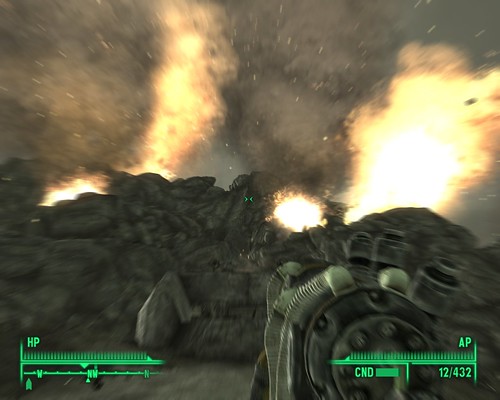
But what makes one game better at ‘being there’ than another? And for that matter, what makes the ‘Being There’ itself enjoyable? For Oblivion I find that it’s the little details that build the world and make me love the game – stumbling upon unscripted events that could easily be happening without your presence tickle all the right places for me. Conversely I think a large part of why I struggled to engage with Fallout 3 (after all it’s just Oblivion with guns, right?) is that it seemed to lose much of these unexpected events, instead leaning heavily on discovering ‘places of interest’ that sit dormant waiting for you to find them. To me, Fallout 3 distinctly lacks the feeling that the world is ‘lived in’ by anyone at all, heightened by the fact that there are so few people ever doing anything in the world outside of major quest hubs.

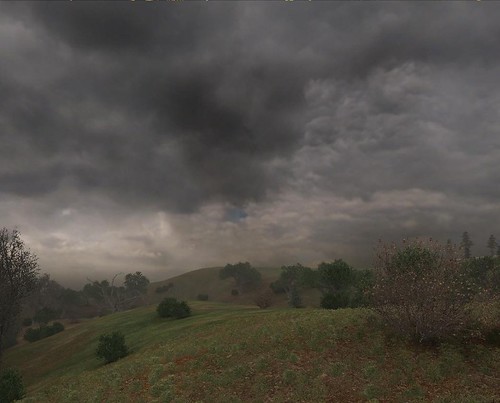
I’ve also been playing STALKER this week, and while it’s been lauded as a ‘living world’ game similar to Oblivion, I haven’t actually found it as engaging. I think, in this case, it comes down to the geographic design of the world. Areas in STALKER feel like wide corridors connected only by entry and exit points. It would be much more attractive to me if it did away with it’s ‘levels’ and opened up The Zone a bit more. I also wonder if the enjoyment of ‘Being There’ in Oblivion and Far Cry 2 is not present in STALKER because of its distinctly dark and brooding aesthetic. While there are undoubtedly moments of beauty, they seem much fewer and further between.

Lastly, in a strange and maybe unnatural comparison, I think I’m looking forward to (eventually) playing the new Empire: Total War game for somewhat similar reasons. Judging by this after action report by Tim Stone over at Rock, Paper, Shotgun the battles look like they encourage the feeling of ‘Being There’ with their rich level of detail and potential for player-created narratives. I look forward to seeing whether that impression is accurate.

In the meantime, does anyone else have any suggestions for games that encourage that feeling of ‘Being There’ - of watching the world flow around you? Hit up the comments and let me know and I’d also be interested to hear what particular aspects of those games make you feel like you’re 'really there'.

Saturday, 21 February 2009

How To Kill People More Effectively In Far Cry 2


I love Far Cry 2. You want to love Far Cry 2, but you’re always getting killed, then getting rescued by your buddy only to get killed again a mere minute later. So here is SLRC’s top 5 tips on How To Kill People More Effectively In Far Cry 2. Inspired by Steve Gaynor’s post ‘Basics of FPS encounter design’, because Far Cry 2 is both the epitome of good FPS encounter design, and its antithesis.


#1 – Distance is the man killer, and you are the man.

If there is only one thing you learn about playing Far Cry 2, it should be that the distances involved in any engagement are an order of magnitude higher than any other game around. The sprawling African savannahs allow for you and your enemies to trade potshots at targets up to a kilometer away – and still retain reasonable chance of hitting.

Long range weaponry is king in Far Cry 2 and ideally you want to have at least one weapon with a scope on it at all times. Why? Because your enemies are better than you, can see through the brush and scrub better than you and there are just plain more of them. The more distance you can create between yourself and your target, the less likely they are going to be able to land any hits on you (especially if they are wielding shotguns, LOL!).

However, we here at SLRC know that ideal isn’t always possible, as you will probably eventually run out of bullets from killing so many people. In that case, you’re going to have to close to a middle distance and change to an alternative weapon. Note however, that I have never on a difficulty harder than normal been able to fight closer than 50 yards and take no damage; the AI is just too fast and too accurate at point blank range. Be smart and Just Don’t Go There. Which brings us to point #2.

Pro Tip: If you get your angle right, and you are patient, you can often shoot two people with one sniper round! Brillantine!

#2 – Pick where YOU want to murder people, don’t let them decide where you are going to die.

If your enemy doesn’t know you are there, you have the advantage of time, as well as space. Use it. Choose both where and when to engage. If possible, follow point #1 and fight from as far away as possible. For arguments sake, however, lets pretend you don’t have any sniper weapons or (more likely) you’re out of bullets from killing all those naughty mercenaries. Sometimes you need to get up close and get your hands dirty.

The main thing to look for is cover – learn to read the environment and look for things that you can potentially stand behind and that won’t let bullets through. If the obvious approach to a position doesn’t look like a good idea, it probably isn’t – don’t risk it. Swing around and come at them from the side, or even better, from behind. There’s usually a multitude of options in Far Cry 2, so explore them. That stand of trees off to the right looks OK, but further to the North West there is a burnt out car, which is even better. The bigger the cover the less bullets you’ll be pulling out of yourself. Higher ground is always a good idea, too.

Since Far Cry 2 utilizes a semi-recharging health system, getting behind cover even when lightly wounded is absolutely critical unless you want to burn through syrettes like a morphine addict on a week long bender. It becomes an issue particularly on the higher difficulties where you can only carry 3 on you at all times (without buying an expensive upgrade for more) and is compounded when you’re trying to save some for when you buddy gets injured. Defensive play is often necessary at medium-close range, and that’s only possible if there’s plenty of cover – the enemy can and will flank you and you will die.

Pro Tip: If your enemies are in cover and you are standing in an open field, you’re probably already dead.


#3 – Know your escape route and when to GTFO.

This ties in with point two, because if anything at all goes wrong, you will need a plan to get out of there and the faster the better. If an engagement has a chance of going hairy, SLRC personally like’s to park it’s car facing in the direction I know I’ll be wanting to escape and it has been useful on more than one occasion. An anecdote:

Once, on a mission to assassinate a prominent member of a faction, I parked my jeep on a large hill to the west of my target. A huge grassland area with no cover stretched between me and a number of his body guards. I parked my jeep facing south-west and started picking off mercenaries. They swarmed at me like I’d disturbed an ant hill, and I cut off their direct approach to me by starting a fire in the grass between me and them. However, as fire likes to travel uphill and it quickly turned on me meaning I had to GTFO as the ground caught fire beneath me. Thanks to having my jeep parked already facing the way to go, when I got in I was able to move in a safe direction and get out of the fire without taking much damage at all.

Often times, however, it will be the caser that your vehicle will be destroyed or disabled when you need to GTFO. In that case, sprint is your friend – learn where the sprint key is and the sprint-crouch move which allows you to slide the last few meters along the ground and into cover. It may just save your life!

Pro Tip: Your vehicle can be a valuable source of cover for your pathetic, bleeding figure as you limp off into the jungle.


#4 – Start a fucking fire.

I’m tempted to leave this point as-is, because it really is as simple as that. The effect of a nearby fire on an enemy is described by the Far Cry 2 fire propagation expert, Jean-Francois Lévesque (who is on twitter, incidentally), in an interview on Gamasutra.

Speaking in RPG terms, the fire acts as an area of effect fear spell.

Life forms will flee or at least try to avoid fire. It disorients the AI, making enemies forget about you and focus on saving their own skin. It gives you an advantage against high numbers of opponents.

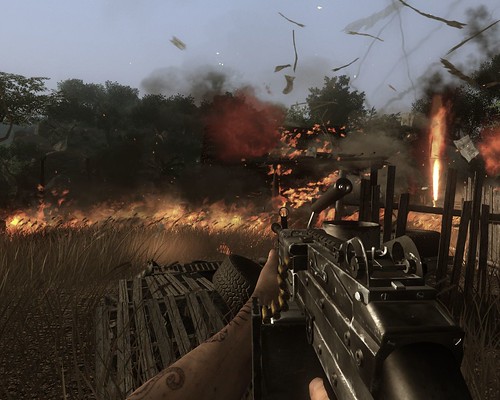
Before, during and after anything goes wrong in your fight you should be thinking about starting some kind of fire. You always have on you two Molotov cocktails available for throwing and there are often many things you can shoot to blow up to start fires too. Make use of them all - anything to get those bastards to stop shooting at you!

Pro Tip: Despite the fact that it’s an extremely cheap weapon from the Gun Merchant, the flare pistol combines points 1 and 4 from this guide! Don’t underestimate the potential in starting a fire exactly where you want it, really, really far away.


#5 – Don’t use someone else’s gun, keep yours clean and don’t run out of ammo.

Weapon deterioration is a big part of Far Cry 2 as anyone that’s played for more than an hour or so can attest. So make sure to visit the weapon dealer regularly to pick up a free new gun – remember, if you’ve unlocked it you can get new ones whenever you like for no additional cost! Isn’t that handy?

When you run out of sniper ammo, the LAST thing you want to do is ditch you gun for (to quote Danny Archer from Blood Diamond) some “rotten AK” which is going to jam on you when you least need it. A better idea is switching to a secondary or special weapon, until you find an ammo box or crate.

Pro Tip: A big-ass machine gun in your special weapon slot is a very good idea for when you can’t use your sniper rifle, and when your pistol is a flare gun. As much fun as it is to light men ON FIRE with the flare gun, it’s pretty dangerous and SLRC does not recommended it.


Wednesday, 31 December 2008

From Go to Woe - Only The Best of SLRC in '08


Two Thousand and Eight in the year of our Lord was the year SLRC really entered its stride. While the URL of ‘drgamelove.blogspot.com’ was officially claimed in October of Oh-Seven, the first real piece of writing on the blog that says anything worth reading was the April ‘08 Round Table entry ‘Starcraft and the power of 3’s’. Off to a slightly shaky start, the piece was roughly shoe-horned into the round table topic of the month but was ostensibly targeting the potential within asynchronous gameplay.


Actually, there was a small piece buried in the earlier fluff that pointed towards the future direction of the blog – a post about how System Shock 2 is a bit skewed towards the hacker/navy career path. I think that I was actually wrong in saying that though (even if I didn’t exactly test the alternatives in practice), but I’d be interested in hearing other tales from SS2 players, if only because it’s such a classic (and dare I say canonical?) game. Its influence on the hallowed Bioshock is deeply profound and obvious to any veteran of the earlier ‘Shock game.


In May, while researching my thesis I attended the “first ever academic conference held in World of Warcraft” and then promptly cancelled my subscription. I never did go back for Wrath. Also in May, I presented to my honours class, a seminar on immersion in videogames and took an Xbox with me to show them all Call of Duty 4. Immersion is an interesting topic, and the class members were most familiar with literary comparisons – an interesting counterpoint to my own reliance on CLINT HOCKING and Chris Crawford for theories of videogame immersion.


In June I created the ‘Things-to-do-while-you-should be working on your thesis’ tag, which was first applied to one of my most enduringly popular posts ‘10 Free Indie Games to play while not working on your thesis’, although… it seems I never applied that tag to that actual post. Nevertheless, it fits, and it has been consistently a popular search result on Google for ‘Free Indie Games’. Also in June, I blogged what is possibly my longest post ever, ‘A post for Xenia: Simulation and an apologetic explanation of Super Columbine Massacre RPG’. Which was probably the first post of mine to gain some real traction in the blog-o-sphere, going purely on comments. L.B. Jeffries managed to succinctly sum up my argument saying,

If I'm reading you right...the basic idea is that instead of making a bunch of events to experience the creator should instead be creating a bunch of reactions to the player.


Which would have only been so much easier if I had just said that, but then it might not have been as persuasive? Who’s to know. It was also an important landmark for SLRC because it really hints at the focus of most of my analysis and player/experience centric-criticism for the rest of the year. These are the things that ‘I’m Quite Interested In’.


July was almost a non-starter, busy as I was with thesis coursework, but I managed to squeeze out a post asking the question ‘Should we aim for some sort of rating system for indie games?’ after I introduced DEATH WORM to a bunch of 6-10 year olds to general hilarity.


In August, I wrote up what eventually became the motivating question for my thesis – why do game developers think a linear medium like music can just be shoved into a nonlinear videogame? – in the post ‘Videogames and Digital Musicians’.


September opened with the cracking ‘What speaks to me the most’, a post all about my inclination towards the ‘tourist’ player type in Mitch Krpata’s New Taxonomy of Gamers, the spiritual successor to Richard Bartle’s earlier ‘taxonomy of MUD players’. Expanding on that idea and partially in response to a post by Corvus Elrod adressing player preference for first person or third person camera, I wrote ‘The peaks and perils of first person camera’. An interesting foreshadowing of things to come – in it I mentioned a Game Set Watch column which pointed out how ‘innovative’ the latest Alone in the Dark game’s mechanic of forcing you to check your body for injuries was. Almost in answer to my criticism of AitD (Why would you need to know where to heal yourself if you are actually in this body?), Far Cry 2 would later in the year present a similar focus on embodiment minus the need to ‘discover’ where you were injured. In the rest of the month of September, I wrote about ‘The Affect Discussion’ which still hasn’t really been addressed adequately by videogame critics or proponents, and did a back-and-forth retrospective with an old friend of mine in a retrospective on the classic computergame-making-game ZZT.


If April was SLRC’s beginning, October was the month in which we could finally say ‘SLRC has arrived’. The big announcement in it was the completion of my thesis, but it was quickly overshadowed by, first, my second ever contribution to the Blogs of the Round Table ‘Playing Halo with my Mother’ and later by my initial burst of enthusiasm for Far Cry 2. The initial pre-game discussion in ‘Why I’m so Fracking excited about Far Cry 2’ was quickly followed by ‘Far Cry 2: Wrongs and Rights’ in which I had my first encounter with a game designer In The Wild when CLINT HOCKING stopped by the blog to thank me for the attention paid to his game. I then tried to pry myself away from Far Cry 2 to play Fable 2 with a rather scathing result, and at around which point SLRC celebrated its technical First Birthday. October rocketed home with ‘War Stories from Mosate Soleo’ leading the charge, followed up close behind by a quick photo-journey through Far Cry 2 (which has sadly since been broken by my flickr reorganisation). Finally October culminated in the Magnum Opus ‘Hocking’s Masterpiece’ which has been rather widely linked to as an excellent example of SMART fanboyishness.


Ah, November, what a month. If I had to pinpoint the onset of The Madness it would be somewhere in November. Two Posts about Valve’s Left 4 Dead added a distinctly metallic taste to the month and with the additional arrival of Fallout 3 it became a bit of a clusterfrak. Far Cry 2 had well and truly ruined me for any and all future games with Fallout 3 not surviving the comparison with honour intact. However, with the posting of this rather vitriolic diatribe against its rather flaccid ending (which was supposed to be more entertainingly ironic than I think the post it ended up) I think I needed to straighten-up and fly right by criticizing a rather less easy target. And perhaps a little more coherently. Which I did when I got annoyed by the vapid portrayal of ‘the moustache twirling evil doer’ character, Mister Burke and pointed out how he should have been more Heath Ledger and less Jack Nicholson. And there’s was a photo of a scorpion stuck on a fence! Giggle!


Which leads into December, wherein The Madness reaches a head – starting with ‘Frank Bilders is Dead’, a first person perspective piece. Look ma’, I’m in a vidjagame! Erm… I also posted a review for a game that came out two months prior, and with which I was right pleased (the review, not the game: that as pretty dumb) – here’s to more videogame review gigs! Then I wrote what I felt was perhaps a slightly overlooked piece on Far Cry 2 ‘I have two hands and with them I touch the world’, which (I thought at least) was Pretty Smashing Actually and all about the difference having hands as the central embodiment of the avatar made over traditional FPS gun-centrism. Around that time the whole ‘Games Journalism Journalism’ trend fired up again (lead by Mister Snappy Gamer and his Angry Internet Man impersonations) and I had to have a go myself – writing to criticize the trend of talking about games and mechanics as though it was more maths than art. Yes that touched a bit of a nerve, but the cool was kept. I’m just much more into the experience and the subjective (done well) – and this could not be made plainer than by my ‘Going Gonzo’ piece. In December I also finally got my thesis marks (86 – High Distinction, just) and posted the full text for all and sundry. With that, I started posting the (exceptionally long, but terribly worthwhile) transcript of my interview with Marty O’Donnell – composer and Audio Director of the Halo series. It’s going to run to about 7 or 8 parts, but I promise, it’s totally worth a read. Shortly thereafter (and just to fill in a posting gap, I might add) I re-posted a lightly edited excerpt from my honours thesis, ‘Audiosurf – Breakfast of Champions’ which swiftly got picked up by Kieron Gillen of Rock Paper Shotgun in linked to in The Sunday Papers. The result was no less than 700 pageloads in the space of a few days. Just going off my own habits, I click through maybe one or two items in RPS’ Sunday Papers weekly, so if I’m at all indicative, their readership is probably quite easily in the 5,000-10,000 reader’s mark. And that’s just their more intellectual and less busy weekend post! Phwoar!


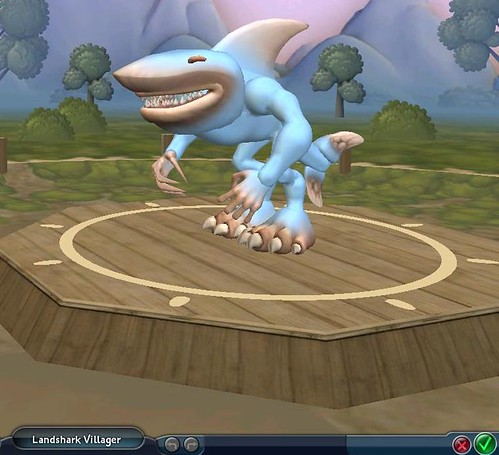
A number that big requires a brand new paragraph to get over, so lets finish the last part of December by mentioning that I was (to my own child like delight) included in Michael Abbott’s wonderful end of year gamers confab epic podcast of legendary proportions. That was an absolute blast to be on and a huge honour to be considered alongside some truly respectable bloggers. Not content to finish the year on such a self-congratulatory note, I then went and followed up with a second Gonzo journalism piece “Gonzo Pt 2 – Return of the Shark”, which was either brilliant or a spectacular failure. And, that’s the only way I’d want it. Look for more of same in early Oh-Nine. Toot-Toot! Last but not least and barely sneaking into 08, I finally got around to playing some more Spore and discussing (if ever so disdainfully) the procedural music in the game, with "Spore 'n' Eno".


Thanks for reading (or even glancing over), all you readers out there. You know who you are and I don’t (but apparently Feed Burner say’s there’s now 60+ of you! Where’d you all come from?!) so you’ll just have to give yourselves a pat on the back for discovering SLRC ‘before it jumped the Shark’. Onwards!, to Twenty-Oh-Nine with nary a backward glance and a slight ringing in the ears. Enjoy the New Year and please drink responsibly.


Tuesday, 16 December 2008

An investigation of new musical potential in videogames; A Thesis


So the day has finally arrived and the chickens can now be counted. First the raw mark:


For my thesis, which I spent all year writing, I received a mark of 86 which is safely within the High Distinction band. Accordingly, the full text of my thesis is now available here. Go read it, print it, bind it, critique it, lambast it, or just put it on your coffee table and let it look pretty.


So here's the inside scoop on what to expect:


- Chapter 1 is me raving, perhaps somewhat inadvisably, about a loony Indie game for 1000 of my 17,000 word limit before getting around to talking about music and what I'm going to say in this wordy monstrosity.


- Chapter 2 is my literature review (highly skippable if you aren't interested in either a) Ian Bogost or b) Gonzalo Frasca)


- Chapter 3 is all about how I think the current musical paradigm in videogames is, erm... how you say? COMPLETELY RUBBISH (okay, not quite, but almost) and then I talk about games like Guitar Hero, Audiosurf and Everyday Shooter and how wicked awesoe they are....


- Chapter 4 is the thesis, really, and it's where I interview the awesome Marty O'Donnell in an attempt to glean some insights about music for videogames from him. If you only read one chapter, it should really be this one.


Which also reminds me that I've got the full text of the interview ready to put up, so I'll kick start that series later in the week - keep an eye out for it. I think Marty has some genuinely interesting and important things to say about sound and music in games - and about game design more generally.


What are you still doing here? Go download it already!


Also: props to my man in Melbourne, Dan Golding, who recently posted his own thesis for which he got an even better mark (90) so go download and read his when you're done with mine.


Edit: Matthew Gallant from The Quixotic Engineer has graciously provided hosting for my thesis so I don't have to use Mediafire. Isn't he lovely? =)


Monday, 15 December 2008

A dearth of Indochina


Earlier today (yesterday if you’re in a GMT negative time zone) Corvus Elrod mentioned that he was watching Band of Brothers, the Tom Hanks/Steven Spielberg epic miniseries that does some pretty great things (in my opinion) with its World War II setting. His quote was that “It's good, but I don't find that war related media interests me much”, which is fair enough. It prompted a bit of a quick whip-around in the twittosphere about the abundance of attention paid to the 1939-45 period by both Hollywood and the videogame industry (to the point where it has now become kind of a joke).


Matthew Gallant then asks “Why isn't there then a similar degree of fascination with, say, the Vietnam war?” At first glance it seems like it’s purely an issue of ‘Well, we won the second World War’, the same for which cannot be said of Vietnam without distorting it into some unrecognizable alternative reality. However, there have been some serious challenges to the conventional wisdom that says videogames should be set in ‘winnable’ conflicts – most notably, Far Cry 2 which I have argued makes a very different statement about conflict than even the somewhat edgy Call of Duty 4, which still essentially sees a ‘win’ at it’s conclusion if at a significant cost.


So if it’s entirely dependant on ‘winning’ and ‘losing’ a particular campaign or situation, then how can we explain the continued focus on the world wars (or even just the Second World War)? Is it just another case of western euro-centrism? On twitter again, Scott Juster, from the experience points blog notes that WWII was “an extremely well documented war. Photos, audio, and video make for an abundance of sources.” Which is quite true. (By the way, sorry for not reading your blog more often guys) Corvus did, however, acknowledge its importance in the formation of national identity, particularly a new American identity in the context of a rapidly globalizing world.


In doing some quick googling for this post, I came across this article in Newsweek from Dec 07, ‘Why WWII Videogames are Hot’ which suggests yet another possibility that I hadn’t quite considered fully before but which seems the more I think about it quite a plausible explanation. The author describes why that particular conflict makes such good videogame fodder, saying:

The close-range infantry combat of Operation Market Garden illustrates why World War II, particularly as it was fought in Europe between 1944 and 1945, has become such popular videogame fodder. The Allies' 11-month campaign across Europe to Berlin was, "to a significant extent a rifleman's war," says historian Niall Ferguson. And though soldiers depended heavily on air and armored support, "they still had to do a lot of ditch-to-ditch, house-to-house fighting—the perfect setting for first-person shooter games."


Which seems to hit the nail on the head in a way the previous explanations didn’t – how many times have you heard about a Mod for a popular FPS game that aims to reproduce The Great War only to be shouted down by people claiming (and perhaps rightly so) that it would be boring (or even frustrating) to partake in a ‘massacre’ like the battle of the Somme. I mean, Christ, who really who wants to be part of a military action where, in just six weeks, a nation like New Zealand can lose nearly one whole percent of it’s population in war casualties. The First World War has been likened by some to a ‘meat grinder’ that absorbed a whole generation of Europe’s men. Add to that the new dominance of the machine gun and of artillery over traditional rifles and cavalry and you have a mix of terribly one-sided gameplay for a first person shooter.


Since gameplay is such an important factor in determining suitable settings for a war game, with that in mind, the reason the Vietnam War has largely been avoided comes slightly more into focus. Not only is proper ‘jungle’ notoriously difficult to depict realistically, not to mention notoriously demanding on videogame hardware, but lots of foliage makes for hard to discern targets. Even in a modern game like Far Cry 2, it can seem like the enemy AI is somehow omniscient – able to see through otherwise dense undergrowth to pinpoint your exact location even it would be plainly impossible for the human eye. Actually, I wonder if the non Vietnamese soldiers felt something like this, and whether it couldn’t be incorporated as a game mechanic, but that’s a bit of a digression.


So to as visual proof of how hard it is to properly see through Vietnamese jungle I’m including here some photos’ taken on my own trip to Vietnam back in January of this year and along side them screenshots of two Vietnam FPS games - Battlefield Vietnam and Vietcong: Purple Haze.


Battlefield: Vietnam


Vietcong: Purple Haze

Somewhere in the Mekong Delta - about 2 hours drive and another hour by bike south and west of Ho Chi Minh City.


I still have yet to see anything in a game like the impenetrable walls of foliage that the Vietnamese jungle presents - and that's probably for the best unless you want a game about going everywhere via boat or roads. Actually, that does remind me of one game...

If you're interested in more of my pictures from the trip in January (all taken by my Dad, an excellent photographer), I've uploaded a choice selection to my flickr stream.

Monday, 8 December 2008

I have two hands and with them I touch the world

I have two hands, and with them, I touch the world.


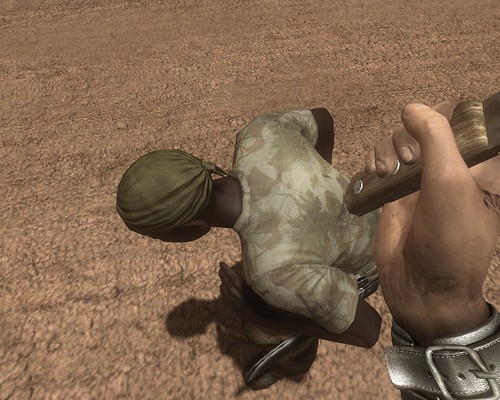
In the post release discussions of Far Cry 2 that I have read few others have mentioned what I think is perhaps the single most genre-innovating aspect of the game. The first person shooter’s de rigeur level of interaction is based on weapons – usually guns. Since as far back as Doom and earlier however, the ‘fist’ or ‘gauntlet’ or other hand-held melee device has been a present reminder that a person can readily do other things with their hands than simply aim and squeeze a trigger. Far Cry 2 takes note, and says ‘alright, let’s see what that means for the FPS’.


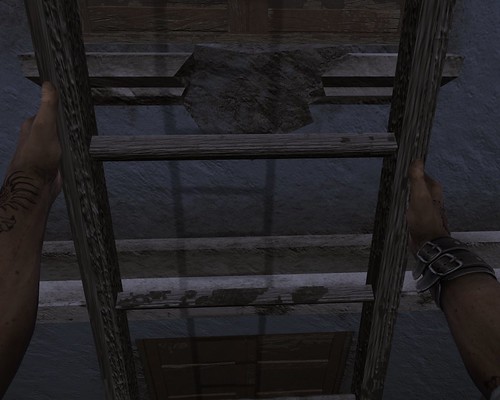
The things my hands hath wrought in Far Cry 2 are as varied as their real world counterparts – they are utilitarian, opening doors and containers, picking up objects like weapons, briefcases and diamonds. Immersion in the first person perspective is apparently paramount, and the realistic application of my hand to a door-handle is one small detail that is by no means lost on this author. The ‘procedural animation’ system makes my hand always appear to touch the object I am reaching for, twisting, collecting, opening. While it is intentionally perhaps not quite as versatile as the animation system in Spore, it doesn’t need to be. Yet it remains a significant raising of the bar for the standards of first person interaction. We will see only in time whether those standards are met, much as I suggested in my initial post on the game. If Gillen, et al. are to be believed, the Half-Life cycle of influence takes approximately two years, and I would add that the case of Halo seems to follow a similar pattern. That seems an unfortunately long time to wait for someone who, like me, is now well and truly ensnared by the Far Cry 2 immersion factor.


My hands are also my last saving grace when an explosion or gunshot wound renders me close to death, and given sufficient time can work their restorative magic upon the rest of my body. Indeed they themselves appear to miraculously heal from wounds that were inflicted mere moments earlier – an interesting parallel with the gradual healing of whole body wounds which we now take for granted and which are, admittedly, perhaps even sillier in concept than the somewhat arbitrary hit-point ‘n’ health pack combo paradigm they seem to universally have replaced. However I would not wish a return to those heady days of fighting Nazi’s on 5 hp as a result of an inability to find a health pack within arms reach. After all, the health pack only allows me to increase a semi arbitrary numerical value that somehow represents my ‘wellness’ and distance from death. Admittedly, auto regenerating health and body parts vastly improves game flow and rhythm – but it remains an abstraction. Still, even on that front Far Cry 2 proposes a slightly more refined version: Take too much of a beating and your health won’t regenerate beyond a certain point. That is, only until you stop to pump some more morphine into your blood stream – delivered via your hands and lower arms, of course – a novel mix of the arbitrary health pack and the auto regeneration systems.


Lastly, my hands are more than up to the task of bringing swift retribution to those who would visit violence on my own body. After all the above, this almost seems like the least interesting possibility, and I wonder whether compared to the amount of time spent holding a map in your hands or steering a vehicle, this last option does not actually plateau into a more even distribution. My hands are, after all, the most prominent manifestation of my avatar that I see through the game – and that they should spend most of their time trying to kill and maim others starts to seem oddly nihilistic. Then again, that is what the game’s about isn’t it?


Thursday, 13 November 2008

The unofficial VGC Zombie Survival League wants YOU!


Left 4 Dead looks set to be a runaway success, revolutionising the way we play Co-op games. If you, or a colleague, is interested in coordinating with others to increase your chance of survival in the Zombie Apocalypse, then head on over to the Vintage Game Club Unofficial Zombie Survival League thread and sign on!

Join the fight!

(Also for those interested, we're currently playing through the vintage PSone/PC game Abe's Odyssey, and it's proving to be a veritable goldmine of both videogame design mistakes and triumphs. Join in the discussion anytime in this forum board.)


Monday, 10 November 2008

Embodiment and Immersion: Fallout & Far Cry, FIGHT!


Not to harp on about a single topic or anything, but I’ve been pondering why I’ve felt so disappointed by Fallout 3. Yep, you read it right – I don’t entirely feel like the review scores it got were wholly deserved. I think I’m doubly stung because, in confluence with the hype train, they influenced my decision to go out and spend my hard earned dollars on the game. Okay, so I’m complicit in the last point for being a sucker for hype and the former can easily be countered by the suggestion that the review process is entirely subjective, which I tend to agree with, so lets skip past finger-pointing and try and identify why.


I’m a bit of a one trick pony at the moment, because I think it largely comes down to the sense of embodiment that the game offers, and certain things which only break my sense of immersion. For starters, when compared to Far Cry 2, my character in Fallout 3 feels like a lifeless sack of potatoes, and as Michael Abbott has recently noted, so do the other inhabitants. Why would I want to play a game in which I have to plod around everywhere like some machine reminiscent of Marvin the Paranoid Android when, with the swap of a disk and a click of a different icon on my desktop, I can effing sprint-slide into cover in Far Cry 2, and rip pieces of shrapnel from my body with a pair of pliers.


Secondly, and perhaps more importantly, as Kieron Gillen noted somewhere that I can’t seem to recall, in Fallout 3 you can do outrageous things like jump up on a table in the middle of a bar, and no-one cares. It would be fine, actually amazing, if there were responses for these out there actions but as it stands, nary a soul has one whit of a comment for many of the crazy things you can do in that game. And so as a player I find myself having to think up some (usually extremely tenuous) excuses for why other characters are downright uncaring about my kleptomania and other inexplicable behaviour, in order to maintain narrative coherence.


Take for example, any number of houses in Fallout: in a great many you will find a number of items that will fail to be marked as ‘owned’ by another character (shown by red text in game) which when picked up by the player results in thievery. Obviously, the majority of these are accidents, but as a result of this accidental design I find my sense of immersion broken by having to do a kind of “meta” thinking and decide whether or not I would (in character) take these items. More often than not I find myself reacting purely out of function and take the items anyway (sometimes I don’t) and take advantage of the exploit, but the fact is that every time I do it is immersion breaking. In a similar vein, by allowing me to jump on a table before beginning a conversation with an NPC, Bethesda has allowed for the occurrence of a situation in which the logical response of an NPC (which could be anything from “What do you think you are doing?” to “Get off mah dinner table, whippersnapper!”) is not present within the game. I find this extremely irritating.


The obvious counter argument is that “well you should be role playing, and if your character wouldn’t stand on a table then neither should you” and I suppose that is a valid argument. However it is most definitely NOT how I want to play a videogame – for me it’s all or nothing. If you can do something in a game, then there should be an appropriate response for it. Why even bother to let me jump on tables? What purpose does it actually serve? It’s not even as if it would be impossible to implement a system to prevent the majority of these oddities. Far Cry 2 contrives to make 100% certain that, when in a context for which a certain kind of action makes no sense (read: certain indoor areas), then you are stripped of the mere possibility of performing an incongruous action. Most notably, when you meet with certain mission-critical people indoors, you can no longer run, jump or fire your weapon – often having had your weapons taken off you before entry. This makes perfect sense, so I am only too happy to oblige!


I believe some of the reason for my difficulty in accepting the incongruity of an NPC ignoring my strange behaviour comes from not possessing a strong skill at, or even inclination towards Role Playing. And yet, even Role Players I know have commended the vintage game, Deus Ex for some of the small details that work to build a consistent and convincing world, specifically the noting of your characters entry into the womens’ bathroom. It seems to me that, while it is undoubtedly possible to force ones self into a way of playing that “only makes sense” in the game world, it makes even more sense to me to enforce certain behaviors unless they serve a purpose. In an interview I conducted with Marty O’Donnell, the audio director for Bungie studios’ and responsible for the sound and music of the Halo series, for my recently completed thesis we got onto the topic of giving the player control over “every aspect of the game”. O’Donnell said to me,

…game players have gotten into a habit [of thinking] that they should have control over all these things and basically I’m saying, you know what, no – you shouldn’t.


So, Bethesda, if you’re listening; in the future, either put in things to make sense of all my possible actions or please, please limit them to just sensible ones.


Friday, 24 October 2008

Far Cry 2: Wrongs and Rights

**SPOILER ALERT: These are mostly gameplay-related spoilers, but if you are trying to steer clear of anything and everything to do with the game before it comes out then perhaps you should stop reading now.**


Like just about every videogame in history, Far Cry 2 does some things well, and some things not so well. Lets get the wrong things out of the way first.


Okay, so FC2 has some of the same ‘open world’ problems shared by GTA, Oblivion and STALKER. While browsing an internet forum, I encountered a great and humorous way to sum it up (colourful language warning!). User ‘cpd’ said:

think gta but apartheid africa. plus fucking malaria FUCK OFF FUCKING PILLS

oh and the fact that EVERY c*** wants to shoot you. EVERY SINGLE JEEP will immediately swerve into your path to shoot the living fuck out of you. get out, kill them, repair jeep, drive 100m up the road, repeat.

So it can be kind of repetitive, and frustratingly so – but I’m kind of okay with some of that. I recognize a lot of people probably won’t be, but it kind of ties into the sense of space and physicality that I'll mention later on. I am, however, a guy who has played and nearly completed Oblivion with mods to disable fast-traveling (i.e. played the whole game on horse or foot), so maybe that rules me out. FC2 is at least as large as Oblivion, so getting around can at points become a large part of the game. While there are plenty of cars and utes lying around, the problem comes with transitions to fighting – you either have to get out of your car which takes precious time, or swap to a turret if you vehicle has one leaving you stationary and exposed. Perhaps this issue will be solved later on with the addition of someone riding shotgun, I will admit to only being about 8% of the way through (after nearly 6 hours I might add).


And the good!


The ‘buddy system’ is awesome. Specifically, the fact that if you die and you have a live buddy rested and waiting, they will immediately rush to your side, in a bid to save your life. They’ll pick you up, shoot most of the nearby enemies for you, and give you some breathing room to patch yourself up. It really does solve one of the biggest and most fundamental problems with player death – lets face it, reloading from a save game isn’t exactly all that fun. So it makes sense to do away with it if you can. John Walker from Rock, Paper, Shotgun (who I quoted in my last blog post) wrote back in September about the issue. He said,


I want a high profile, big budget, mainstream action game in which the player character is invincible. I believe that the next truly great game will be the one that does this.[1]


Far Cry 2 doesn’t make you invincible, but the number of times I have accidentally ‘died’ and have just begun to reach for the quick-load button only to fall into the arms or my buddy’s saving embrace, are many.


The other thing that Far Cry 2 does extremely well (and this is the one that I think everyone will or should be talking about soon) is give you a sense of embodiment within the world. As Steven Gaynor (Fullbright) pointed out over Twitter, ‘An FPS that visualizes your hand turning doorknobs? I think I'm in love.’[2] The comparison I couldn’t help but keep making was to Bioshock which often took control of the player and their hands to perform actions, usually in its on-the-rails cutscenes. In Far Cry 2, your hands are always doing this something and they really feel (to me at least) like they are my hands. Add to this the fact that when you need to you can see your body and legs (mostly in other on-rails sections) and you can start to see the building blocks of a really interesting system for representing the player in a virtual world.


In Far Cry 2 you never change to third person, ever – and this is a really good thing! Unfold your map and you will hold in your hands a map of the African country you're stranded in, represented as just another thing in your hands. Like a gun, but for information and orientation. When driving you can open up the map and hold it in one hand, and the net effect is similar to what you would do if performing a similar action in the real world. Your eyes flit back and forth between map and windscreen, balancing path finding with map-reading. No game has ever done that to me before. Also, getting in and out of a vehicle takes time, and while I decried it earlier as being frustrating in combat, it actually further adds to a sense of embodiment. It feels like I am a real human being with a body that takes a real amount of time to move, not some super ninja that flits around at the slightest twitch of a mouse.


In conclusion, it's too early to tell if Far Cry 2 is the ‘game changer’ that I hoped it would be in my previous post. However, even if it's not, it’s certainly another great step in the right direction, in this author’s humble opinion.


Post Script: Jim Rossignol, lover of all games open and exploratory, has posted his own initial thoughts on the game on Rock, Paper, Shotgun. He's pretty much spot on with everything except the Alt+Tab thing - mine works fine.


[1] http://www.rockpapershotgun.com/2008/09/18/rps-demands-i-want-to-live-forever/

[2] http://twitter.com/fullbright/status/971289072

Wednesday, 22 October 2008

Why I'm so fracking excited about Far Cry 2


“I think Far Cry 2 is going to be amazing…” John Walker, RPS Wireless Show, Ep.2

I also think Far Cry 2 is going to be amazing, and it’s partly because of what the guys at RPS have said about it, and partly because of what the Creative Director, Clint Hocking has said. In an interview for Edge Magazine, he used a literary comparison to explain its difference from the original Far Cry.


The original Far Cry is The Island Of Dr Moreau, a story of a mad scientist that has unlocked the inner savagery in man and created literal monsters,” says Far Cry 2’s creative director Clint Hocking. “But at the same time HG Wells was writing Moreau, Joseph Conrad was writing Heart Of Darkness, which actually has very similar themes. It’s about someone in the jungle that has discovered and is leveraging man’s inner madness, and become a metaphorical rather than literal monster. This is Far Cry 2.


The focus on the “inner madness” is an area that I am only too happy to explore. Could Far Cry 2 become the Apocalypse Now of our gaming generation? Kieron Gillen, in the same RPS Podcast as the earlier quote from Walker, explained why he thought that it was going to be a “game changer” of a game. In terms of the open world nature of the game and how the story is told, Gillen said


…the sort of narrative structure is basically you choose who you want to be from a list…and then all the other characters become NPC’s in the story…the structure generates via programming…and that’s really clever. That absolutely how we should be trying to do narratives in games instead of just the ridiculous cut-scene approach…of… your metal gear solid 4 approach, which is ludicrous. That this is absolutely embracing the form and wouldn’t be possible in any other form, [is] really interesting and novel.


If there’s one phrase that can get me instantly interested in a topic about videogames it’s “embracing the form”. To any developer who is interested in creating a game that wouldn’t be possible in any other medium, I instantly say “Yes! Lets!” and want to give them all my money. Gillen seemed to think that Far Cry 2 had the potential to change the way we perceive games, even what games are possible of, saying


Far Cry…kinda sounds like… well you can’t really go back after this. …The idea that suddenly an entire generation of gamers will be injected with something which changes how they think a shooter could work is exciting, cause that hasn’t happened since Half-Life. …Wouldn’t it be amazing if, this Christmas everything changed? The idea that the sort of things people expect form the genre changed? It hasn’t changed since 1998.


I also find that notion to be terribly exciting. However, there is always the potential that it will be ignored, missed by the game developing community at large, and generally passed over. John Walker questioned Gillen’s belief, saying


I’d love to think that were true, but unfortunately, that when PoP came out I said ‘Oh my goodness, no platform game can ever be the same again because of this game’ and yet not one single platform game has done it right at all – I mean, Braid? …Tomb Raider games…still don’t have rewinding time in them and there’s no reason not to. I mean, there’s enough mysticism and magic going on. ‘Oh yeah, but they’d be stealing that idea directly from Prince of Persia’ well what was PoP? *laughs* A direct steal from Tomb Raider. Loads of these brilliant redefining games just seem to get ignored for years, which is really frustrating.


Gillen, in response, suggests that, perhaps in this case, Prince of Persia was largely passed over because it “wasn’t the number 1 game in the industry. Whereas Half-Life was.” He says,


I think Far Cry 2 is going to be huge. If it’s huge, people rip it off more. Especially if it’s in a genre which is popular, which a shooter is.”


Early reviews are in. The verdict, so far, is quite good. Tom Chick:


The objective of Far Cry 2 as a game is to get out of the way and let you experience the game world. And there is no other game world quite like this one: haunting, spectacular, meditative, explosive, violent, and serene, all at once, and all in a mere shooter.

I for one, can’t wait to get my hands on it.

Thursday, 16 October 2008

October Round Table: Playing Halo with my Mother

'It’s a Family Affair': This month’s Round Table invites you to explore your earliest memories of playing games with your family.

How does one shoehorn family and videogames into the same sentence? In my case it’s to say that the two never were in the same sentence. As a pre-adolescent, and then as a teenager, videogames were an escape from the bullying I received while at school, and – for my parents – a welcome method of keeping me occupied for a while at home. I will admit that, as a child, I was one that demanded a lot of attention from parents and caregivers, and it was probably a happy day when they were able to sit me down with SimTower and not have to worry about keeping me occupied for an hour.


When I reached an age old enough to have my own computer (around 14 if memory serves) I began to spend entire Saturdays locked away in my bedroom playing games like the original Half-Life, Black & White, Baldur’s Gate and anything else I could pirate from friends. So it really wasn’t until last year that the phrases “my parents” and “videogames” ever really started to go together in any sentence that wasn’t an admonishment about spending so much time on my computer.

When my mother noticed how much fun my brother and I had when playing cooperatively in the Halo series of games (and how much of our focus it took away from useful and productive things like chores, eating, etc.) she declared that, it looked like fun and that one day you’ll have to show me how to play Halo. And so my brother and I introduced mum to the Halo games.


Yes, she was pretty bad at first, but she made good progress, and the fact that we played cooperatively meant it was an easy learning curve for her. The thing it made me realise, however, was just how much accumulated skill we as gamers now possess – more specifically, the ability to rapidly adapt to new control schemes and button mappings. When my brother and I played The Orange Box on Xbox 360, we perhaps took 15 minutes to become reasonably competent at the Valve variant of console shooter controls, whereas my mother with her near complete lack of previous gamepad experience still has trouble moving and looking at the same time after a number of hours playing.


So I learnt a lot from playing with family – there is such an amazing level of knowledge that we gamers take for granted. When we complain about ‘arbitrary’ control schemes, I now take a minute and think about how, well really, all control schemes are largely arbitrary to you also happen to have a similar shared gaming background. I mean, why does shoot always have to be under the right index finger? Just because that’s what we use that when shooting a physical gun? Okay, that’s a bad example because maybe there is something to be said for some button mappings, but jump as A? That’s also reasonably standard, and there is no correspondence between using your legs and pressing A with your thumb.


Thinking back to it now, when I first played Half-Life all those years ago, I had no-one to tell me about the WASD control scheme. Imagine if, instead of looking into the control mapping and thinking oh, that’s interesting, I think I’ll try that, I instead said, oh stuff that – arrow keys for me k thnx. I’d probably be horrible at modern PC shooters (in b4 “you’re already horrible at PC shooters”).


This issue of accumulated, similar experience among gamers is one that’s cropped up a fair bit in the last couple of days – Both Matt Gallant at the Quixotic Engineer and Dan Purvis at Graffiti Gamer have addressed the question of whether the ‘enthusiast’ or ‘hardcore’ gamers and press have different interests and experience to your more ‘average’ gamer (if there is such a person). I think I’m definitely on the affirmative side of the issue in question, as playing with my mother has shown me exactly how big that gap can be.

Wednesday, 10 September 2008

The peaks and perils of First Person Camera


Corvus Elrod and I have been going back and forth over twitter this week about camera's and camera choice in games, and he's written up a series of posts about 3rd person camera (yesterday) as well as 1st person view. And its gotten me thinking about first person perspective games a lot (mostly because they are the kind of game I tend to gravitate towards) and in particular why I think Assassins Creed was actually better for being rendered in third person and conversely why I think Mirrors Edge, while commendable for trying a whole slew of new ideas and daring to be different just generally, is possibly doomed to have some serious problems.

The essential point is the difference in camera angle - where Assassins Creed generally uses a 3rd person over the head view to depict Altair scrambling up the side of buildings, Mirrors Edge uses First Person perspective. So what's great about the first person perspective? Primarily, with a First Person Perspective you get a strong and direct connection with 'you' as the player inside the game. You're are looking out your own characters eyes, after all, and in my opinion this view (with certain caveats) seems natural and instantly relatable; it's closer to the 'normal' way that we view the world from our bodies. Additionally, it allows for very precise actions, most commonly used for aiming weapons such as guns, bows and other projectiles.

Unfortunately there are equally a number of negative aspects with the first person perspective game and which for the sake of brevity I will not attempt to list. However, one aspect I want to foreground in this discussion is highlighted once we start aiming for rather more complex control relationships with our player avatar and ourselves.

Basically I see the issue as one of embodiment in the game-space. As I hinted at in Corvus' original post I don't think that anyone has yet made a first person perspective game where the 'camera' - your embodied view of the world - is anywhere near as flexible as our real world bodily configuration.

We have a pair of eyes that move independently of our heads, and on top of that our heads can also move independently of our torso. The whole history to date of the First Person Perspective game (to the best of my knowledge) has been limited to an avatar that moves his or her eyes, head and torso as one. And this is actually fine... for certain things. It's fine particularly for (surprise, surprise) shooting games as when you aim down the sights of a real-world weapon, you don't move your head or even your eyes far from the target.

Additionally the first person perspective can only give the player so much information about their surroundings. For starters, our display screens for videogames are woefully too small to represent the whole field of vision of the average person, and as such, first person representations of games are going to lose information that the player would have in an identical real-world situation.

Take for example, your feet. Do you have to look down at your feet to know where they are? Of course not. So when Halo makes the player aim down at their feet we just know that some information about the environment is being lost. And you know, this is also fine. As Corvus says, many videogame protagonists are supposedly wearing bulky, vision impairing helmets after all. Except that when playing a game we also lose two (well three if you count taste) other senses that could be delivering information as well! We don't get to feel the world - the cool brush of a breeze on our skin or the crunch of gravel under our feet - or smell the scents in a space. So all this information which we would in reality be receiving about our surroundings, whether consciously or not, is further lost.

I was reading recently the Game Set Watch Column 'Diamond in the Rough - A body in the dark' about the healing system in the most recent Alone in the Dark. The article rightly discusses some of the innovative features of the game and how it encourages embodiment in the game-space, however when I came to this passage I had to stop, suppressing the urge to guffaw.
The effect of all of this is to ground you in the body of your protagonist. You must constantly check yourself for new cuts or bruises, sometimes eliciting a tired shrug from Edward when a visual check reveals no new blemishes.


Okay, am I the only person to think that having to visually check your body for cuts and bruises is actually dis-engaging you from your body? Since when have you ever had to stop and look yourself over only to realise that actually "Oh, I'm bleeding from the stomach".

Yes, granted there have been some times when I have experienced an adrenaline rush that has suppressed the pain of small injuries, and I have heard of people 'shrugging off' larger injuries as well, but if you've got the time to 'look yourself over' you've got the time to take a breather and start feeling the pain!

So, all this gets me to the point of saying, for all the benefits the FPS brings with it's embodied perspective, it comes with a bunch of detractors. And that's why I think Assassins Creed went the right way with 3rd person parkour action. I believe that the use of the third person perspective can partially make up for what we lose in the form of experienced, embodied information about the world.

Just one last quick quote - this time from Clint Hocking of Far Cry 2 talking about their own implementation of specific areas and even types of injury, Hocking responded saying

...a contextual animation [plays] based on the type of injury you received and the location of the injury. If you fell from a cliff, you might have a dislocated ankle that needs to be relocated. If you were shot in the leg, you might need to prise the bullet out with a knife, if you were hit by a grenade blast you might need to pull shrapnel our of your elbow… the idea is to hit the player with a visceral ‘punch’ right at the moment that the intensity is highest and his adrenalin is pumping. The combined effect is to create powerful psychosomatic bonds between the player, the avatar and consequently the world itself.


I think Hocking's got the right idea - whether it's first, third or some odd combination of the two (think Oblivion style interchanging) the aim has to be to convey enough information to the player and about the player so as to aid a sense of embodiment, which only aids in the never-ending quest for 'immersion'. If that's the goal (and the actually result) then I don't really mind which one they choose. Maybe I could even learn to love Mirrors Edge (God knows I really want to!).