Showing posts with label immersion. Show all posts

Thursday, 12 March 2009

Getting My Immersion Fix


There is a certain type of game that I gravitate towards and that always seems to end up being the ones I keep coming back to, spending far and away the most time with. These games delight me with tiny pockets of ‘emergent narrative’ – parts of the game that for whatever reason ‘just happen’ as a result of the fact that the world around me is alive with people and things. The stories that most stand out in my memory are the ones that pop up without explicit authorial intent, the ones that just happen to coalesce into some strange and surprising mini story.

When I play The Elder Scrolls IV: Oblivion my regular habit is to walk everywhere to get around. I like to avoid the use of ‘quick travel’ because it doesn’t make logical sense to me that I should be able to instantly teleport around the world. The ‘quick travel’ method that is present in both Oblivion and Fallout 3 pulls me out of the game because literally nothing happens to the player while travelling. I want things to happen to me; after all, it’s why I’m playing a game.

So I use foot power like the lowly commoner I am and install a mod that introduces ‘stage coaches’ that fits with the fiction of the game as well as providing an alternative method of quick travelling between major cities. When I walk, I actually quite enjoy the experience because I find the countryside calming, idyllic – enjoyable for its own sake. Interestingly, the games I’ve most recently spent the most time with all involve traversing the world – I mentioned on the special holiday edition of the Brainy Gamer podcast last year that a lot of the joy I get from playing Far Cry 2 is in learning to skilfully snake my way through a hostile environment. Similarly, the way I like to play Oblivion is just as grounded in inhabiting the world.

This week I was playing Oblivion, and as I walked my Orc north and then west from the Imperial City sewer exit all the way to Chorrol (practically via Bruma) I was quite deliberately taking the scenic route. The direct route would have cut the trip time in half, but I especially like the view from the Orange Road, you get some beautiful views of the Imperial Spire through gaps in the trees and much of the forest is made up of what looks like Silver Birch trees, my favourite (an aside: We had a beautiful silver birch outside our front door but it sadly died from a fungus a year or two ago and blew down in the wind. It was one of my favourite trees.)

On this occasion, I got about half way and spied an imp that looked like good target practice for my marksman skill. I started stalking him, readying my bow and arrow. Unaware of my presence, my first attack gained the benefit of extra damage. Success, a hit! But he is not going to be defeated by a single arrow as I’m still a lowly level 1 Orc, and so the creature flees. This happens because I have a mod installed that makes all sorts of back-end faction changes and the end result is that this Imp now behaves somewhat like a normal wounded animal. I finish him off and continue my journey west and shortly come across an intriguing scene. The bodies of multiple bandits are strewn across the road and the survivors of a pack of wolves haunt the road ahead. They were clearly weakened from their fight with the bandits with one of their number already dead, so I had no trouble finishing them off from a distance. But I was so shocked when I came across such a strange scene that for a moment I almost forgot I was playing a game.

I realised quickly that I was more surprised by the fact that this interaction was entirely natural and actually made complete sense. I could tell at a glance that the bandits, who had been hiding off to the side of the road waiting to pick off unwary travellers, had fallen prey themselves to a pack of hungry wolves. I didn’t see it happen, but the knowledge that this was off happening somewhere else in the world as I wandered around was thrilling. After all, why should my player character be the center of attention in the world? My character is just a nobody at this point, so why should everything in the game be planned and scripted in advance just for me? The real world doesn’t work in that way, so why should a videogame?

I guess this is the difference between games as entertainment – the highly scripted Hollywood film approach to games – and games as experiences. The difference has been described by many, but perhaps most effectively by Steve Gaynor in his post ‘Being There’. The games I love are not the ones that try to usher me along and give me a tightly controlled narrative experience, even though I still enjoy those occasionally. Instead, the games I love are about ‘Being There’.

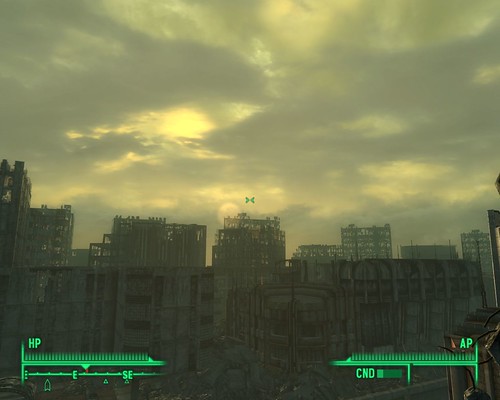
But what makes one game better at ‘being there’ than another? And for that matter, what makes the ‘Being There’ itself enjoyable? For Oblivion I find that it’s the little details that build the world and make me love the game – stumbling upon unscripted events that could easily be happening without your presence tickle all the right places for me. Conversely I think a large part of why I struggled to engage with Fallout 3 (after all it’s just Oblivion with guns, right?) is that it seemed to lose much of these unexpected events, instead leaning heavily on discovering ‘places of interest’ that sit dormant waiting for you to find them. To me, Fallout 3 distinctly lacks the feeling that the world is ‘lived in’ by anyone at all, heightened by the fact that there are so few people ever doing anything in the world outside of major quest hubs.

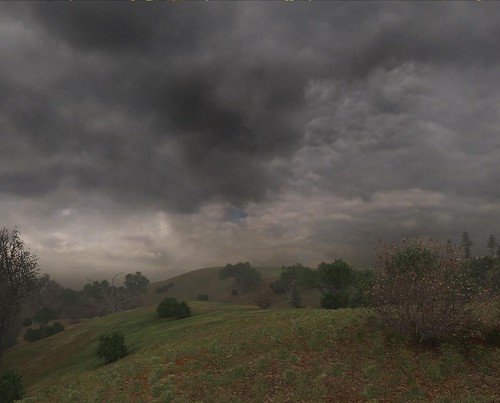
I’ve also been playing STALKER this week, and while it’s been lauded as a ‘living world’ game similar to Oblivion, I haven’t actually found it as engaging. I think, in this case, it comes down to the geographic design of the world. Areas in STALKER feel like wide corridors connected only by entry and exit points. It would be much more attractive to me if it did away with it’s ‘levels’ and opened up The Zone a bit more. I also wonder if the enjoyment of ‘Being There’ in Oblivion and Far Cry 2 is not present in STALKER because of its distinctly dark and brooding aesthetic. While there are undoubtedly moments of beauty, they seem much fewer and further between.

Lastly, in a strange and maybe unnatural comparison, I think I’m looking forward to (eventually) playing the new Empire: Total War game for somewhat similar reasons. Judging by this after action report by Tim Stone over at Rock, Paper, Shotgun the battles look like they encourage the feeling of ‘Being There’ with their rich level of detail and potential for player-created narratives. I look forward to seeing whether that impression is accurate.

In the meantime, does anyone else have any suggestions for games that encourage that feeling of ‘Being There’ - of watching the world flow around you? Hit up the comments and let me know and I’d also be interested to hear what particular aspects of those games make you feel like you’re 'really there'.

Thursday, 26 February 2009

Guest Rant: Turning The Other Cheek


The following piece was written by a friend of mine and I offered to post it on my blog if he could get the thing down in print. Follows is Tim's rant about realism, immersion and convincing game AI.


I am a fan of Control Alt Delete comics. I am also a fan of Call of Duty 4. Recently Tim Buckley, author & artist of CAD, made a comic joking about Killzone 2. To anyone who has read this comic my rant will make sense...or at least more sense than otherwise. (So go read it – Ed.) Regardless it did bring up the question, to my mind, of why game AI designed to respond tactically to a player’s skill or playing style, which is attempting to mimic the real world, would in the comics situation just send more troops in to die. Now true enough; if one man with a gun runs into a military facility then sending in a squad of heavily armed troops may be entirely appropriate as a response, but seriously, how many men can be sacrificed before someone says, "OK...lets just lock him in and flood the building with poisonous gas”.


Sure that may be overkill, but considering how many people (virtual people) die every time I play Far Cry 2, its curious that one man can make it the distance in a computer game without being nuked, without being murdered by the very factions I’m betraying. The commanders of these armies must be lunatics to think that a guy who has already killed many, many of their soldiers or security guards is going to have trouble if you just send in another 10.


It's then somewhat surprising these games can create and hold any sense of immersion. Sure we'd all love to see ourselves in a fantasy, an unstoppable force of good or evil or ponies...whatever you stand for – that doesn’t change the fact that no single person could possibly do the sorts of things we achieve in the virtual world. This is not to say games should make all characters week and venerable cowards who run in fear at the first site of an enemy...thought that did work for Mirrors Edge. But it is to say, why are game developer’s still obsessed with creating a sense of realism when the point of these games is often to escape the real world.


And this brings me to why I love Call of Duty 4. Any game that Nukes the player character halfway through the story is good in my books. Still, wouldn't it be nice to return to the good old days of Sonic the Hedgehog where you could die horribly by drowning but before that happened, you got bright colours and a gameshow countdown timer to bring it about, rather than horrifying orchestral music and 8 shades of gray?

- Tim.


Wednesday, 31 December 2008

From Go to Woe - Only The Best of SLRC in '08


Two Thousand and Eight in the year of our Lord was the year SLRC really entered its stride. While the URL of ‘drgamelove.blogspot.com’ was officially claimed in October of Oh-Seven, the first real piece of writing on the blog that says anything worth reading was the April ‘08 Round Table entry ‘Starcraft and the power of 3’s’. Off to a slightly shaky start, the piece was roughly shoe-horned into the round table topic of the month but was ostensibly targeting the potential within asynchronous gameplay.


Actually, there was a small piece buried in the earlier fluff that pointed towards the future direction of the blog – a post about how System Shock 2 is a bit skewed towards the hacker/navy career path. I think that I was actually wrong in saying that though (even if I didn’t exactly test the alternatives in practice), but I’d be interested in hearing other tales from SS2 players, if only because it’s such a classic (and dare I say canonical?) game. Its influence on the hallowed Bioshock is deeply profound and obvious to any veteran of the earlier ‘Shock game.


In May, while researching my thesis I attended the “first ever academic conference held in World of Warcraft” and then promptly cancelled my subscription. I never did go back for Wrath. Also in May, I presented to my honours class, a seminar on immersion in videogames and took an Xbox with me to show them all Call of Duty 4. Immersion is an interesting topic, and the class members were most familiar with literary comparisons – an interesting counterpoint to my own reliance on CLINT HOCKING and Chris Crawford for theories of videogame immersion.


In June I created the ‘Things-to-do-while-you-should be working on your thesis’ tag, which was first applied to one of my most enduringly popular posts ‘10 Free Indie Games to play while not working on your thesis’, although… it seems I never applied that tag to that actual post. Nevertheless, it fits, and it has been consistently a popular search result on Google for ‘Free Indie Games’. Also in June, I blogged what is possibly my longest post ever, ‘A post for Xenia: Simulation and an apologetic explanation of Super Columbine Massacre RPG’. Which was probably the first post of mine to gain some real traction in the blog-o-sphere, going purely on comments. L.B. Jeffries managed to succinctly sum up my argument saying,

If I'm reading you right...the basic idea is that instead of making a bunch of events to experience the creator should instead be creating a bunch of reactions to the player.


Which would have only been so much easier if I had just said that, but then it might not have been as persuasive? Who’s to know. It was also an important landmark for SLRC because it really hints at the focus of most of my analysis and player/experience centric-criticism for the rest of the year. These are the things that ‘I’m Quite Interested In’.


July was almost a non-starter, busy as I was with thesis coursework, but I managed to squeeze out a post asking the question ‘Should we aim for some sort of rating system for indie games?’ after I introduced DEATH WORM to a bunch of 6-10 year olds to general hilarity.


In August, I wrote up what eventually became the motivating question for my thesis – why do game developers think a linear medium like music can just be shoved into a nonlinear videogame? – in the post ‘Videogames and Digital Musicians’.


September opened with the cracking ‘What speaks to me the most’, a post all about my inclination towards the ‘tourist’ player type in Mitch Krpata’s New Taxonomy of Gamers, the spiritual successor to Richard Bartle’s earlier ‘taxonomy of MUD players’. Expanding on that idea and partially in response to a post by Corvus Elrod adressing player preference for first person or third person camera, I wrote ‘The peaks and perils of first person camera’. An interesting foreshadowing of things to come – in it I mentioned a Game Set Watch column which pointed out how ‘innovative’ the latest Alone in the Dark game’s mechanic of forcing you to check your body for injuries was. Almost in answer to my criticism of AitD (Why would you need to know where to heal yourself if you are actually in this body?), Far Cry 2 would later in the year present a similar focus on embodiment minus the need to ‘discover’ where you were injured. In the rest of the month of September, I wrote about ‘The Affect Discussion’ which still hasn’t really been addressed adequately by videogame critics or proponents, and did a back-and-forth retrospective with an old friend of mine in a retrospective on the classic computergame-making-game ZZT.


If April was SLRC’s beginning, October was the month in which we could finally say ‘SLRC has arrived’. The big announcement in it was the completion of my thesis, but it was quickly overshadowed by, first, my second ever contribution to the Blogs of the Round Table ‘Playing Halo with my Mother’ and later by my initial burst of enthusiasm for Far Cry 2. The initial pre-game discussion in ‘Why I’m so Fracking excited about Far Cry 2’ was quickly followed by ‘Far Cry 2: Wrongs and Rights’ in which I had my first encounter with a game designer In The Wild when CLINT HOCKING stopped by the blog to thank me for the attention paid to his game. I then tried to pry myself away from Far Cry 2 to play Fable 2 with a rather scathing result, and at around which point SLRC celebrated its technical First Birthday. October rocketed home with ‘War Stories from Mosate Soleo’ leading the charge, followed up close behind by a quick photo-journey through Far Cry 2 (which has sadly since been broken by my flickr reorganisation). Finally October culminated in the Magnum Opus ‘Hocking’s Masterpiece’ which has been rather widely linked to as an excellent example of SMART fanboyishness.


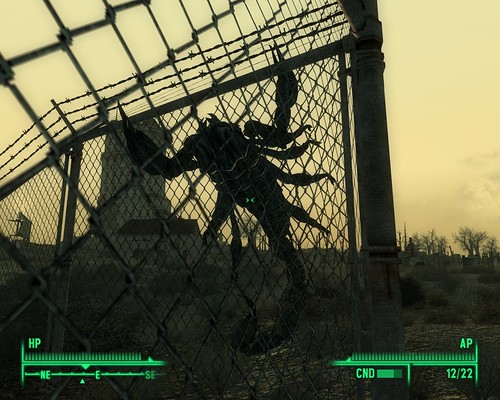
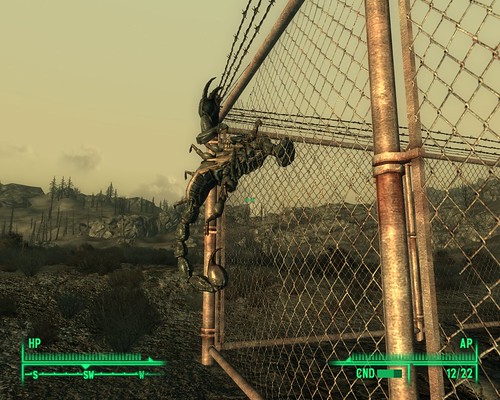
Ah, November, what a month. If I had to pinpoint the onset of The Madness it would be somewhere in November. Two Posts about Valve’s Left 4 Dead added a distinctly metallic taste to the month and with the additional arrival of Fallout 3 it became a bit of a clusterfrak. Far Cry 2 had well and truly ruined me for any and all future games with Fallout 3 not surviving the comparison with honour intact. However, with the posting of this rather vitriolic diatribe against its rather flaccid ending (which was supposed to be more entertainingly ironic than I think the post it ended up) I think I needed to straighten-up and fly right by criticizing a rather less easy target. And perhaps a little more coherently. Which I did when I got annoyed by the vapid portrayal of ‘the moustache twirling evil doer’ character, Mister Burke and pointed out how he should have been more Heath Ledger and less Jack Nicholson. And there’s was a photo of a scorpion stuck on a fence! Giggle!


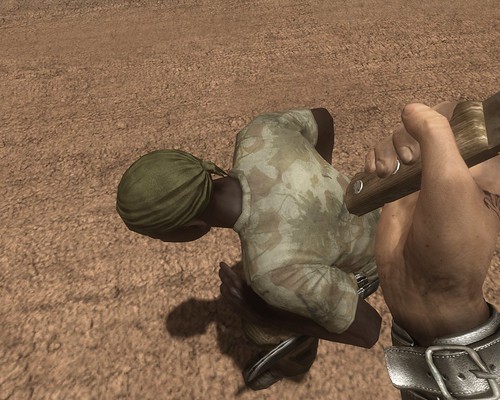
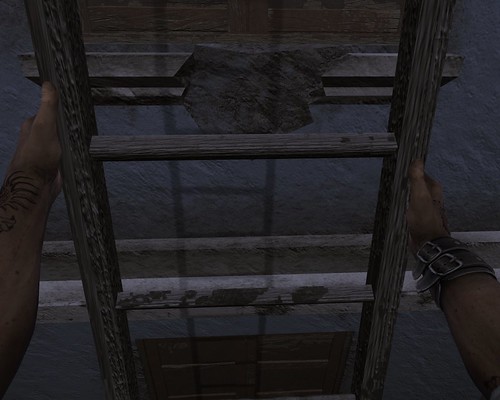
Which leads into December, wherein The Madness reaches a head – starting with ‘Frank Bilders is Dead’, a first person perspective piece. Look ma’, I’m in a vidjagame! Erm… I also posted a review for a game that came out two months prior, and with which I was right pleased (the review, not the game: that as pretty dumb) – here’s to more videogame review gigs! Then I wrote what I felt was perhaps a slightly overlooked piece on Far Cry 2I have two hands and with them I touch the world’, which (I thought at least) was Pretty Smashing Actually and all about the difference having hands as the central embodiment of the avatar made over traditional FPS gun-centrism. Around that time the whole ‘Games Journalism Journalism’ trend fired up again (lead by Mister Snappy Gamer and his Angry Internet Man impersonations) and I had to have a go myself – writing to criticize the trend of talking about games and mechanics as though it was more maths than art. Yes that touched a bit of a nerve, but the cool was kept. I’m just much more into the experience and the subjective (done well) – and this could not be made plainer than by my ‘Going Gonzo’ piece. In December I also finally got my thesis marks (86 – High Distinction, just) and posted the full text for all and sundry. With that, I started posting the (exceptionally long, but terribly worthwhile) transcript of my interview with Marty O’Donnell – composer and Audio Director of the Halo series. It’s going to run to about 7 or 8 parts, but I promise, it’s totally worth a read. Shortly thereafter (and just to fill in a posting gap, I might add) I re-posted a lightly edited excerpt from my honours thesis, ‘Audiosurf – Breakfast of Champions’ which swiftly got picked up by Kieron Gillen of Rock Paper Shotgun in linked to in The Sunday Papers. The result was no less than 700 pageloads in the space of a few days. Just going off my own habits, I click through maybe one or two items in RPS’ Sunday Papers weekly, so if I’m at all indicative, their readership is probably quite easily in the 5,000-10,000 reader’s mark. And that’s just their more intellectual and less busy weekend post! Phwoar!


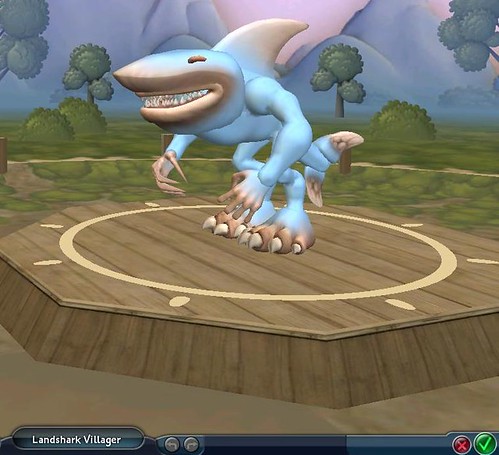
A number that big requires a brand new paragraph to get over, so lets finish the last part of December by mentioning that I was (to my own child like delight) included in Michael Abbott’s wonderful end of year gamers confab epic podcast of legendary proportions. That was an absolute blast to be on and a huge honour to be considered alongside some truly respectable bloggers. Not content to finish the year on such a self-congratulatory note, I then went and followed up with a second Gonzo journalism piece “Gonzo Pt 2 – Return of the Shark”, which was either brilliant or a spectacular failure. And, that’s the only way I’d want it. Look for more of same in early Oh-Nine. Toot-Toot! Last but not least and barely sneaking into 08, I finally got around to playing some more Spore and discussing (if ever so disdainfully) the procedural music in the game, with "Spore 'n' Eno".


Thanks for reading (or even glancing over), all you readers out there. You know who you are and I don’t (but apparently Feed Burner say’s there’s now 60+ of you! Where’d you all come from?!) so you’ll just have to give yourselves a pat on the back for discovering SLRC ‘before it jumped the Shark’. Onwards!, to Twenty-Oh-Nine with nary a backward glance and a slight ringing in the ears. Enjoy the New Year and please drink responsibly.


Monday, 8 December 2008

I have two hands and with them I touch the world

I have two hands, and with them, I touch the world.


In the post release discussions of Far Cry 2 that I have read few others have mentioned what I think is perhaps the single most genre-innovating aspect of the game. The first person shooter’s de rigeur level of interaction is based on weapons – usually guns. Since as far back as Doom and earlier however, the ‘fist’ or ‘gauntlet’ or other hand-held melee device has been a present reminder that a person can readily do other things with their hands than simply aim and squeeze a trigger. Far Cry 2 takes note, and says ‘alright, let’s see what that means for the FPS’.


The things my hands hath wrought in Far Cry 2 are as varied as their real world counterparts – they are utilitarian, opening doors and containers, picking up objects like weapons, briefcases and diamonds. Immersion in the first person perspective is apparently paramount, and the realistic application of my hand to a door-handle is one small detail that is by no means lost on this author. The ‘procedural animation’ system makes my hand always appear to touch the object I am reaching for, twisting, collecting, opening. While it is intentionally perhaps not quite as versatile as the animation system in Spore, it doesn’t need to be. Yet it remains a significant raising of the bar for the standards of first person interaction. We will see only in time whether those standards are met, much as I suggested in my initial post on the game. If Gillen, et al. are to be believed, the Half-Life cycle of influence takes approximately two years, and I would add that the case of Halo seems to follow a similar pattern. That seems an unfortunately long time to wait for someone who, like me, is now well and truly ensnared by the Far Cry 2 immersion factor.


My hands are also my last saving grace when an explosion or gunshot wound renders me close to death, and given sufficient time can work their restorative magic upon the rest of my body. Indeed they themselves appear to miraculously heal from wounds that were inflicted mere moments earlier – an interesting parallel with the gradual healing of whole body wounds which we now take for granted and which are, admittedly, perhaps even sillier in concept than the somewhat arbitrary hit-point ‘n’ health pack combo paradigm they seem to universally have replaced. However I would not wish a return to those heady days of fighting Nazi’s on 5 hp as a result of an inability to find a health pack within arms reach. After all, the health pack only allows me to increase a semi arbitrary numerical value that somehow represents my ‘wellness’ and distance from death. Admittedly, auto regenerating health and body parts vastly improves game flow and rhythm – but it remains an abstraction. Still, even on that front Far Cry 2 proposes a slightly more refined version: Take too much of a beating and your health won’t regenerate beyond a certain point. That is, only until you stop to pump some more morphine into your blood stream – delivered via your hands and lower arms, of course – a novel mix of the arbitrary health pack and the auto regeneration systems.


Lastly, my hands are more than up to the task of bringing swift retribution to those who would visit violence on my own body. After all the above, this almost seems like the least interesting possibility, and I wonder whether compared to the amount of time spent holding a map in your hands or steering a vehicle, this last option does not actually plateau into a more even distribution. My hands are, after all, the most prominent manifestation of my avatar that I see through the game – and that they should spend most of their time trying to kill and maim others starts to seem oddly nihilistic. Then again, that is what the game’s about isn’t it?


Monday, 17 November 2008

Fun and Loathing in Las Vegas Washington D.C.

Why is this not as funny as it should be?

Lately, I’ve been trying to play Fallout 3 in a way that doesn’t get me as angry and annoyed as the situation I described in my previous post about the game. I’ve started using a few mods that both improve the interface and make the ‘karma’ system more opaque. While welcome, sadly the changes are a case of ‘too little too late’ to enable anything more than a “meh” feeling about Fallout 3 in general. While the rage has died down, I can’t resist but add my .02c on what’s still bothering me.


Mostly it’s to do with the moral judgments the game makes and the attendant Karma system. One reviewer (I fail to recall who, perhaps Alec Meer?) in their write-up of Fallout 3 mentioned that whatever character you chose to play, the Fallout 3 world would resist the temptation to punish you harshly or judge you for your actions. Having only first hand experience with Fallout 2, I can’t speak for the whole series, but this seems quite consistent with the feel established by the first two games. If you wanted to kill random people and take their stuff, you’d be feared, naturally, but that was about it. There was really no judgment about what kind of person you were. Similarly, the villains were primarily cartoon-stereotype individuals, deluded madmen (and women) or brutish bullies. They conformed to typical archetypes that allowed them to transcend cliché and enter the realm of intelligent satire.


In Fallout 3 there is a character called Mr. Burke. He is a suit who works for a very rich man and apparently revels in nihilistic destruction. Let’s imagine how this character would have appeared in Fallout 1 or 2. He would probably be suited, probably comes with a bodyguard or two and would fit into the “madmen killer” stereotype. You understand him, and that he is meant to be a stereotype. You know that he is unstable, a ruthless killer, but also otherwise completely rational. He sees life as something that is made more precious by death, and so seeks to spread death in order to re-value life in this post-apocalyptic wasteland. You understand his twisted and flawed logic, his broken personality and know that there is some kind of rationale for why he is this way, something in his past, perhaps. Maybe he just read too much Nietzsche, either way, you are never supposed to believe that he is inherently bad or evil, just misguided in the extreme. There is no presiding moral outrage here unless you choose it yourself, just impartial acknowledgement of the fact that he must be stopped or he will continue to kill. End of story.


Let’s contrast this with the character of Mr. Burke in Fallout 3. His voice and character says he’s some of these things, and his dialogue is written to make sense this way… but his voice actor (voiced I am sure by the same person who did the The Speaker for The Dark Brotherhood in Oblivion) inflects in his voice that, “I am slimy and evil”. His voice drips with “evil” and “nastiness”. You should hate me and be outraged by my actions, it says. This is not Fallout. This is too ham-fisted for Fallout. If Mr Bourke is to be serious, it should be more like the disturbing style of Heath Ledger as ‘The Joker’ than cartoon-villain Jack Nicholson.


The difference lies in that while my earlier characterization of Mr. Burke was intentionally simplistic, he was a parody of and commentary on that simple-minded, 1950’s aesthetic. His character manages to pose deep questions while being simplistic when the latter is a po-faced affair that lacks the same semi-aware playfulness that says “I know I am a stereotype and I’m playing up to it”. In short, Mister Burke pisses me off for taking himself too seriously. It would be fine if he did, except there is no accompanying pay-off in additional depth. He should be scary to be around, intimidating and edgy.


This picture also has nothing to do with this post.

I think most of this is a result of a combination of voice acting, writing and animation, and Fallout 3 to me seems to end up making judgments without asking the real questions with regards to the Mr. Bourke character. Instead of traditional morality being destroyed by the nuclear bombs that wiped out so much else of civilization, it has been dragged into the apocalyptic wasteland without a care for how well it fits. It fails to capture the levity of the original titles and loses the accompanying ability to contrast the whimsical with the horrific. It would be all too easy to blame this on the transition from cartoonish 2D sprites to full 3D models, but I think that’s a bit of an easy out.


I don’t quite know what the answer to this problem is. I have the feeling, though, that there’s something they could learn from Left 4 Dead’s ability to blend being constantly surrounded by death in the apocalypse (the serious) with the decidedly upbeat characters. The aesthetic at least seems closer to my taste than Fallout’s. That said, however, the beautiful wasteland remains pretty much the only place in Fallout that I can enjoy without cringing at something or someone every other second.


Wednesday, 12 November 2008

...In which I rage against the ending of Fallout 3

FALLOUT 3 SPOILERS ABOUNDING! TREAD BEYOND AT YE’ OWN PERIL!


This post is, of course, a rather self-indulgent, passionate rant, but I really, REALLY need to say this out loud. Plus, I think it's kind of a funny piece.


I really, really, really hated the ending of Fallout 3.

It seemed to sum up the whole rest of the game for me– sloppy, slap-dash, ill-conceived. An anecdote perhaps to elaborate.


First time through I tried to “save the wasteland” through the powers of verbal persuasion (just because I could and indeed, I did) and after convincing evil Colonel Leaves-turn-brown-and-fall-to-the-ground that he should just up and leave I was promptly stuck in a locked room with no exit and an obvious script failing to run. GG Bethesda, you cagey fellows.


So I did a bit of a RRRAAAGGGEEE and a reload back to the admittedly conveniently placed autosave which had occurred upon entering The Final Room Of The Game… dun dun DUN! So instead of exercising my charm, wit and powers of persuasion I just blasted Captain Trenchcoat in the head several times until he was dead. Did I mention I was already level 20? Well I was, and it was boring, everything was already too easy. I honestly don’t know why they even let me go past 15, as that would have been the decent thing to do to stop me form becoming some sort of super-god-man creature that explodes heads with a single look… But I digress.


So now, after blowing this guy away and instead of standing there like a poor excuse for a shop-front mannequin, my Brotherhood (Sisterhood?) of Steel compatriot Miss Lady Lyon starts her “finish the game now in the most clichéd and overwrought manner possible” script. You’ll remember this one from before, as it was obviously the one that didn’t start correctly earlier. So anyway she runs up to me and fills my screen with her waxy complexion and tells me that it’s all over and we win – YIPPEE! Then Dr Li tells us over the intercom that, oh noes, the plant is about to explode maybe from being damaged by the fighting or maybe by the sabotage that might-or-might-not have been committed before we even got here insert breath. You can tell how important it is by how breahless I am. Truly, a dreadful situation, I’m sure you’ll agree.


But wait, like a bad 90’s infomercial, there’s more. Someone maybe very possibly you will have to go into the control room which is now filled with deadly radiation to activate the purifier or it will explode!


So. That’s the 411. Miss Lyon turns to me and says “One of us will have to go in there and activate the purifier but the radiation is sure to kill anyone who goes in there!” Now I’m a smart guy, I thinks to myself – hey, I’ve got an advanced radiation suit, and I’ve got enough Rad-X and Rad-Away to walk through the reactor room of Chernobyl, I could maybe probably perhaps actually do it alright. But then I thinks to myself, hey I have a better idea- do I know anyone who could stand abnormally-high-and-sure-to-be-lethal-for-a-normal-person-dose of radiation? Oh yeah, that big green Meta Human dude who is STANDING RIGHT FUCKING BEHIND ME. *ahem*.


So I, in my most noble voice, tell Miss Lyon, with a wink and a smile, “Why certainly, old gel’, I’ll venture into yon radiation filled room and give that switch the old flickeroo. It won’t know what hit it, wot wot!” I turn to my traveling companion with a twinkle in my eye and say. “Fawkes ol’ buddie ol’ pal – I want you to go into the room with massive levels of radiation which are completely and totally harmless to you but would kill me faster than a green-snake up a sugar cane and save absolutely everyone in the wastelan. You're practically born for the job!” To which Fawkes ol’ buddie ol’ pal replies “Fuck no! You have a destiny, rah rah rah. I ain’t goin in there witchu!”


Bah! Fine, I didn’t need your help anyway… idiot. So in I go, stiff upper lip and all that, (rather chipper actually what with my advanced rad-suit and my small mountain of anti-radiation meds) rather convinced of the certainty of my own safety and survival. I enter the airlock and it opens up into the control room. See now, that wasn’t so bad was it? Rad count within acceptable levels, nothing actively killing me...Now where’s that switch I have to flick? Is it over there? (I run off round the back) HOLY SWEET JESUS THERE’S ANOTHER MUTANT IN HERE MOMMA!!!


Astute observation and correct but only insofar as there is a mutant in here, rather than another. Fawkes, by virtue of me not telling him to “stay where he was” outside, has followed me INside thanks to the miracle of the spawning distance. Yah rly. GG Bethesda, you cunning, cunning linguists, GG. /sarcasm and all that.


Okay fine. Whatever, it’s a bug. I’ll pretend he’s not there. Input the code, purifier starts, everything is honky dorey. Wait, what’s this? I’m swaying slightly. Now I’m keeling over! What the FRAK?! I feel fine! Seriously! Those Rad-Away’s I took make me less irradiated than I’ve been for days! And now you’re SCRIPT killing me?! Awww man!


Bah! I’ve had enough of being forced into the binary dichotomy of being a self-sacrificing hero or a treacherous villain in games! I’m going back to Far Cry 2 where no one judges me for being a complete fucking asshole as long as I get the job done. Fuck yeah.

Monday, 10 November 2008

Embodiment and Immersion: Fallout & Far Cry, FIGHT!


Not to harp on about a single topic or anything, but I’ve been pondering why I’ve felt so disappointed by Fallout 3. Yep, you read it right – I don’t entirely feel like the review scores it got were wholly deserved. I think I’m doubly stung because, in confluence with the hype train, they influenced my decision to go out and spend my hard earned dollars on the game. Okay, so I’m complicit in the last point for being a sucker for hype and the former can easily be countered by the suggestion that the review process is entirely subjective, which I tend to agree with, so lets skip past finger-pointing and try and identify why.


I’m a bit of a one trick pony at the moment, because I think it largely comes down to the sense of embodiment that the game offers, and certain things which only break my sense of immersion. For starters, when compared to Far Cry 2, my character in Fallout 3 feels like a lifeless sack of potatoes, and as Michael Abbott has recently noted, so do the other inhabitants. Why would I want to play a game in which I have to plod around everywhere like some machine reminiscent of Marvin the Paranoid Android when, with the swap of a disk and a click of a different icon on my desktop, I can effing sprint-slide into cover in Far Cry 2, and rip pieces of shrapnel from my body with a pair of pliers.


Secondly, and perhaps more importantly, as Kieron Gillen noted somewhere that I can’t seem to recall, in Fallout 3 you can do outrageous things like jump up on a table in the middle of a bar, and no-one cares. It would be fine, actually amazing, if there were responses for these out there actions but as it stands, nary a soul has one whit of a comment for many of the crazy things you can do in that game. And so as a player I find myself having to think up some (usually extremely tenuous) excuses for why other characters are downright uncaring about my kleptomania and other inexplicable behaviour, in order to maintain narrative coherence.


Take for example, any number of houses in Fallout: in a great many you will find a number of items that will fail to be marked as ‘owned’ by another character (shown by red text in game) which when picked up by the player results in thievery. Obviously, the majority of these are accidents, but as a result of this accidental design I find my sense of immersion broken by having to do a kind of “meta” thinking and decide whether or not I would (in character) take these items. More often than not I find myself reacting purely out of function and take the items anyway (sometimes I don’t) and take advantage of the exploit, but the fact is that every time I do it is immersion breaking. In a similar vein, by allowing me to jump on a table before beginning a conversation with an NPC, Bethesda has allowed for the occurrence of a situation in which the logical response of an NPC (which could be anything from “What do you think you are doing?” to “Get off mah dinner table, whippersnapper!”) is not present within the game. I find this extremely irritating.


The obvious counter argument is that “well you should be role playing, and if your character wouldn’t stand on a table then neither should you” and I suppose that is a valid argument. However it is most definitely NOT how I want to play a videogame – for me it’s all or nothing. If you can do something in a game, then there should be an appropriate response for it. Why even bother to let me jump on tables? What purpose does it actually serve? It’s not even as if it would be impossible to implement a system to prevent the majority of these oddities. Far Cry 2 contrives to make 100% certain that, when in a context for which a certain kind of action makes no sense (read: certain indoor areas), then you are stripped of the mere possibility of performing an incongruous action. Most notably, when you meet with certain mission-critical people indoors, you can no longer run, jump or fire your weapon – often having had your weapons taken off you before entry. This makes perfect sense, so I am only too happy to oblige!


I believe some of the reason for my difficulty in accepting the incongruity of an NPC ignoring my strange behaviour comes from not possessing a strong skill at, or even inclination towards Role Playing. And yet, even Role Players I know have commended the vintage game, Deus Ex for some of the small details that work to build a consistent and convincing world, specifically the noting of your characters entry into the womens’ bathroom. It seems to me that, while it is undoubtedly possible to force ones self into a way of playing that “only makes sense” in the game world, it makes even more sense to me to enforce certain behaviors unless they serve a purpose. In an interview I conducted with Marty O’Donnell, the audio director for Bungie studios’ and responsible for the sound and music of the Halo series, for my recently completed thesis we got onto the topic of giving the player control over “every aspect of the game”. O’Donnell said to me,

…game players have gotten into a habit [of thinking] that they should have control over all these things and basically I’m saying, you know what, no – you shouldn’t.


So, Bethesda, if you’re listening; in the future, either put in things to make sense of all my possible actions or please, please limit them to just sensible ones.


Thursday, 6 November 2008

A Spoiled Gamer, Am I.

I am a spoiled gamer. For the past few weeks I have done little but play videogames and write about them; in between deciding that I don’t want to pursue a PhD and career as a life-long student, of course. However, that is not exactly what has spoiled me.

I’ve been playing Fallout 3 for the past two days (pretty much to the exclusion of all else) and while it’s certainly a lot of fun, by my reckoning it seems weirdly perverse to award the game a 10 out of 10 score, as a number of outlets have[1]. I can’t help but wonder if these reviewers were even playing the same version of the game as me. A 10/10 game you expect to be polished to perfection and bug free. Fallout 3 is not. A 10/10 game you expect to push gaming conventions forward in new and unexplored directions. Fallout 3 largely does not. Finally, a 10/10 game you expect to be as good or better in every respect to other, lesser scored games of a similar vintage and again, I cannot help resist making certain comparisons that say Fallout 3 is not.


The main thing that I find particularly hard to swallow, amplified a hundred fold by the fact that the last game I played was Far Cry 2, is the sense of embodiment in the world. Far Cry, in this respect, is the more truly Next-Gen game in my opinion, and I discussed how a sense of embodiment is one of its greatest achievements in a previous post. While there are obviously other areas of the game that are less inspired, the importance of what Hocking and his team have achieved in giving you a sense of body, I believe, cannot be over emphasized.


So comparatively Fallout from the moment you begin feels different. Ignoring the fact that I had an audio bug during the intro video which obscured the voice-over behind some static noise (10/10? Really?), your character’s movements in Fallout seem like a direct rip from Oblivion. While Far Cry 2 goes to extraordinary effort to animate and portray you as a character to the best of current technical limitations, Fallout 3 reflects a character design aesthetic stuck in yester-year that doesn’t seem to mind stilted and jerky animations. It was fine in 2006 that your character slid around the world on somewhat greasy shoes, but in 2008 (nearly 2009 now!) haven’t we come a bit further? I’m by no means the only person to pick up on this aspect of the game, notably Alec Meer in his (in my mind much more clear-headed review of Fallout[2]) noted some very real issues with the game and scored it much more appropriately, giving it an 8.8. Additionally, I was linked to a piece on Boing Boing Gadgets by friend of SLRC, Aandnota, that described an encounter with a prostitute, saying:

The prostitute NPC mutely follows you up to your room and lies down on the bed beside you like a fetal lump. You then get to sleep on the bed beside her. And that's it. The next morning, you wake up, and she patrol-puppets out without a word.[3]


After experiencing Far Cry 2 in all its whacky, embodied insanity I am now spoiled for a sense of physical connection to my character. If Kieron Gillen is right, and Far Cry 2 follows a similar trajectory of influence to the original Half-Life, it will probably be two to three years before we see games directly ripping-off its focus on a sense of body. Which somewhat saddens me because I think a Bethesda-style RPG with Far Cry’s animation and determination to be grounded in the world would be an absolutely KILLER combo. I hear all the time people saying that they just wanted a tiny bit less of being always on the run in Far Cry and maybe a little bit more of some RPG elements, like a heightened sense of factions. Traditionally, these things could be sorted by fan made modifications, however it’s been stated that there will be no modding tools for Far Cry 2. What I wouldn’t give to see that change.


Ah well, a guy can dream, right?


[1] See, http://www.metacritic.com/games/platforms/pc/fallout3 - The list includes 1up.com, Eurogamer, Gamespy, GameRevolution, G4TV, Thunderbolt, and LEVEL.

[2] See http://www.rockpapershotgun.com/2008/10/28/attack-of-the-fallout-3-reviews/ for a quick summary and a link to the full text.

[3] John Brownlee, “Fallout 3, or "Why can't Bethesda make fucking post-apocalyptic hookers fun?", http://gadgets.boingboing.net/2008/11/05/fallout-3-or-why-can.html

Wednesday, 29 October 2008

A brief photo-journey through Far Cry 2's Africa


Or view it on flickr here.

EDIT: I have since rearranged my flickr profile and as such, it has broken. Here's the closest to the original set of images.

Friday, 24 October 2008

Far Cry 2: Wrongs and Rights

**SPOILER ALERT: These are mostly gameplay-related spoilers, but if you are trying to steer clear of anything and everything to do with the game before it comes out then perhaps you should stop reading now.**


Like just about every videogame in history, Far Cry 2 does some things well, and some things not so well. Lets get the wrong things out of the way first.


Okay, so FC2 has some of the same ‘open world’ problems shared by GTA, Oblivion and STALKER. While browsing an internet forum, I encountered a great and humorous way to sum it up (colourful language warning!). User ‘cpd’ said:

think gta but apartheid africa. plus fucking malaria FUCK OFF FUCKING PILLS

oh and the fact that EVERY c*** wants to shoot you. EVERY SINGLE JEEP will immediately swerve into your path to shoot the living fuck out of you. get out, kill them, repair jeep, drive 100m up the road, repeat.

So it can be kind of repetitive, and frustratingly so – but I’m kind of okay with some of that. I recognize a lot of people probably won’t be, but it kind of ties into the sense of space and physicality that I'll mention later on. I am, however, a guy who has played and nearly completed Oblivion with mods to disable fast-traveling (i.e. played the whole game on horse or foot), so maybe that rules me out. FC2 is at least as large as Oblivion, so getting around can at points become a large part of the game. While there are plenty of cars and utes lying around, the problem comes with transitions to fighting – you either have to get out of your car which takes precious time, or swap to a turret if you vehicle has one leaving you stationary and exposed. Perhaps this issue will be solved later on with the addition of someone riding shotgun, I will admit to only being about 8% of the way through (after nearly 6 hours I might add).


And the good!


The ‘buddy system’ is awesome. Specifically, the fact that if you die and you have a live buddy rested and waiting, they will immediately rush to your side, in a bid to save your life. They’ll pick you up, shoot most of the nearby enemies for you, and give you some breathing room to patch yourself up. It really does solve one of the biggest and most fundamental problems with player death – lets face it, reloading from a save game isn’t exactly all that fun. So it makes sense to do away with it if you can. John Walker from Rock, Paper, Shotgun (who I quoted in my last blog post) wrote back in September about the issue. He said,


I want a high profile, big budget, mainstream action game in which the player character is invincible. I believe that the next truly great game will be the one that does this.[1]


Far Cry 2 doesn’t make you invincible, but the number of times I have accidentally ‘died’ and have just begun to reach for the quick-load button only to fall into the arms or my buddy’s saving embrace, are many.


The other thing that Far Cry 2 does extremely well (and this is the one that I think everyone will or should be talking about soon) is give you a sense of embodiment within the world. As Steven Gaynor (Fullbright) pointed out over Twitter, ‘An FPS that visualizes your hand turning doorknobs? I think I'm in love.’[2] The comparison I couldn’t help but keep making was to Bioshock which often took control of the player and their hands to perform actions, usually in its on-the-rails cutscenes. In Far Cry 2, your hands are always doing this something and they really feel (to me at least) like they are my hands. Add to this the fact that when you need to you can see your body and legs (mostly in other on-rails sections) and you can start to see the building blocks of a really interesting system for representing the player in a virtual world.


In Far Cry 2 you never change to third person, ever – and this is a really good thing! Unfold your map and you will hold in your hands a map of the African country you're stranded in, represented as just another thing in your hands. Like a gun, but for information and orientation. When driving you can open up the map and hold it in one hand, and the net effect is similar to what you would do if performing a similar action in the real world. Your eyes flit back and forth between map and windscreen, balancing path finding with map-reading. No game has ever done that to me before. Also, getting in and out of a vehicle takes time, and while I decried it earlier as being frustrating in combat, it actually further adds to a sense of embodiment. It feels like I am a real human being with a body that takes a real amount of time to move, not some super ninja that flits around at the slightest twitch of a mouse.


In conclusion, it's too early to tell if Far Cry 2 is the ‘game changer’ that I hoped it would be in my previous post. However, even if it's not, it’s certainly another great step in the right direction, in this author’s humble opinion.


Post Script: Jim Rossignol, lover of all games open and exploratory, has posted his own initial thoughts on the game on Rock, Paper, Shotgun. He's pretty much spot on with everything except the Alt+Tab thing - mine works fine.


[1] http://www.rockpapershotgun.com/2008/09/18/rps-demands-i-want-to-live-forever/

[2] http://twitter.com/fullbright/status/971289072

Wednesday, 14 May 2008

1st Academic Conference held in the World (of Warcraft): "Convergence of the Real and the Virtual" Conference

So, I thought I'd just upload a few quick pics of the conference session that I attended, through the power of caffeine and some late evening visitors beforehand. The session I attended was on last Saturday at 12:30 Eastern US time (which translates to 2:30am START for me... how convenient.)

All of the discussions were held in guild chat, and it was interesting sitting around in a cavern full of avatars, all sitting and doing nothing. It seemed very unnatural for wow, and perhaps represents an attempt to colonise the popular phenomena that is WoW by academia. That said, there was some audience participation in the form of /agree /nod and /cheers at interesting points, but overall, it was an experience very detached from normal every-day WoW.

Here's a couple happy-snaps I took of the session that I attended (the 2nd session) and it was held in the Undercity.


Aww, lovely - we're fishing for Orks-es


Left hand side shot of the cavern it was held in


Accompanying right hand shot.

So, there were about 230 people online at the time, with maybe 200 of those actually in attendance. The discussion was kinda interesting, but not particularly illuminating. Constance someone from Germany made probably the most interesting points, and I've got a transcript that I've started editing and might include some of the more interesting points.

Like I said earlier though, the most interesting aspect of the conference was just gathering 200 academics from around the world and watching them interact. The build up to the conference and the activities where everyone got involved seems much more interesting, and I think they could support a conference type structure in themselves.

Coming soon: Update on the 'Call of Duty' presentation I gave to my Honours class, and some more ideas it spawned about VR and Immersion. Till then.

Saturday, 10 May 2008

Virtual Reality and the First Person Shooter

Ok, so here's the deal with this post. It's a proposal for a research paper that I had to submit for a subject at Uni, and I thought that it had some interesting enough ideas that I'd post it for anyone who would care to read.

Two posts in less than a week - madness, I know.

________________________________________________________________


Research Paper Proposal

Ben Abraham

Throughout the course of researching my presentation topic for week 12’s virtualities I have identified a notion that I wish to explore in my research paper. The intersection of my thesis topic – broadly defined as the First Person Shooter (FPS) category of videogames – and the discussion of virtual reality has lead me to identify certain commonalities between the two areas. Additionally, an inverse relationship between the rise of the FPS as a genre and the decline in media representation of and interest in VR can be loosely correlated, and it is this issue, thinking about First Person Shooter videogames as a kind of virtual reality, that I wish to explore. In this proposal I will give an example of how one particular ‘exemplary’[1] FPS game engages with this issue and I will finish by elucidating a number of the concepts which I plan to employ to talk around this topic. I have also appended a short annotated bibliography to demonstrate the breadth of resources available on the topic but which were not directly referenced in the body of the proposal.

In her article on Immersion and Interactivity in literature, Marie-Laure Ryan sets up a definition of virtual reality saying that VR is “an immersive, interactive experience generated by a computer[2]”. This definition leaves a lot of latitude for interpretation, for any computer based activity that leaves the user with a sense of being immersed in the activity could then be considered ‘virtual reality’, allowing for someone to argue that even incredibly banal activities like word processing and data entry could be considered VR. She does however add further caveats to the definition, such as being able to ‘apprehend a world as real’ and ‘to be able to interact physically with it’[3].

From my own first hand experience growing up in the 1990’s, Virtual Reality seemed to me, as portrayed by the media, as being about donning gloves and a visor and perhaps a body suit, in order to experience a three dimensional world like out own, albeit one that only exists as 1’s and 0’s in a computer and in the imagination of the person. Prime examples of this kind of representation include the 1992 film The Lawnmower Man, in which a Virtual Reality researcher, played by Pierce Brosnan, increases the intelligence of a mentally handicapped man via a mixture of Virtual Reality games and drugs, with the result being the stimulation of his mind, which in turn endows him with telekinetic powers in the ‘real’ world. This idea of VR, one with blocky characters and clumsy interactions based on bodily inputs, it seems to me has dropped below the radar of public consciousness, to be replaces instead by the humble computer monitor and gaming control pad. I will try to explore this in my research paper, examining the notion that they have been replaced by this new and different idea of VR, and one I might say is more promising in terms of expressive potential and narrative possibility.

The main text when talking about videogames and virtual reality is undoubtedly Janet Murray’s Hamlet on the Holodeck, in which she uses the ‘holodeck’ technology from the Star Trek universe to paint an excellent illustration of some of the issues surrounding virtual reality. Videogames are similar to the holodeck in the sense that they are often visual representations of a physical space. Naturally, virtual reality can encompass non visual representations, and videogames like these, particularly MUD’s and other online games, are discussed by both Ryan and Murray – however I wish to concentrate specifically on graphical representations and the use of an ‘avatar’. By giving the player a representation of themselves, the avatar with which to explore and interact with the space, videogames have developed some rather unique methods of telling stories. While there have been and will continue to be games made that rely solely on text based or spoken word methods of explicating story elements, a number of particularly striking games of recent times have devised alternative methods of explicating a narrative, often integrating them with more traditional techniques.

As an example of this dual layered approach to telling the story, a useful example is the critically lauded game ‘Half Life 2’ by Valve Software[4]. The game is a ‘first person shooter’, a genre of games that give the player a ‘virtual self’ to move and shoot and perform actions in a way unrestrained by the barriers imposed by real life and to tell their story Valve employ both ‘old media’ style narrative exposition as well as some tricks rather more unique to videogames. Much of what they do in this way they describe as ‘training’ the player in the rules of the gameworld, and at the same time they are often weaving in narrative exposition elements that expand the players insight into the world. Robin Walker, a developer with Valve, describes one example from very early on in Half Life 2 when they player is still ‘learning’ how to interact with the world. In this particular example, the players progress is impeded by a police officer who tells the player to pick up an empty soft drink can before they can progress.

…the cop who tells you to pick up the can… we want you to press use, but at the same time you're learning about the relationship between the Metro Cops and the players, and the way they use civilians. But at the same time you're building this animosity between you and this character that eventually you'll be able to deal with when you get a weapon…[5] (emphasis added).

In this way, Half Life 2 combines teaching the player how to play the game with telling the player about the game – in this case that civilians like yourself have to do what they are told by the police, and thus setting up the world the players avatar inhabits with its 1984 style government that strictly controls its citizens.

Another aspect of the issue that I propose to discuss is what Ian Bogost calls ‘simulation fever’. Videogames, despite being simulations and therefore viewed as ‘objective representations’ of what their designers intended, Bogost says, are inherently subjective by virtue of their nature as ‘reductive’[6]. Even when a simulation attempts to render every physical aspect of an environment or situation in detail, it still abstracts concepts like the application and implication of the value of human life, a point which Bogost elucidates by referencing a military simulation of a sarin nerve gas attack modelling simulation. While it represents the progression of the gas on a university campus, showing such useful information as potential evacuation routes, it does not represent other concerns, such who to prioritise for evacuation; the Nobel Prize winning professors or the students with years of possible contribution in their lives still left unrealised[7]. Simulation Fever, Bogost says, occurs when the game player “[struggles] between the omissions and inclusions of a source system and the player’s subjective response to those decisions[8]”. It is a useful concept as it directly engages with the idea of a videogame as a form of virtual reality and reveals an aspect of how videogames manage that relation.

Finally, I want to briefly mention one last resource that I intend to use in my research paper, as it is indicative of my intention to draw upon the large body of writing about the subject, and that is an online blog post discussing the concept of Immersion. Michael Abbot, a professor at a liberal arts college in the United States, also runs a blog called ‘The Brainy Gamer’, and makes a habit of posting his thoughts on games to encourage and solicit intelligent discussion on the subject. One particular post, inspired by a talk given at the Game Developers Conference 2008, was about the concept of immersion in games. His line of reasoning was that, in his experience, many of the games that have been the most immersive to him have been the ones with the least, or the most abstracted level, of graphical representation, for example sports management simulations, which represent players and games as “a spreadsheet[9]”. This idea is interesting because it has very real implications for how videogames make manifest their virtual reality, and while I am choosing to focus in on the FPS genre of videogames, which are often characterised as aiming for photorealism, and are often the driving force behind computer hardware upgrades[10], there are still many unexplored possibilities within the realm of representational styles[11].

In conclusion, I have very briefly touched upon some of the material that I plan to use in discussion of the conception of videogames as a form of virtual reality. Obviously much more could be said about the topic, not least about the implications and implementation of the ideas I propose to cover, but I believe I have provided a concise window into the subject and my rationale for the project.


Bibliography

Abbott, Michael. ‘Immersion - Is it just me?’, The Brainy Gamer. http://www.brainygamer.com/the_brainy_gamer/2008/03/immersion---is.html, first posted 2 March 2008, accessed 26th March 2008.

Adams, David. ‘Half-Life 2 Sells Millions.’ Ign.com. http://pc.ign.com/articles/583/583162p1.html. accessed 6th May 2008

Bogost, Ian. Unit Operations : An Approach to Videogame Criticism. Cambridge, Mass.: MIT Press, 2006.

Bramwell, Tom. ‘Opening the Valve Interview’. Eurogamer.net. http://www.eurogamer.net/article.php?article_id=65391. accessed 26th April 2008.

Murray, Janet Horowitz. Hamlet on the Holodeck : The Future of Narrative in Cyberspace. New York: Free Press, 1997.

Ryan, Marie-Laure, 1999, ‘Immersion vs. Interactivity: Virtual Reality and Literary Theory’, SubStance - Issue 89 (Volume 28, Number 2), pp. 110-137.

Shim, Richard. ‘'Doom 3' may doom users' current systems’. CNet News. www.news.com/2100-1043_3-5295390.html. accessed 7th May 2008.

Valve Corporation. ‘Awards and Honours.’ Valvesoftware.com . http://www.valvesoftware.com/awards.html. accessed 7th April 2008.

Annotated Bibliography

Artful Gamer, The. ‘Inviting the Imagination: The Power of Words’. The Artful Gamer. http://www.artfulgamer.com/2008/01/19/inviting-the-imagination-the-power-of-words/. accessed 26th March 2008.

Chris at The Artful Gamer blog discusses Michael Abbott’s blog post on Immersion and Interactivity, discussing the power of words to immerse.

Bogost, Ian. Persuasive Games : The Expressive Power of Videogames. Cambridge, MA: MIT Press, 2007.

Bogost in his second book argues the case that games possess a 'procedural rhetoric' as well as a number of other concepts useful for Videogame criticism.

Borden, Ed. ‘Gaming is an out of body experience.’ Ed Borden: PWNING 9-5. http://www.edbordenblog.com/2008/03/immersion-immersion-immersion.html. accessed 26th March 2008.

In this post on his personal blog, Ed Borden riffs on Michael Abbott’s post on immersion, adding his own perspective and addressing some issues not covered in the original.

Gee, James Paul. What Video Games Have to Teach Us About Learning and Literacy. New York: Palgrave Macmillan, 2003.

Gee argues in his book for viewing videogames, and learning about videogames, from within their context, or 'semiotic domain'. His also includes a semi-autobiographical tale of how he came to appreciate games, coming from a very non-typical background, and making interesting points about immersion and storytelling.

Hocking, Clint. ‘GDC 2008 i-fi: Immersive Fidelity in Games’. Click Nothing. http://clicknothing.typepad.com/Design/hockingc_GDC08_Immersion.zip, accessed 7th May 2008.

In this downloadable file, Hocking includes the slides and a PDF transcript of the talk he gave the GDC 2008, the talk which inspired Michael Abbott’s blog post on the same subject.

Rose, John. ‘Fewer Mechanics, Better Game’. Gamasutra – The Art & Business of making games. http://www.gamasutra.com/view/feature/3621/fewer_mechanics_better_game.php. accessed 22nd April 2008.

In this article for Gamasutra, an games industry publishing website, John Rose talks about how sometimes ‘less is more’ in terms of a games functionality, and talks about the lebel of abstraction present in games like Half-Life.

Travis, Roger. ‘Bungie’s Epic Achievement: Halo and the Aeneid’. The Escapist Magazine. http://www.escapistmagazine.com/articles/view/issues/issue_66/384-Bungie-s-Epic-Achievement. Accessed 2nd May 2008.

In this opinion piece for The Escapist Magazine, Travis talks about how one particular FPS game, Halo 2 for the Xbox, contains within its narrative an allegory of the epic Latin poem ‘The Aeneid’. Both stories focus on an “eponymous hero”, and the author elaborates on the parallels between them.


[1] Exemplary as defined through critical reception, financial success and a certain indefinable presence as part of popular culture. I acknowledge this is a somewhat problematic proposition.

[2] Ryan, Marie-Laure, 1999, ‘Immersion vs. Interactivity: Virtual Reality and Literary Theory’, SubStance - Issue 89 (Volume 28, Number 2), p. 110.

[3] Ibid.

[4] With a score of 96 out of 100 on Metacritic.com, a reviews aggregate website, winner of no less than 35 “Game of the Year” awards for the year of 2004 (http://www.valvesoftware.com/awards.html, accessed 6th May 2008) and according to an IGN news item sold approximately 1.7million copies of the game in the first two months of release (http://pc.ign.com/articles/583/583162p1.html, accessed 6th May 2008), I believe this claim to be largely beyond doubt.

[5] Tom Bramwell, ‘Opening the Valve Interview’, Eurogamer, http://www.eurogamer.net/article.php?article_id=65391, accessed 26th April 2008.

[6] Ian Bogost, Unit Operations : An Approach to Videogame Criticism (Cambridge, Mass.: MIT Press, 2006). See Ch. 9, ‘The Simulation Gap’.

[7] Ibid., p.98

[8] Bogost, Unit Operations : An Approach to Videogame Criticism, p.132.

[9] Michael Abbott, ‘Immersion - Is it just me?’, The Brainy Gamer, http://www.brainygamer.com/the_brainy_gamer/2008/03/immersion---is.html, first posted 2 March 2008, accessed 26th March 2008.

[10] Richard Shim, ‘'Doom 3' may doom users' current systems’, CNet News, www.news.com/2100-1043_3-5295390.html, accessed 7th May 2008.

[11] For one interesting example of an alternative to the photorealism of many ‘bleeding edge’ FPS games, the also Valve Software developed game ‘Team Fortress 2’ released in November of 2007 chooses to represent the players avatars in a cell shaded cartoon style.